


Transcript
Harlan Krumholz: Welcome to Health & Veritas. I’m Harlan Krumholz.
Howard Forman: And I’m Howie Forman. We’re physicians and professors at Yale University, and we’re trying to get closer to the truth about health and healthcare.
Our guest today is Dr. Sudhakar Nuti, but first, we like to check in on current or hot topics in health and healthcare. Harlan, what are you going to tell us about today?
Harlan Krumholz: Today I want to dive into a current legislative battle that I think can dramatically reshape how U.S. scientists conduct research. And it’s going to affect potentially major breakthroughs to fundamental physics, and I think it’s worth talking about.
Howard Forman: Sure.
Harlan Krumholz: It’s a controversy about the SAFE Research Act, the Securing American Funding and Expertise from Adversarial Research Exploitation Act of 2025.
So this is a bill that’s already passed the House of Representatives as an amendment to the annual defense spending bill. Its core intent is national security; that is, to stop funds and intellectual property from reaching our adversaries.
And importantly, the Senate didn’t include this measure in their version of the bill, but it’s being discussed now between the House and the Senate. So that means this isn’t yet law, but its fate is being decided right now by a small group of lawmakers who are reconciling the House and Senate versions.
So what exactly is this? The Act aims to prohibit funding to any researcher or university that has a relationship with a foreign adversary country. So what’s that? That represents Russia, Iran, the Republic of North Korea. Okay, that makes sense. But also the People’s Republic of China.
The opposition is focused on the bill’s enormously broad definition of what counts as a ban-worthy relationship. An individual will be blocked from federal funding, blocked from federal funding, government-wide if they or their institution had any affiliation, partnership, or other research or teaching relationship with one of these countries.
So to give you a broader idea of what this is, this includes academic co-publication, any joint research paper or scholarly work with a co-author from one of these countries, educational programs, things like abroad programs, foreign language immersion, going to a conference, visiting scholars, hosting a guest professor, gifts or travel if someone supports you to go to a conference.
And here’s the kicker. This ban applies retroactively for five years. That means a perfectly legal academic relationship from four years ago could now disqualify a top U.S. scientist from receiving a new grant.
And I’m going to make this point about China in particular, because there are so many relationships, students, collaborations. I understand the issue about there is a field of endeavors that represent areas that have geopolitical implications, but the vast majority of collaborations are just about science. And if we’re going to handicap ourselves by basically saying any U.S. scientist who’s had a relationship with any researcher or any conference or any educational opportunity in China for the past five years is going to be precluded from federal funding, that’s going to have dramatic and devastating implications.
We must secure our critical technology, but this broad approach essentially asks us to secure our research by eliminating this sort of vital sense of collaboration and coordination that’s going on.
It’s not just one way. It’s not just that our science goes to China. We also learn from them as well. And if we force this mass shutdown, this uncoupling, and even fundamental research like global health or climate science, we’re going to set back research by decades, because we’re going to be unable to work together, and it’s going to basically put on the sidelines large numbers of excellent scientists.
So I think the question for Congress is, are we making a short-term security fix that risks long-term scientific advances and really U.S. dominance in science by totally uncoupling?
And you have a long relationship with scientists in China, so I have self-interest in this, but I also have the knowledge that the science there is advancing rapidly. We’re learning from them just as they learn from us. In areas that are not sensitive for national security, we ought to be digging in and collaborating and cooperating more, not less.
Howard Forman: I couldn’t agree more.
First of all, I think there are free speech implications, and I also think it’s using a blunt instrument to achieve something that a precision scalpel could more effectively achieve. I don’t know the underlying law, why it has to be written the way it’s written, but I do wonder whether it’s even constitutional.
Harlan Krumholz: Yeah. And I mean, this has been passed by the House, so this thing is in discussions as they do reconciliation. But I think that there are movements we can make that really will create an isolationist approach that will markedly disadvantage us.
But the idea is it’s got this five-year look back. So anyone who’s had any collaborations with people in China—
Howard Forman: It’s crazy.
Harlan Krumholz:—any visiting students, would be sidelined from federal funding? It’s just not sensible.
Howard Forman: Yep.
Harlan Krumholz: All right, let’s get onto our guest.
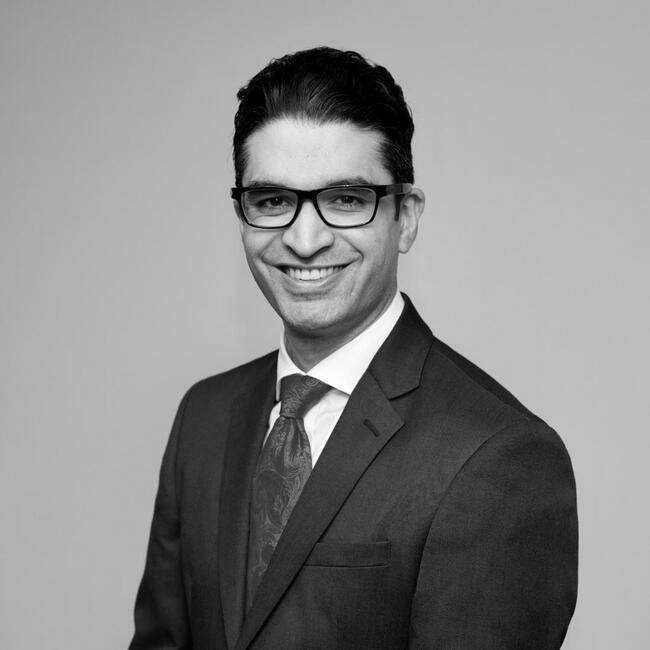
Howard Forman: Dr. Sudhakar Nuti is a street medicine lead and primary care physician at the New York City Health + Hospital System, where he holds the senior director position in the Office of Ambulatory Care and Population Health. Dr. Nuti is also a clinical assistant professor of population health and medicine at the New York University Grossman School of Medicine.
As one of 16 members on the Clinicians Network Steering Committee for the National Health Care for the Homeless Council, Dr. Nuti uses clinical medicine science and policy to improve healthcare for unhoused individuals. His research focuses on studying health outcomes and disparities for underserved populations in America.
He received his bachelor’s degree from Yale College in 2013, which is when I first met him, and his master’s of science in public health from the London School of Hygiene and Tropical Medicine in 2018. After graduating from Yale School of Medicine, Dr. Nuti completed his residency at Harvard Medical School at the Massachusetts General Hospital in 2022.
So first of all, it is such a pleasure to have you on the podcast and to welcome you back. You are one of the relatively few people who have invested a lot of time with Harlan and with me. You know us equally well. I would like to thank you—
Harlan Krumholz: He’s someone we love. He’s someone we love.
Howard Forman: Absolutely. And he is a Connecticut native.
And I wanted to start off by listening to what your journey has been like, because I’ve heard you tell it. I’d like to hear from you how your journey has informed your work right now dealing with unhoused and homeless individuals.
Sudhakar Nuti: First, thanks. I love you guys back, and you know that. So thanks for having me on. I’m very excited to be on.
My journey. Where to start?
I mean, you guys know this. I grew up in poverty, right? Just me and my mom in Section 8 housing, on food stamps, on Medicaid, and really living on this edge where if something went wrong or we were unlucky, we would have become homeless.
Harlan Krumholz: And I just want to interject one thing about, your mother’s a hero. She is.
Sudhakar Nuti: Yeah. Absolutely. If we were unlucky, bad things would have happened, but I was lucky that I had my mom who worked multiple jobs to put food on the table, to keep a roof over our heads, to make childhood as normal as it could be for someone that didn’t have much.
I was lucky to have amazing teachers and mentors like the two of you who have helped me along the way. I was lucky to have some smarts and a good work ethic that allowed me to do well in school. And now I’m in this really privileged position where I’m a Yale-educated, Harvard-trained doctor, and I really feel this profound obligation, and I always have and I always will, to give back and to pay it forward.
And so now I’m a doctor for people who are homeless on the streets. And when I take care of folks, I often see myself in them, and I see my story, and I see my mom and our story as a family, and I see what could have been if we were unlucky. And a lot of my patient stories are tragic.
And I have this opportunity now to work with an amazing team to meet people where they are and to try to fundamentally change the trajectory of their lives, and to get them health and housing and hope. And it’s the most meaningful work I’ve ever done.
Howard Forman: Can you follow that up and just explain what is the patient population you are actually dealing with in this practice?
Sudhakar Nuti: You know, I really have two jobs at H+H. I have a clinical job where I’m a street medicine and primary care physician for folks experiencing homelessness, where two days a week, every week, I’m out on the streets of Brooklyn meeting people in street corners and subway platforms, on parks and encampments, under bridges, and providing healthcare to them and social services to them, addiction medicine support, medical support, housing support. And then I also practice primary care in one of our specialized homeless healthcare primary care clinics in our system.
And then I have this larger role at Health + Hospitals, which is the public healthcare system of New York. It’s the largest public healthcare system in America. It’s one of the largest providers of homeless healthcare in America. We took care of 70,000 people experiencing homelessness or housing insecurity last year, which is a lot. And so I have this role at the system level to try to think about how do we improve the health and wellbeing of these folks across the system and across really the city of New York in coordination with other agencies, community-based organizations, and others to try to improve the health and wellbeing of really the most vulnerable people that exist in our society?
Harlan Krumholz: Just take one second to explain H+H to people who are listening.
Sudhakar Nuti: Yeah.
Harlan Krumholz: Because they may not recognize this isn’t just a public health arm. This is actually running the whole system for—
Howard Forman: The largest public health system outside of the VA military.
Harlan Krumholz: Running hospitals. Not just public health, but medical care, healthcare.
Howard Forman: The healthcare system.
Sudhakar Nuti: Yep.
Howard Forman: Public healthcare system.
Sudhakar Nuti: Yeah. So H+H is sort of the healthcare arm of New York City. We run 11 hospitals, a number of federally qualified health centers. We have an insurance company, we have medical respite, we’ve built housing on our land.
You know, Mitch Kass is this visionary leader we have, as both of you guys know, who’s really thought a lot about addressing homelessness through the healthcare system, the public healthcare system specifically in San Francisco and L.A. and now has brought that to New York. And Ted, our good friend, has really been the driver behind—
Harlan Krumholz: Ted Long. Yeah.
Sudhakar Nuti: Ted Long, who’s been actualizing a lot of those changes from a healthcare perspective.
So we’re a large organization.
Harlan Krumholz: And what’s the budget?
Sudhakar Nuti: The budget for…
Harlan Krumholz: H+H. It’s like …
Sudhakar Nuti: Billions.
Harlan Krumholz: Billions. Billions and billions.
Sudhakar Nuti: Yeah.
Howard Forman: Yeah.
Sudhakar Nuti: Yeah. And we get funds from the city, we get funds from the federal government, we get funds from our value-based payment contracts. We try to be as financially sustainable as possible.
And I think what’s hard about homeless healthcare is it’s not always financially sustainable, and different people have to pursue funding in different ways. And it’s often this patchwork quilt of funding opportunities, whether it’s funding from city government, funding from state government, funding from federal contracts, from national healthcare, from the homeless dollars. You get a lot of philanthropy invested, but that’s not always consistent and reliable. And often these teams aren’t really financially sustainable. They may be very small, based out of little student-run clinics sometimes, and sometimes it’s part of large healthcare organizations like us.
And so there isn’t really one-size-fits-all approach to street medicine in America or really across the world, but there’s an International Street Medicine Institute that’s trying to normalize that work and provide standards and guidance, and we’re a part of that as H+H. And I think more and more people are recognizing the need that to meet these people where they are is the most important thing, and that’s not always within the four walls of the healthcare system.
Howard Forman: So can you specifically tell us what it means to meet them where they are? Because I think our listeners still probably have a tough time knowing, are you hopping out of the car and finding them on the curb? Are you bringing a van to them? Tell them what that’s like.
Sudhakar Nuti: Yeah. For our program, our show program, which is our street medicine program at H+H, we have a slightly unique, I think, approach to street medicine.
So what we’ve done in partnership with city agencies and other community-based organizations, we’ve identified hot spots of street homelessness or unsheltered homelessness across New York City. And what we have is this fleet of buses, these tiny buses, kind of like the Yale Shuttle, where we’ve sort of torn out the insides and we’ve replaced them really to be mobile clinics. So we have a place for patients to sit, we have ultrasound, we have point-of-care labs, we have wound care kits, we have a bunch of supplies.
And what we do is, we don’t really “drive around.” We just park those in hot spot areas across the city. And normally we try to do that on a consistent schedule so patients know where to find us and where and when we might be there.
And most of our work is either patients come to us and there’s a line outside and we see them on the bus, or most often we have bags that we carry out into the community and we find people, and we just physically approach them and we meet them where they are.
We often approach with some snacks. You know, I feel like a water bottle is more important than a doctor, for the most part, in developing relationships with these patients. But we provide snacks, we provide food, we provide hygiene kits and other supplies to try to develop a trusting relationship. And then from there, that really gives us a foundation to provide healthcare and other social services to folks, whether that’s wound care, whether that’s addiction medicine care in the community, whether it’s managing someone’s diabetes, or trying to get them into a homeless shelter or work towards getting them into permanent housing.
And so we physically … like yesterday was pouring rain. We were out there, we all forgot our umbrellas. We hopped into a corner store, bought a $3 umbrella, and then we were out in the rain seeing folks, and trying to get them little ponchos so they could protect themselves from the rain, and trying to talk with them as we have over time about trying to get them indoors.
Harlan Krumholz: You know, I wanted to pivot just a minute to get back to your sort of personal story, because there’s aspects to it that I think are interesting to explore and figure out what we can do better.
One of the things we talked about when you were here was what it was like to show up at Yale, given the financial circumstances that you had. You know, I was surprised to read that there are many people at Yale for who food insecurity is a big deal. The people that are here that are students, you sort of think everything’s taken care of, but actually there are people who struggle financially, even as students.
So I wonder if you could just reflect a little bit on what it was like as a first-generation and someone without financial resources at that time, and even your self-image at that time, and then how you managed and what we could be doing better.
Sudhakar Nuti: Yeah. You know, I always think back to… I had this suite of suitemates who were fantastic, and most came from better circumstances than me. And I remember we went to Ikea to buy a rug for our common room, and it was this $200 rug, and we all had to split it. And I was like, “This is too expensive,” and people were like, “Oh yeah, we have to buy it anyway.” And one of my friends pulled me aside, he was like, “If you can’t afford it, I’ll cover your part.” And I was so embarrassed that it had to come to that point, and I was embarrassed that I had to ask for help.
And it’s hard coming into, really, this place of incredible opportunity. Like going to Yale for college really changed the trajectory of my life, and I’m incredibly grateful for the financial aid I had and the opportunity to work with you guys and get connected to amazing friends and mentors along the way. But it was hard to begin with, because I didn’t really know how to fit in. And I think over time you kind of find your people, but it still is easier said than done.
And I don’t think when you’re 18, 19, 20 years old, you’re really thinking about other people’s financial circumstances, for better or for worse. I don’t think people saw me as the poor kid, necessarily. I don’t think that was evident. At the same time, there were a lot of things I couldn’t do that they could. You know, when you talk about vacations, you talk about extracurricular opportunities, et cetera.
You know, one thing I wish I knew was how much support there was for folks like me. I don’t think it was as readily advertised. One of my regrets is not traveling internationally more, for example, while I was in college, because Yale would have paid for that, and I didn’t know it. Because my mom and I never really went on a vacation. We’d go home to India to see my family, and the first real vacation we went on was, I was in med school. I was in my mid- to late twenties when we went on a real vacation for the first time. And so this idea of going to travel places was foreign to me and … no pun intended.
But yeah, I think that it was hard. I think I learned that there’s a game to life, really, to play, and I learned the language of that and the tactics of that by observing people who seemed to be good at it. And I think that was the life education I needed more than the bookish knowledge that I got, was really how to move forward in a way that I could try to be successful in the things that I wanted to do. But it wasn’t easy. It wasn’t easy.
Harlan Krumholz: You know, I think that … I mean, there’s sort of a unidirectional learning that’s going on. You come in in these circumstances, and you’ve got to learn how to cope and you learn about what life is like on the other side. There’s an education that can occur the other way, which is how do people who have never been surrounded by that, never been in those circumstances, begin to appreciate how the vast majority of people have to live? I mean, I think about an education at Yale and there’s the formal education, but there’s also, how do we create an understanding of the circumstances of many different people in life?
And I think about that on the street medicine side too, which is that many people just avert their eyes or just think, “That couldn’t be me” and “There’s something wrong with those people.” And even some people think maybe that they deserve it. They did something wrong. They’re in those circumstances because of their choices they made. As opposed to understanding that that’s not how it works.
And that’s one of the great gifts of being a doctor is that you actually get a chance to interact with people at very different stations of life. You can learn a lot about how people are coping with their lives that’s different than your life.
Sudhakar Nuti: I think about … You know, from a college perspective, part of it’s just having conversations with people. And I don’t think the obligation should be on the disadvantaged to inform the advantaged of their circumstances. I think that’s probably too much to ask. But I do think folks in a position of privilege, like I am now, have this, at the very least, an opportunity, if not an obligation, to share the stories of the people that they know and the patients that they take care of, to be able to educate the population a little bit more about how hard life is and how different it is for certain types of people.
I mean, I have like millions of patient stories I could share with you about just how tremendously unlucky people are from childhood that has fundamentally changed the trajectory of their lives for the worse.
Harlan Krumholz: Give us one or two.
Sudhakar Nuti: Yeah. I saw this patient last week. He’s one of my first patients. I’ll call him John. John is in his fifties, Black man, born and raised in Bed-Stuy, Brooklyn. He would spend a lot of time when he was a kid with his uncle. And his uncle would race pigeons, so he’d be on a rooftop with a bunch of cages hanging out with his uncle with pigeons.
His uncle also used heroin. And you know how you have tourniquets on your arm when you’re trying to get a blood draw to find a nice vein to put a needle in? John’s uncle didn’t have a tourniquet, so he had John hold his arm as a human tourniquet so he could inject heroin. And that had gone on for a very long time, months to years, and then one day, John held his uncle’s arm and his uncle used heroin and his uncle overdosed. And John didn’t know what to do, so he just went to school, elementary school, as if nothing happened. And it turns out his uncle died.
And throughout his childhood and most of his adulthood, he blamed himself for killing his uncle. And to cope with his feelings, he used drugs. He doesn’t inject, he’s afraid of needles, understandable PTSD, but he used crack cocaine. And he got in trouble with it, he went to prison, he came out. He got sober while he was in prison, but then his mom died, and he didn’t know how to deal with those feelings because he wanted to see his mom and spend time with her when he came out of prison, and he went back into using. And he’s been using for the last three years; heroin, fentanyl, and crack cocaine.
And I met him when he had these wounds from xylazine, which is this additive they’re adding to a lot of drugs, and I was taking care of his wounds. And we developed this relationship a few years ago, and we’re going back and forth over this journey to try to address his substance use. He wants to quit, we get him on Suboxone, he doesn’t show up to clinic, he misses his doses for the last few years now.
Last week, though, I learned that in this very … he made no show of this at all. I’m like, “What’s going on with your housing opportunity?” Because we have this amazing Housing for Health team at Health + Hospitals that tries to find housing for folks, and we connected him with them and they weren’t able to get in touch with him. But he’s like, “Yeah, I mean, this morning I signed my lease.” And I’m like, “Are you kidding me? You signed your lease?” And so hopefully we’re ending his homelessness.
Now, does that mean that he’s going to be successful once he’s housed? That’s a whole different question. And often, patients have difficulty once they’re housed because some of them have never lived by themselves before, and so they have to learn how to budget and they have to learn how to cook.
I saw a patient of mine the other day, we went to a home visit after we’d housed him, and he had this pot of meat that he cooked. And I’m like, “Wow, you can cook for yourself? This is great. How long has that pot been out there?” He’s like, “Oh yeah, a few days.” He didn’t know that you’re supposed to refrigerate food. No one taught him that.
You know, I think there are things that we just take for granted that people have never learned, and then we expect them to be able to work towards going to appointments by themselves and work towards getting to housing by themselves and then being successful in housing by themselves. And if we expect people to do all this independently, they’re going to fail. And that’s because they don’t have this foundation that many of us do have, having good parents who taught us how to live independently in the world.
And so I think that’s sort of what makes it difficult, but it’s important to talk about it because then we could realize what types of solutions we need moving forward.
Harlan Krumholz: I’m going to just add one quick question here at the end. You know, you speak about it with such poise, but I know it’s a hard job and it’s frustrating, and it can feel like you’re not making progress because it just never ends, the demand never ends.
How do you take care of yourself in the course of this? How do you manage the tragedy that you see in front of you every day as you’re trying to make a difference?
Sudhakar Nuti: Good question. I think it’s a really hard question, because I mean, a couple of my patients died in the last couple of months, and I was just a wreck. And my patients die probably more often than most.
I think first I have the most amazing team that I work with, and really we support each other in the work every single day. And I think if you talk to anyone who does this work, they would probably say the same. Their team is the most important thing. They’re the ones that we process all our feelings with, we come up with plans with, we celebrate with, we grieve with. And so I have this amazing team that I lean on.
I mean, I try to journal, and I try to process things in my own way, but I don’t have a good answer to how to deal with your patient dying of an overdose right when you house them or having a heart attack two weeks after they’ve finally secured permanent housing after a two-year journey. You know, it’s absolutely heartbreaking.
I think we try to find solace in the fact that at the very least we’ve been witness to people’s suffering, and we’ve given them a meaningful, positive relationship in their lives that they may have never had before. I mean, a lot of patients tell me they love me and they think of me as family. Just a little bit of pressure, but… It also feels like we give folks, when they do pass away, the opportunity to die with dignity and self-respect. And I think that’s just as important. And when we think about the success in this work, it’s not always clear, but at the very least we rely on that, the fact that we’ve given folks the opportunity for dignity and self-respect and kindness.
Harlan Krumholz: And I’ll just say my admiration for you just continues to grow year after year. It’s always been high, but it continues to grow.
People don’t know this about you, but you’re a talented writer also. And I hope that you’ll begin to write about this and communicate with others and help others understand what you’re seeing and understand where this may go. And it’s been a great pleasure to have you on.
Howard Forman: Thanks for everything you do.
Sudhakar Nuti: And maybe with my last bit, I just want to thank the both of you, right? Because I really wouldn’t be here professionally or personally without you two. I mean, you guys are the two most important mentors that I’ve ever had and I probably ever will have. And I have so much love and respect and profound gratitude for the two of you, because I really wouldn’t be here.
Harlan Krumholz: And you should know your time with us was a gift to us more than our gift to you.
Howard Forman: Absolutely. Absolutely.
Sudhakar Nuti: Well, the time is still ongoing, thankfully.
Howard Forman: You got it. Thankfully.
Harlan Krumholz: Thank you.
Howard Forman: All right. Be good. Thank you.
Sudhakar Nuti: All right, my friends.
Howard Forman: He’s such a good guy. He’s great.
Harlan Krumholz: That was a terrific, terrific interview.
Howard Forman: Yeah.
Harlan Krumholz: He is a great guy, and we’re lucky to know him, and he’s doing great work.
Howard Forman: Yep.
Harlan Krumholz: But okay, let’s get onto your section, Howard. What’s on your mind this week?
Howard Forman: Yeah, so three really quickies.
First, nationally, we are seeing continued outbreaks in Utah, South Carolina, Arizona with measles, and additional cases being documented throughout the year in almost every state, with the exception right now of places like Connecticut, which is one of the very few states that does not have a single case reported at this time.
Total for the year is now 1,798, and we’re seeing roughly 40 new cases each week, 30 to 40 each week. As we head into measles season, it’s not beyond the realm of possibility that we pass 1992’s total of 2,126 cases, but even without that record, we’re already at a 33-year high.
What cannot be emphasized enough is that essentially all patients who have gotten measles during this national outbreak have been unvaccinated or under-vaccinated. Measles vaccine in combination with mumps and rubella is one of the safest known vaccines or drugs. Your life and the lives of those around you may depend on it.
Moving on from that, I want to mention that globally, measles vaccination is a huge success story. Over the last 24 years, cases have fallen from 38 million to 11 million, and deaths have declined from 780,000 to 95,000. These numbers are still way too high, and they can go much lower still if we can get vaccination rates above herd levels, 95% in all regions.
58.7 million deaths, and let me just repeat that, 58.7 million deaths were averted globally from measles vaccination over this 24-year window. That’s an awe-inspiring number. I cannot say it enough for everybody. Individual protection is wonderful, but getting to herd levels prevents outbreaks. And outbreaks will continue to occur if we don’t get to those levels. Make sure you and your family are up to date on measles vaccinations, particularly given the fact that so many young folks may have missed one or more doses during the pandemic.
And then I want to just end on a slightly longer note, and that’s on the leaked memo from Vinay Prasad. That’s Dr. Vinay Prasad, the chief medical and scientific officer and director of the Center for Biologics Evaluation and Research at the FDA. So one of the most senior leaders of the FDA. We’ve mentioned him before on this podcast.
He has suggested in this memo that 10 young people, age seven to 16, have died as a result of COVID vaccination; a revelation that does not appear to be documented anywhere else but in his internal memo, which was leaked on Friday. He believes this number is a lowball estimate.
It is very unfortunate that someone who has built a career around data and scientific fidelity is creating national urgency from narrative rather than data. It is absolutely possible that he is correct here, but the way to prove that and to increase faith in our healthcare institutions is through transparency. Each of these cases is apparently reported through the Vaccine Adverse Event Reporting System of errors, which already creates questions as to how accurate the reporting is, since this is not meant to be a rigorous reporting system.
I should note that there have been large series reported on myocarditis after vaccination, and none of them have reported deaths in the United States in this age range. About 30 million people in the U.S., 30 million children in the U.S. received the COVID vaccination during the early years of the pandemic.
Harlan Krumholz: So Howie, let’s just stick with this thing about Prasad. You know that John Mandrola, who’s got a big following on social media as a cardiologist, but he often goes into other areas, wrote a very vigorous defense of Prasad’s leaked email. And he said, first of all, that it was a private internal email, not a public statement, and in a trusted organization, it should have stayed internal, is what he says. What’s your response to that?
Howard Forman: My response is that if you’re sending an email and mentioning Biden multiple times in a email message to your staff, you are specifically addressing more than just the staff you’re writing to. He wrote this because he wanted RFK Jr. and President Trump to know that he is standing up for the administration and against Biden. I just think that’s the worst … I mean, it may not be a Hatch Act violation, but it comes awfully close to politicizing the work that the FDA should be doing.
Harlan Krumholz: Yeah. And I think that there’s a case to say that if you’re going to send a memo to the entire agency, you have to, like you said—
Howard Forman: Of course.
Harlan Krumholz: … expect that that’s going to come out. I think … You know that I think that it’s a worthy area of investigation to look at, vaccines.
Howard Forman: Absolutely.
Harlan Krumholz: Vaccine safety is an important issue. It’s one we should invest in, we should learn more about. There’s no question about it. If you are going to say that people have died, it’s important to present all the facts. It’s important—
Howard Forman: Absolutely. That’s all we’re asking for.
Harlan Krumholz: Yeah. And I hope that’ll be forthcoming because it will be important for us to examine that information beyond what’s in VAERS. VAERS is this Vaccine Adverse Events Reporting System, but it tends to be hard to make inferences about causal relationships from.
Howard Forman: Exactly.
Harlan Krumholz: So it really takes kind of the shoe leather epidemiology where you really go out and collect all the information, and then that should be published too. I mean, we should be—
Howard Forman: Exactly. I mean, it would—
Harlan Krumholz: … following the science.
Howard Forman: It would shock me that as we are five years into this pandemic that not a single report has made it into the literature. I can’t believe there is this global conspiracy where people are afraid to publish a single paper talking about a single patient.
Harlan Krumholz: I will give you the other side of this, as someone who’s tried to publish papers that have raised questions about the safety of vaccines. By the way, I believe vaccines have an extraordinarily net positive effect. I also believe that vaccines can have, for some people, an adverse effect. I don’t think there’s any question about that. But I will tell you that the journals are averse to publishing papers that say that the vaccines have problems.
Howard Forman: But there—
Harlan Krumholz: That’s my experience.
And I will also say as a faculty member, there’s a strong … because of the politicization, when we with Akiko have published questions about the vaccine, first of all, it’s been weaponized by some groups, but other groups on the other side have also attacked us. It is not easy to publish in this area.
Howard Forman: I’m with you, but here’s my counterpoint to that. You have this large series published out of VAERS that documents dozens of myocarditis cases in both post-COVID and post–COVID vaccine cases that is published, reputably published and reviewed. There are multiple deaths that get published in another paper as well. It’s not that people aren’t publishing it; we’re not finding this population he’s talking about where he’s talking about a minimum of 10 adolescents dying after vaccination.
Harlan Krumholz: Oh no, we need to do it. I’m just acknowledging that the cancel culture on both sides has put academics in a difficult position if you want to follow science around vaccines. I’m just making that point too, which is…
Howard Forman: Understood.
Harlan Krumholz: Most people don’t want to touch it. It’s a third rail right now. Like, “Why do I need the aggravation of studying vaccines, like epidemiologically, if I’m going to enter this debate?” And so what you’ve got are the voices that are most extreme. Anyway, I’m just making a point.
We’ll end on a high point. You’ve been listening to Health & Veritas with Harlan Krumholz and Howie Forman.
Howard Forman: So how did we do? To give us your feedback or to keep the conversation going, remember to email us at health.veritas@yale.edu or follow us on any of social media. And Instagram is our newest hot ticket, so look for us on Instagram.
Harlan Krumholz: And we love your feedback. Feel free to rate us, write to us. We love it. We respond to it and we’re always trying to get better.
Howard Forman: Health & Veritas is produced with the Yale School of Management and the Yale School of Public Health. To learn more about SOM’s MBA for Executives program, visit som.yale.edu/emba, and to learn more about Yale School of Public Health’s Executive Master of Public Health program, visit sph.yale.edu/emph.
Harlan Krumholz: And we always like to highlight our superstar undergraduates, Gloria Beck and Tobias Liu; our fantastic producer, Miranda Shafer; and I always like to say I get to work with the best in the business, Howie Forman.
Howard Forman: Well, I’m grateful that we get to do this, Harlan. It was real fun to Sudhakar today.
Harlan Krumholz: Yeah. Talk to you soon, Howie.
Howard Forman: Thanks, Harlan. Talk to you soon.
“The Yale School of Management is the graduate business school of Yale University, a private research university in New Haven, Connecticut.”
Please visit the firm link to site