


Transcript
Harlan Krumholz: Welcome to Health & Veritas, I’m Harlan Krumholz.
Howard Forman: And I’m Howie Forman. We’re physicians and professors at Yale University, and we’re trying to get close to the truth about health and healthcare. Today, we’re excited to welcome Dr. Zeke Emanuel, and we have a lot to ask him, so I’m going to turn it over to you, Harlan.
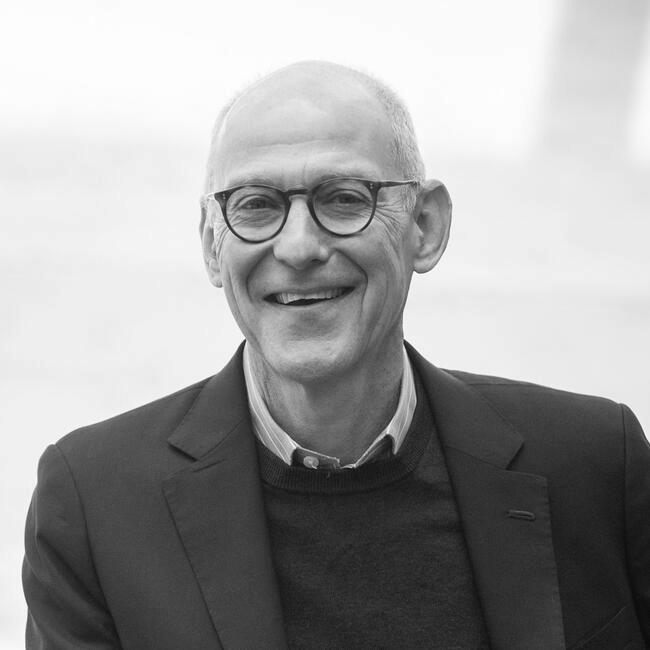
Harlan Krumholz: Just as you say, Howie, this is a bonus episode. We have one of our good friends who’s written a great book, and we want to give him a little bit of a platform to talk about it, so let me get into it. Today we’re joined by Ezekiel Emanuel. Zeke’s been with us before and is one of the most influential voices in health policy, ethics, and medicine in the United States and, honestly, around the world. He’s a physician, was a breast oncologist, a bioethicist, currently vice provost for global initiatives at the University of Pennsylvania. He served a senior leadership role at the National Institutes of Health, in the White House, and was a key advisor to the development of the Affordable Care Act, Obamacare. He’s a prolific scholar, public commentator, hundreds of scientific publications, a long history of bringing evidence and ethics into the public debate.
He’s here with us today because the author of a book, wait for it, Eat Your Ice Cream: Six Simple Rules—
Howard Forman: I love that title.
Harlan Krumholz: Yeah, it’s a great title. Great title. Six Simple Rules for a Long and Healthy Life. And I should add, Zeke and I were classmates in medical school, known him for a long time, really enjoyed watching his career. And it’s so great to have you with us here today.
Ezekiel Emanuel: And Harlan, you didn’t mention, you were the fellow when I was an intern in the CCU, and taught me a lot about cardiac—
Harlan Krumholz: Can you imagine that?
Ezekiel Emanuel: Probably why I ended up as an oncologist.
Harlan Krumholz: Well, and people should know, we started off medical school together, but because of course he got his Ph.D. and got all this additional training, so then at one point I was ahead of him in the training, but…
Howard Forman: Harlan has taught us all a lot—as have you, Zeke.
Harlan Krumholz: So, let me launch into it a little bit. You spend much of your career focused on health systems, policy, ethics. This book feels more personal and, honestly, more practical for the reader. What motivated you to write this book now, and what problem did you feel was not being addressed by the way other people have been talking about health and wellness and longevity?
Ezekiel Emanuel: Honestly, Harlan, anger. So, the history of the book is such that I was at a conference, and Ariana Huffington asked me a question about, “Why don’t we have more wellness in the healthcare system?” and I basically answered, I said, “Look, there are six behaviors to wellness. They’re not complicated, no one’s making a ton of money on them, and the healthcare system doesn’t really do prevention well.” And that was pretty honest, and I sort of began thinking about the six, what you would do in each of them. And then, in the end of ’23, I finished my courses, and for some reason I got Outlive. I think my brother sent it to me, I can’t really remember how it showed up.
Harlan Krumholz: The Peter Attia book, right?
Ezekiel Emanuel: Right. And I read it, and it just made me angry. And it made me angry for several reasons. One, it seemed very obsessive, like wellness should be the focus of your life, and at some point he says, “The entire goal of life is something like outlive…”—he’s got some crazy sentence like that. And I’m like, this is nuts. And then you read the book and it’s mainly focused on exercise and getting it precisely right, and you get to the end and he’s got an afterword where he says, “Well, you can be in great shape, but if you don’t have good family relations, you don’t have a good wife or spouse or something, what’s it all for?” And I was like, “Yeah, dummy, what’s it all for?” Because first of all, having good social relations is the most important thing for wellness. So, it was the obsession, it was the misplaced priorities, it was also this idea that there’s a lot of self-denial that has to go into wellness.
So I sat down and I wrote 35,000 words over the course of three weeks, and I had a book. And I don’t know, you get that out and you put it away, and I put it away, and then I had dinner with Adam Grant and Kara Swisher. And then—
Howard Forman: That’s quite a dinner, by the way.
Ezekiel Emanuel: It was a great dinner. Everyone is sparky in their own way. And for some reason I mentioned this, and they said, “Oh no, you’ve got to publish this, really important,” kind of thing. And so, I dusted it off, they gave me their editors, their agents, their PR people.
Howard Forman: Wow.
Ezekiel Emanuel: And so we were off to the races, and that’s the origin story of the book. And then, I realized that I had learned a lot, like social relations from my dad, so it became more personal.
Howard Forman: So, that’s exactly where I want to go. The book is infused with so much of what makes you a special person, and one of those things is your family. And there are so many lessons that you seem to have learned from your parents, and particularly your father, who, by the way, you dedicated the book to. Can you share some of these lessons that you gleaned from your dad about exercise and sociability, specifically? Because I thought those were really helpful for me.
Ezekiel Emanuel: Well, it’s funny, I was just visiting my mother, who’s 92 years old, and I gave her a copy of the book. I forget exactly how we got onto it. And she was talking about her wellness and routines, and she said, “I would always go out and walk and stuff,” and then she says, “And your father, he never exercised.” And I showed her the chapter on exercise, but the opening line is, “My father never exercised.” Going to the gym he would have thought was a waste of money and time. On the other hand, his nickname at the hospitals, that—he was a pediatrician, and he would round every morning at about four hospitals—his name was Speedy. He was the fastest walker I ever knew, and really just buzzed along. And the nurses would be trotting after him, we little kids would be trotting after him, and he got his steps in well before anyone was talking about 10,000 steps, much less the faster you do them, the better it is for your health.
And that was just his routine. The other thing is, as kids, he knew about five or six languages, and could piece together other languages. Wherever we went, and he was an inveterate traveler, he always thought travel is the best education, and we would sit down and he’d start talking to people, people at the next table, the waitresses.
Howard Forman: I love that.
Ezekiel Emanuel: Whoever. And as a little kid, you’re so embarrassed, can’t you just shut up and enjoy the meal? And anyway, it was just crazy. But you’re sitting there, and you learn… you absorb, you don’t “learn,” you’re not “studying it,” you just absorb that. Talking to other people is normal. For example, when we would take road trips, he said, “We’re new to town. What should we do?” Open-ended question, and then he would find out, how did they get there? Where were the relatives from? What did they like to do? And my mom also, my mom would collect all sorts of people, she has one of the highest EQs of anyone I know. And if there was something bothering someone, she would pull it out and help them. And she was always… it’s not that she wasn’t judgmental, my mom’s a very judgmental person, but she was always empathetic to people.
We had an enormous number of people staying with us. As I mentioned in the book, we had a cousin who was recovering from hepatitis, stayed with us two years. We had other cousins staying with us, we had the son of our orthodontist, who was over at the house, he also ended up teaching us how to build things because my father couldn’t screw a light bulb in. We had my grandparents live with us two years before they emigrated, and we just thought it was normal. It’s what people did.
Howard Forman: Yeah. And you also talk about what happens when your father is not able to do his working exercise.
Ezekiel Emanuel: He became diabetic because he was unable to walk and do the normal things, and it was terrible, terrible.
Harlan Krumholz: One of the nice things about the book is the way in which you really boil down a huge literature. So, a lot of these things are maybe people would think, “Yeah, we just know these,” but you actually put them in the context of the evidence, and you end up with these six fundamental behaviors, things like movement, sleep, diet, like we’re talking about, engagement. But I wanted to ask you just practically, which of these six rules do you think is most underestimated for its impact on health?
Ezekiel Emanuel: Oh, I think it’s sociability, because I don’t think we think of sociability and interacting with other people and having close friends or talking to your Uber driver and barista as a wellness activity. And we think, psychologically, somehow it’s good for the mind or the spirit or whatever’s out there, but it has deep physiological benefits. And I think one of the most interesting things I learned from pursuing the book is you look at the literature, and it says, yeah, it’s something like 28%, 29%, 30% decrease in mortality risk over eight years, if you’re more social and have more friends than if you aren’t. But then the question is, well, how is this working? There’s a whole literature now of looking at social people, looking at the genes that are turned on, looking at their immune responses, and this isn’t about it’s all in the mind, this is about, yeah, it really does affect the immune response systems. It affects cardiovascular risks.
And that I think is something most people, they don’t connect the dot. Having friends is better for your immune response and better for your cardiovascular risk factors, and that I think by and large is shocking. The other thing I think, and more controversial, Harlan, I’ve become a very big proponent of dairy. Now, when I was young, my mother did not give us milk to drink because she was worried about the nuclear fallout from all the nuclear tests and the strontium-90. So, we only got powdered milk—it was dreadful and had a blue tinge.
Howard Forman: Oh, my gosh.
Ezekiel Emanuel: None of my brothers and I can… we can’t drink milk, we just can’t. But we would summer outside the United States and have yogurt every day during the summer, and we love yogurt, but you can never get it in the ’60s in the United States, there just wasn’t any yogurt available in the US. Turns out, full-fat dairy is really good for you. If you have it as a kid, you end up being taller, it’s associated with lower risk of diabetes and cardiovascular disease, there’s a report out that it’s lower risk of dementia. And if you have yogurt and kefir, they’re hard cheeses, aged cheeses, they are fermented and have all the extra probiotic stuff. In general, they’re very good.
They’re also associated with lower colorectal cancer risk, slightly higher endometrial and prostate cancer. Now, there are some nutritionists, and you and I know Walt Willett at the School of Public Health, who was our professor, he presents the data, he’s got a great review of this in The New England Journal of Medicine three or four years ago, really very meticulous review. And you can tell he’s kind of like, “Eh, don’t do the dairy, saturated fats, bad idea.” I come to the opposite conclusion by looking at the data. I think it’s actually quite good for you, especially if you do more of the fermented dairies.
But ice cream itself, another thing, partially I think it’s yes, high saturated fats, but those saturated fats are in globules, they do not have the same impact as saturated fats from red meat. So, I think those are two… That’s why it’s called Eat Your Ice Cream. Those are two, I think, findings out of this book that are most surprising when I talk to people.
Harlan Krumholz: I will say one quick thing about the “Eat Your Ice Cream,” people might see that and sort of say, “Relax, enjoy life,” but you actually are asserting in the book that, no, eat your ice cream, it’s good for you.
Ezekiel Emanuel: I think it is also an element of joy. If wellness becomes a lot of self-deprivation, you’re not going to sustain it for decades the way you have to, if you want to live a healthy, long, and happy life. And you should have some of these things. Plus, I don’t know, almost all of these self-deprivation things are… it’s not a happy way of living. And let me tell you one other thing, I think I have this at the end of the book. Last summer, summer of ’25, I was at a conference, and one of the big, big gurus in longevity, who does the longevity for dogs stuff, he was at the conference, was presenting, he says, “I could give you a diet and you eat this diet, you’ll get five or 10 extra years of life.” Well, I’m skeptical of when someone begins like that. And then he’s in line eating breakfast ahead of me—
Howard Forman: Yeah, that’s right, you said the bacon.
Ezekiel Emanuel: Loading on the bacon on his plate.
Howard Forman: That’s right.
Ezekiel Emanuel: This is the wellness diet? I want to enjoy life, forget about that.
Howard Forman: That’s right.
Ezekiel Emanuel: Yeah, this is what the longevity people actually do. Forget what they say.
Howard Forman: I love that. Yes.
Ezekiel Emanuel: What do we economists call that? Revealed preferences? Yes. I like the bacon. I’m going to stick to the bacon.
Howard Forman: That’s right, don’t give up the bacon. I’m curious, you mentioned in the book that your wife does track some of the metrics that come up on the phone, and things that you can use to measure your exercise and health and wellbeing, and you say that you’re not a big follower of that, but I’m curious, are there any metrics that you look at the phone periodically to track?
Ezekiel Emanuel: No, I don’t look at the phone. So, I have right here my Garmin watch, and I track three numbers on there. I ride a bicycle, so I like to track the speed… I am a competitive person, as Harlan will tell you. I like to know the distance, how far cumulatively going. And then I will look at their calculated VO2 max. I have never done a formal VO2 max, although I’m going to do it. I’m kind of curious, I’m mostly curious how far off the Garmin calculator is of the VO2 max. Because when I ride my bike out there, I don’t go full out, it’s not maximal effort. It’s not really a VO2 max. So, I’m kind of curious. But nothing, I don’t track my steps, I don’t track my sleeping, I don’t track what I eat, so I ignore everything else.
And when she pops up, she sometimes pops up… We were, I forget where we were, we were walking around and she says, “You know, we’ve just done 22,000 steps.” Yeah, I knew we were going, I’m walking a lot, I didn’t know how much, and I don’t know that it made a difference to my life.
Howard Forman: It doesn’t make a difference to my life, but I do track it, I love just seeing what I’m doing, and even reflecting back about why a month was slow or fast. VO2 max is some measure of oxygen efficiency that we use, or… my phone says I’m 38, which made me feel rather badly, what does your Garmin say you’re doing?
Ezekiel Emanuel: My Garmin says I’m 43—
Howard Forman: I think you have to be, at least.
Ezekiel Emanuel: … and for my age, I’m in the, I think, top 10%.
Howard Forman: That’s not good for me, if I’m 38, then.
Harlan Krumholz: You’re so hyper-productive, how much do you sleep? Do you pay attention, or do you not obsess over it and say, I sleep when I sleep, I’m just not worried about it.
Ezekiel Emanuel: It’s funny, I was giving a presentation and the CEO of Oura Ring was sitting right next to me, and I said, “I don’t do that ring, and I think it’s bad for you.” I do not obsess about the hour…. First of all, I don’t sleep short; my sweet spot is around seven hours. Last night, I got a fantastic night of sleep. And there are nights when—sleep is one of those wellness behaviors you cannot will yourself to do. You can only set the bed and set the room, but you cannot say… and I know that if I’ve got a big event coming up, or I’m writing and something’s just not going right, it’s sitting in the brain and it’s keeping me up, I do have a routine which works to get me to sleep. The problem is about 20 minutes in, I’ve had my nap, and then my brain will often turn me on and say, “Oh, you’re thinking about this and here’s the problem. How are you going to solve this part of the healthcare system?”
Howard Forman: You and I have talked about this before, but it comes up in the book, about yoga. And I started to include yoga about 20 years ago, and I think it’s very beneficial, I’ve talked about it on the podcast.
Ezekiel Emanuel: I’m a big believer.
Howard Forman: I know, I want to hear what got you… and you and I have one difference is, I do classes—you do it either alone or with your wife, even if you’re remote, you do it with your wife, I think. What got you into it? What started you down the path to yoga?
Ezekiel Emanuel: A guy named Don Rosenstein, who was head of mental health at the NIH. We were running partners, and I don’t know, one day he talked about going to this yoga class, and how these older women were a lot more flexible than he was, and they could touch their toes and everything, and he was working at it, and I’m like, “Well, if Don does it, maybe I should try it.” And I found a studio, and I went to the studio, and it did help. It helped keep my hamstrings and my quads in particular, because I was doing a lot of running then, much more flexible.
And then, my wife does not like to exercise socially, she’s not a competitive sort, and so we do mainly 20-minute Peloton yoga first thing in the morning, and then we have more recently added some core stuff. I know, I have to do it very regularly for my quads and my hamstrings, in particular, and my hips. And the balance thing, as you get older, and more—
Howard Forman: Oh yeah.
Ezekiel Emanuel: …the balance is going to be critical. So, yeah.
Howard Forman: Those are all the reasons for me is—
Ezekiel Emanuel: Big, big, big believer.
Howard Forman: But it sounds like you do it more. I do it twice a week. You’re doing it more than that.
Ezekiel Emanuel: Yeah. 20 minutes. It’s 20 minutes with sometimes five minutes core, about three times a week every day. We do it every day.
Howard Forman: That’s great.
Harlan Krumholz: I wanted to ask if you wanted to share your views about alcohol, because that’s also on people’s minds. There’s many people that say, “Well, I just enjoy it.” Other people were talking about you really should stop. You want to share a little bit about how you think about that?
Ezekiel Emanuel: So, let me start. I’m a teetotaler. I grew up in a house that we certainly had no hard alcohol, and we very rarely had some wine in the house, the only wine we had was for Friday night Sabbath dinners, which was terrible Manischewitz wine. So you’re not going to become a wine connoisseur.
Harlan Krumholz: I love Manischewitz wine.
Ezekiel Emanuel: And I’ve just never been a drinker. It just doesn’t do anything for me, and I don’t like the taste of beer or anything. Alcohol’s gone through lots of different things, I think the consensus today pretty clearly is, it’s either zero alcohol or it’s max of three drinks a week, and that’s what the limit is. We know that it’s associated with lots of not good things, cancers, there are at least seven cancers that it’s associated with, it’s associated with more rapid cognitive decline, it’s associated with disrupted sleep, which isn’t good for you. So, I think on the other hand, for a lot of people, social interactions are a challenge, and it’s a lubricant. It’s a slight disinhibitor. The things you should definitely not do, don’t binge-drink, don’t drink alone to drown your sorrows, don’t drink to excess, all really, really important. And certainly don’t drink and drive.
We have so many accidents from drinking and driving, and we know that when we put in restrictive laws, the number of car accidents went way down, and raising the drinking age to 21. So, look, 60% to 65% of the American population, American adults drink; we’re not getting to zero. So, we need to come to a place where people can do it responsibly and not endanger themselves or endanger others. That’s probably one drink every other day kind of level.
Howard Forman: There are several times in the book that you reference our former surgeon general, and friend and Yale alum, Vivek Murthy, and these very important reports that came out of the Office of the Surgeon General, and you talk about vaping, you talk about loneliness and connection, you talk about, as we just did, the risks of alcohol use, youth mental health, and I think there’s even more than just that, I think maybe marijuana as well. That office decades ago was a very important bully pulpit for government, and it had a very important role, you can go back to the ’60s, to the ’80s, real big role there. And I think Vivek Murthy did an amazing job, and he wrote a very nice comment about your book. I’m just curious. Where are we as a country right now where we aren’t able to issue reports that aren’t seen as political?
How do we get to a point where everything you’ve talked about is apolitical, there’s nothing in your book that should be seen as political, and yet there will be some people that will see it as political. Do you have thoughts about how we do better?
Ezekiel Emanuel: So, two things. Let me totally agree with you, I think Vivek’s reports on social media and on loneliness in particular are going to stand the test of time, and be equivalent in influence to the smoking report. I like to remind people the smoking report came out in, I think, ’64. Okay? We knew in the ’50s, established by Doll, very definitively that cigarettes caused cancer, and then it took another decade to get the Surgeon General to issue a report. And I like to remind people, it wasn’t until the early 2000s, 40 years later, that Bloomberg finally got cigarettes out of indoor facilities [in New York City]. These kind of social changes take a long time. And we haven’t, in this country, for 16 years now, increased the tax on tobacco, which is the most effective method of reducing smoking, and we’ve stalled out at below teens of number of adults who smoke.
And unfortunately, Hollywood is trying to make it sexy again, which is a very bad situation. Vivek’s reports on loneliness and social media are of the same quality and prescience, and they’re just anticipating the problem. Now, for the politicization. The problem I think is much more that we don’t trust expertise. We’ve had this long decline in the trust of expertise, and I think it threatens us, it threatens trying to get people to do things based upon evidence, and I think we in the medical community especially are going to have to change how we communicate. We have a old model that, you know, “the expert has recognized,” the Walter Cronkites and people trust them. Trust now is much more horizontal because of social media. We have to recognize that. And one of the things I’ve done, and I have to say, I’m shocked, shocked. So, I’ve taken to social media, reluctantly. I am shocked by the number of people who are not in their 20s and 30s who tell me, “Oh, I saw you on Instagram.” Really? What are you doing looking at Instagram? And then the things my students pick up and raise with me—it’s the medium, and we’re going to have to adapt to that. So, I think we have to figure out how we’re going to educate people. And I think if we do it right, if we present ourselves as authentic, present ourselves as interested in other people, and having them live good lives, I think we can do it, but it’s going to require a very significant change in how we approach communication.
Howard Forman: We’re getting to the end right now, I want to just ask you one quick question, how has being a grandfather changed you? Because Harlan’s a grandfather too, and I’m an aspiring grandfather, although I don’t think my children are aligned.
Ezekiel Emanuel: No. I would say there is a funny way in which being a grandfather has made me more humble, in the following sense. You realize, “I don’t know how many more years I’m going to have, but even if I have 20 more years, and my eldest grandchild is 28, they’re going to have some memories of me. There’s no chance great-grandchildren are going to have strong memories of me.” And you realize how evanescent life is then. I think one of the things, the real strength of character, and this is sort of a little Nietzsche, is you realize life is evanescent, you’re not going to be remembered—nonetheless, you want to make a contribution. And I think being able to hold those two things in your head is, I think, exceedingly, exceedingly important. If you’ve got, and I’m sure Harlan and you have had this, there are two things which I still find I still get a kick out of.
One is someone says, “Oh, I read this paper, and the paper’s now 35 years old.” And it’s like, “Wow, I actually did something that’s lasted 35 years. I’m pretty proud of that.” And it gives you a little extra jolt for a while. And then, I ran into someone who was at one of the programs, who I trained or partially trained 15 years ago, and I don’t know, like you guys, I’ve trained scores, if not hundreds of people, and they said, “That was the most important summer I’ve ever had.” It’s like, “Wow. That gives me a jolt. I had a big impact on someone and their thinking.” And I will say that I think I’m not talking out of turn, but the head of CMMI, now, Abe Sutton, was in the first class I taught at Penn, and he says to me, “You changed my life. I got into healthcare because of that course.”
And it’s like, wow. Having that kind of impact on people, and they report it as positive, that’s a really special experience. It’s not just your grandchildren, it’s not just your family, you can make life better for other people. And I think that’s what motivates doctors. That’s a phenomenally good feeling. On the other hand, you also realize it’s short-lived. You’re only around here for 75, 85 years, whatever it is, so make the most of it.
Howard Forman: Well, you have made the most of it, for sure.
Harlan Krumholz: On to the book, Howie.
Howard Forman: The book again, Eat Your Ice Cream by Zeke Emanuel. It really is a great read, and I appreciate you as a friend, and I just want to thank you for coming on the podcast.
Harlan Krumholz: Yeah, it’s a privilege to be your friend, to know you all these years, and to… You’re always a source of inspiration. Thanks, Zeke.
Ezekiel Emanuel: Well, I will say, you guys have been great friends and very loyal friends over the decades, and I can say that I’ve learned a tremendous amount from both of you in the way you go about living. The ideas you have, and I will say, the other thing, the integrity with which you pursue things is super important and a wonderful role model for me. And also a wonderful role model, if you’re an adult and you’re doing interesting things, you confront serious ethical challenges, sometimes I’ve had my job threatened, and whatever, and having friends like you who model, it’s important to stand for the truth even when big corporations are coming down on you, or big institutions are pressuring you, it’s always important to remember, no, there’s the truth, you got to pursue the right thing, and withstand that. You guys really model it tremendously well.
Howard Forman: It matters a lot today.
Ezekiel Emanuel: Mutual admiration society.
Howard Forman: Thank you.
Harlan Krumholz: Humbled by it, humbled by it, but appreciate it.
Howard Forman: Thank you. Thank you. Thank you very much.
Harlan Krumholz: All right, great to see you. Good luck with the book.
Ezekiel Emanuel: Thank you.
Howard Forman: That was really great, it’s so great having Zeke on and to do this right when his book is coming out. Again, the book is, Eat Your Ice Cream by Zeke Emanuel, we will be back at our usual time on Thursday each week in the new year, with another podcast of Health & Veritas. And again, thank you, Harlan, for joining and for everything that you do, and Miranda for pulling us together on short notice.
Harlan Krumholz: Yeah, this has been a bonus episode. We’re going to start doing a few of these from time to time, I hope you guys enjoy it, and please give us your feedback, let us know how you like it. We just want to take advantage of the opportunity when friends are doing interesting things to bring them on in between our episodes.
Howard Forman: Yep. That was great. Thank you, Harlan.
Harlan Krumholz: And Health & Veritas is sponsored by the School of Management and the School of Public Health. We’re assisted by our terrific superstar undergraduates, Tobias Liu and Gloria Beck, by our marvelous producer, Miranda Shafer, and I get to work with the best in the business. Thanks, Howie.
Howard Forman: Thanks Harlan. Thanks very much, Harlan.
Harlan Krumholz: Talk to you soon.
“The Yale School of Management is the graduate business school of Yale University, a private research university in New Haven, Connecticut.”
Please visit the firm link to site