


Transcript
Harlan Krumholz: Welcome to Health & Veritas. I’m Harlan Krumholz.
Howard Forman: And I’m Howie Forman. We’re physicians and professors at Yale University, and we’re trying to get close to the truth about health and healthcare. Our guest today is Dr. Joel Hirschhorn. But first, we like to check in on current or hot topics in health and healthcare. What are you starting us with today, Harlan?
Harlan Krumholz: Thanks, Howie. Of course, as usual, there’s a lot to choose from, but I took one that has been interesting to me for a while and I thought it might be worth talking about. I want to talk about a paper that’s been getting a lot of attention. It’s a simple but unsettling question. Could diet soda be linked with dementia? This study comes from the Northern Manhattan Study, a long-running community-based cohort that’s taught us a lot about stroke, vascular disease, and cognitive aging.
Investigators looked carefully at soda consumption and followed people over time and determined who developed dementia. The good thing about this study was that it was really a bunch of neurologists are involved and they use neuropsychiatric testing and adjudication. So it’s not just looking at codes in the medical record or someone’s self-report, but they’re actually doing the testing. And here’s the headline finding.
People who drank more than one diet soda per day had a substantially higher risk of developing dementia compared to those who drank less. Interestingly, regular soda was not clearly associated. And so people were sitting up and taking notice of this study.
I think the most important part of the paper—and it gets lost in some of these summaries—is that they excluded people with obesity or diabetes. The association between diet, soda, and dementia when they did that disappeared. It was a question of whether or not this was an overall finding or is it confounded by the fact of people with obesity more likely to use diet soda and obesity itself, which is an inflammatory condition, could be the thing that’s really linked with dementia.
This is an observational study. Naturally, it wasn’t like they randomized a bunch of people with diet soda. So there’s all sorts of caveats to it. I’ll just say, years ago, I wrote this piece in The Wall Street Journal where I talked about my own journey with diet soda.
I think the title of it was, “This cardiologist has drank a diet soda for the last time.” My youngest daughter had been on me for a long time to stop drinking diet soda. Her premise was, no one’s really showed this stuff as safe. No one knows about these chemicals. The truth is, no one’s shown that they help you lose weight. People think you’re taking this, using this as a way to control calories, but it’s never really been shown to help people lose weight. And then when I did research in it, it actually was associated with a whole bunch of metabolic abnormalities.
The body is getting tricked. This stuff’s sweet, but it’s not sugar. But it actually, there’s a whole line of research that suggests it actually may be having adverse metabolic effects. I thought in the end, I would move off and I start drinking tea and water. I just moved off. I was never really drinking regular soda, so I was moved off diet soda. This is always of interest to me. I see in a paper like this, it’s just another thing that nudges you to saying, “We don’t really know, but this stuff could be causing problems.” It’s not clear that it’s a healthy thing to do, to be drinking this kind of soda. That’s been my premise. That’s what I follow. But anyway, I don’t know. You don’t drink diet soda, do you?
Howard Forman: I haven’t had soda in 16 years, but that was like a whole, no soda, not anything bubbly at all. You had quit it earlier than me, if I remember correctly. I’ve never looked back, but I do agree with one thing, because I’ve tried this many times. It’s hard to trick the body. If you’re hungry and you try to substitute something low-calorie, your body’s going to continue to be hungry. I’m convinced that a lot of what we understand about obesity and what we’ll talk about with our guest today is centrally mediated. You can’t just fill the stomach with bubbly water and expect that the brain is going to think that was enough.
Harlan Krumholz: The way I explain it when I’m talking to patients is to say there’s a lot of areas where we’re still learning and there’s some uncertainty, but there are hints that there could be issues. And in the end, you just have to make your bets. If you really enjoy it, it makes your life worth living to be drinking that stuff, I’m not going to tell you “I know for sure it’s harmful.” And I want to say, if you get a lot of enjoyment out of it, then maybe it’s worth it.
Howard Forman: Just like Zeke talked about on the podcast a few weeks ago.
Harlan Krumholz: But if you’re indifferent and you’re drinking this stuff, the diet soda, because you think it’s helping your health and you think it’s helping you manage obesity, I can tell you pretty surely that there’s no strong evidence that suggests that’s true either. You got to make your bets about how you’re going to live your life, but they should be informed by what we know and where the uncertainty is. I think in this case, unless you’re enjoying it a lot, there’s certainly not a lot pointing in the direction that it’s helping your health.
Howard Forman: That’s for sure. Yep.
Harlan Krumholz: Hey, let’s get onto our guest. Your boyhood friend.
Howard Forman: Yes.
Harlan Krumholz: This is amazing.
Howard Forman: I know. Long time.
Harlan Krumholz: All right, let’s bring him on.
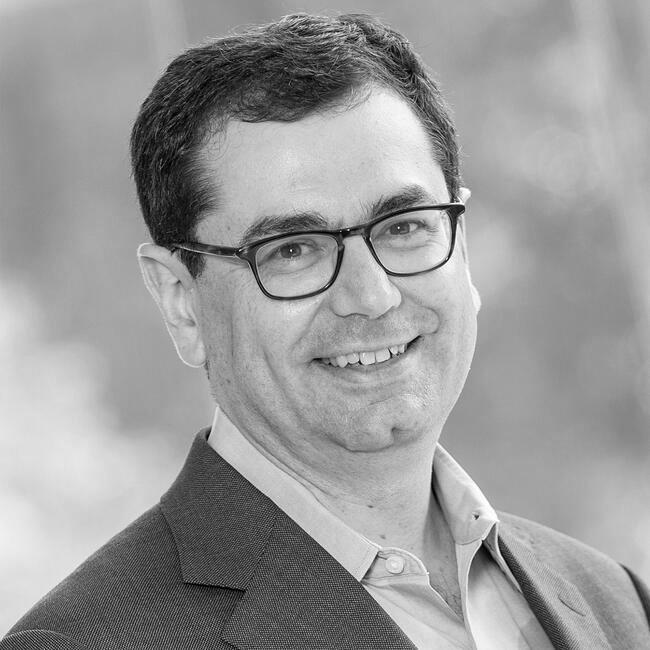
Howard Forman: Dr. Joel Hirschhorn is the Concordia Professor of Pediatrics and Professor of Genetics at Harvard Medical School and serves as the chief of the Division of Endocrinology at Boston Children’s Hospital. He’s also the director of the Boston Children’s Hospital Center for Basic and Translational Obesity Research. Dr. Hirschhorn directs the metabolism program at the Broad Institute, where he has been a member since its founding. He chairs the GIANT, which stands for Genetic Investigation of Anthropometric Traits Consortium, and has run his own laboratory since 2001.
His research uses human genetics to identify genes influencing common diseases and quantitative traits, yielding key insights into the biology of polygenic traits, including height and weight. Dr. Hirschhorn received his bachelor’s degree in biochemistry from Harvard, his medical degree from Harvard Medical School, and his PhD from Harvard University. He completed his fellowship in pediatric endocrinology at Boston Children’s Hospital and postdoctoral training at the Whitehead Institute, MIT Center for Genome Research.
First of all, it’s a huge honor and a privilege to have you come on the podcast. I’ll just say this very briefly. We’ll not stay with this too long, but we have known each other for 48 years and I’ve never… I don’t think there’s anyone I’ve admired for longer or more than you. It is really an honor to have you here. Your work has—
Harlan Krumholz: Howie, how many years was that?
Howard Forman: Forty-eight.
Harlan Krumholz: Forty-eight years.
Howard Forman: We met when we were 12.
Harlan Krumholz: We can get young Howie’s stories out of Joel?
Howard Forman: Here’s the thing.
Joel Hirschhorn: Maybe not recorded.
Howard Forman: Exactly. Your work has informed a tremendous amount of our understanding of the genetics of a lot of diseases. And in fact, when I think about genetics, I always think about Mendelian genetics, where you have recessive genes and dominant genes, and much of your work is about polygenic traits and how it’s multiple genes influencing things. Could you summarize briefly for us some of the major findings of your body of work and then specifically talk about the work on height and obesity, because I think those are two things of great interest.
Joel Hirschhorn: Exactly as you said, a lot of genetics, when it started, was really focused on Mendelian gene, so things where you have a mutation in one gene and that determines what happens. To use height as an example, you might have a mutation in a gene called FGFR3, which is the gene that causes achondroplasia, and that can cause a 16-inch difference in height.
But when people then went and used those, tried to understand things like, “What about variation of height in the general population? Or what about risk of type 2 diabetes?” Those single-gene mutations didn’t really explain what we were seeing in clinics. I was fortunate enough to start my research career, or my postdoc research career, in a lab that was interested in using human genetics to try to understand what are called, as you said, polygenic traits and diseases, where it’s not just one gene, but it’s variation in many, many different genes that all adds up to say, “Are you going to get diabetes or not get diabetes? Or are you going to be taller? Are you going to be short?”
And over time, I and certainly many other people developed the tools to be able to study that variation. The first thing that had to be done was even just figure out where it was. There was a huge effort at what was then the Whitehead and then became the Broad Institute to find the places in the genome that people varied. And then to be able to test them all at once in lots of people. And I—again—other people were able to develop some of the methodologies and really some of the principles. But then how do you do this and how do you do it reliably? One of the first things we discovered was that most of the work that had been done was not as reproducible or consistent as you would have liked.
And so we had to come up with ways of saying, “Okay, here’s some criteria by… if you fulfill those criteria, then you’re actually likely to have a reliable result and you can trust it.” And so once we had all of that in place, then we were able to go to town and say, “Okay, let’s apply that to different diseases.” And we focused a lot on obesity and height, but that’s how it started.
Howard Forman: And just real quick follow-up. When you’re talking about looking at a large number of people, you’re literally talking about millions of data points.
Joel Hirschhorn: Yeah. A typical study might have thousands or tens of thousands, or even now hundreds of thousands of people, what people call biobanks of lots of people who have signed up to be participants in research. And then you have to multiply that by, we’re studying millions of different places in the genome. Actually each study, in theory, if you put it all together, is trillions of data points, which then get summarized down to a little bit more manageable dataset. But it’s a lot of work and a lot of collaborative efforts to really get that kind of work done.
Harlan Krumholz: You know, Joel, Howie tells me, “Okay, I’ve got a childhood friend I want to invite on the podcast.” “Howie! This is a professional podcast! We can’t just be bringing on your childhood friends. Look, we have high standards here. We have the most amazing guests.” And I got to say, “Howie, come on, whatever.” And he says, “Well, just look this guy up.” And then I’m going like, “Okay, I think Joel meets the bar.”
Howard Forman: Joel’s way over the bar.
Harlan Krumholz: He’s way over the bar.
Joel Hirschhorn: Very kind.
Harlan Krumholz: He’s way over the bar. I’m eager to talk to you. First of all, great to meet you. This is fascinating work. I think that just, I want to get to the obesity side of it, but the height side was very interesting to me because you used it in a lot of different ways. Used it to say, if this is true for height, it’s got to be true for a lot of things. But maybe you can just tell listeners a little bit about what you learned because what amazed me was a number of SNPs, and you can probably explain SNPs better than I can, but these little units of information within the DNA. But how many of them contribute to height. And then you really, it’s not a matter of saying it’s just a mutation in this gene, but it’s actually a large number.
But when you take them all into account, which you have beautifully done, they go a long way towards explaining how tall you are. Without ever seeing you, if I just saw your DNA, I can make a pretty good guess about how tall you are. But tell people how many, because I was astounded by how many of these little pieces of information contribute to what ultimately is your height.
Joel Hirschhorn: Yeah. We did a study and it was from about five million people worth of data that was part of the GIANT Consortium that Howie talked about. And when we put all the data together and used those criteria to say we’re pretty confident about all of these, we ended up with just over 12,000 places in the genome.
Harlan Krumholz: It was 12,111 I saw or something like that.
Joel Hirschhorn: Yeah, that’s right.
Harlan Krumholz: But it was an astounding number of…
Joel Hirschhorn: More than we would have guessed, yeah.
Harlan Krumholz: More than you would have guessed. If you just had a drop of my blood and you never saw me, would you be able to guess how tall I am?
Joel Hirschhorn: We’d be able to probably put you into buckets of likely to be tall, likely to be short, or maybe likely to be average, but there’s still a fair bit of wiggle room. It’s for a couple of reasons. One is that even for height, which is one of the most genetically defined traits, there’s still things that are outside of genetics that determine how tall you are. It could have been something that happened in childhood.
Harlan Krumholz: Endocrine abnormality, acromegaly.
Joel Hirschhorn: Sure. Yeah. Or your thyroid was a little off or whatever it might be. But also what we’ve been studying, those 12,111 places, those are the common genetic variants. Things that if you went out on the street and got DNA from a hundred people, you’d find one of these SNPs, which is a place where some people might have a G at a particular spot in the DNA and other people might have an A.
Harlan Krumholz: This is why the Dutch are taller than we are, or there’s certain tribes in Africa that have… Is it because of these or because of an unusual trait? Is it the common traits that all line up?
Joel Hirschhorn: For the Dutch, and this is a area that’s still of really active research to try to answer your question, we thought we had answered it and maybe we were a little bit off or a little over-optimistic. But it does seem like, at least for the Dutch, it goes along with these common variants. So each SNP, it might be that the A is the tall version and the G is the short version.
And you could say, at these 12,000 places or even more, does somebody have more of the tall versions or more of the short versions? And if you look at people, and specifically the Dutch, you’ll find that on average they have more of the tall versions than maybe even other people from Europe. Some of that difference we think is due to these common sites of genetic variation to these SNPs, to these 12,000 SNPs. That’s our best working hypothesis.
Harlan Krumholz: On the height side, if I look at the NBA, on average, is that a group of people who just happen to have… and maybe we should just unpack this a little bit for listeners when we talk about common variants. Maybe I’ll just let you do that. What is a SNP and what’s a common variant? And then I’m going to ask you an NBA question. I’ll give it to Howie.
Joel Hirschhorn: Yeah. There’s these 12,000 places in the genome that we’ve found, and there are many more that are SNPs where people vary. Here it might be some people have a G and some people have an A.
Harlan Krumholz: Just tell what a SNP is.
Joel Hirschhorn: Yeah. So it stands for single nucleotide polymorphism, which, again, doesn’t really necessarily help you, but essentially “polymorphism” just means it can have a couple of different forms. And then a nucleotide is a base of DNA. And so it means that there’s one single, one base that can differ, that can have different forms.
Harlan Krumholz: Are we just saying that this is a little package of information in the DNA? And it just happens to be, instead of reading the exact same in everyone, there are certain things that can vary within that piece of information. And if there’s a certain way it reads, it’s associated with one thing. If it reads another way, it’s associated with something else.
Joel Hirschhorn: Yeah. You get one genome from each of your parents. You might have two A’s that you inherited or you might have inherited one A and one G or you might have inherited two Gs. And that’s true at all of these different common variants, all of these SNPs. And most of those, probably doesn’t matter. It doesn’t affect anything. They’re just like spelling differences like we spell gray, G-R-A-Y, and if you’re in the U.K., you would spell G-R-E-Y, but it means the same thing.
But some of them actually matter. And for height, we found about 12,000 of them that matter, but the effects are really small for each of them. If we have a variant that affects height by a millimeter, we’ll say, “Woo, that’s a lot.” But when you add it up over 12,000 places, you actually can explain about half or close to half of the variation in height in the population, or at least in European ancestry populations.
Harlan Krumholz: Now just to get to my NBA question, when you look at Jokic or you look on average in the NBA, where on average they’re taller than the population. When you see people like that, are most of that just accounted for by just how they got shuffled in their common variants? And again, what we call “common variants,” it means, these aren’t diseases, these are just the way it’s shuffled.
Joel Hirschhorn: Normal variation.
Harlan Krumholz: They just got shuffled a deck that gave them more height. Is that mostly what happens?
Joel Hirschhorn: We think so, but once you get out to people who are really tall or really short, we actually don’t know for sure. This is, I will confess that despite 25 years of working on this, I don’t know the answer to your question. I don’t think anybody really does. At least until we do a study of maybe everybody in the NBA and everybody who’s 6’10” and taller for guys or the equivalent for women.
It could be that it’s just exactly what you’re saying. Instead of 50% short alleles and 50% tall alleles make you average and maybe 55/45 makes you a few inches above average, it could be that they’re 60/40 or 65/35, and it’s just so imbalanced towards the tall alleles that they ended up really tall. I actually don’t think that’s entirely what’s going on.
I think there’s other things going on, but I have no way right now of proving it. I think that once you get to a certain point, maybe there’s a break that gets released. It might be that the genetics would predict you to be 6’6”, but something happens. You actually end up all the way at 7’, even with only 6’6” genetics. But that’s just my personal theory about what’s going on. I can’t point to data that says that.
Howard Forman: This work is ongoing. It’s a huge amount of effort. You’ve answered a lot of questions, but I get the sense that the bigger issue is not about height, it’s about so much else. And I’m not going to step on Harlan’s questions on obesity, because quite frankly, that was what prompted the podcast. He has a very deep interest in the issues around obesity. We’ve had it on the podcast many times. I do want to ask you about type 2 diabetes or any other use cases where similar questions can be asked and answers may or may not be similar to the height issue. Can you speak a little to that and how this is informing our understanding of a lot of diseases?
Joel Hirschhorn: Yeah. I did end up studying height for a couple of reasons. One is I actually am a pediatric endocrinologist, so we do see kids who are short. If there’s time, I could tell you the story of how I got into it, but it turns out that height really is a very useful model trait to study. Essentially you can figure out how to do things in height and what the pitfalls are and how to do it properly.
And then you can take those very same methods and see if they work for the diseases like type 2 diabetes. And it turns out that most of those diseases look like height. There’s lots of different sites of common genetic variation, lots of these SNPs, and together they add up to either increase your risk a little bit or decrease your risk a little bit. And so together, if you have a lot of risk alleles, then you’re much more likely to get type 2 diabetes. And if you have a lot of protective alleles, you’re much less likely to get type 2 diabetes.
It really does work the same way. And I think the challenge now to make it really relevant to disease is not so much in predicting who’s going to get disease and who won’t, but can we take the clues, these are breadcrumbs that nature is leaving us to say, “Okay, it looks like from these SNPs, here are some nearby genes that might be relevant. Can we figure out what those genes are doing? And how they’re acting to either increase or decrease your risk of getting disease?” And does that give us clues as to how we might be able to intervene or develop new therapies?
Howard Forman: Got it. I’m going to let Harlan go next. I’m going to come back with other questions, but I’m going to let him do the obesity thing.
Harlan Krumholz: I think one of the most profound things about the work that you’re doing and the implications are, is really understanding the degree to which obesity is a disease. And let me say, there may be this debate about what exactly is a disease, in this sense. But there are a cluster of genes that you inherit at birth that predispose you to gaining weight and retaining weight in a way that leads you to a cardiometabolic condition that leads you to greater risk of certain conditions like cardiovascular disease and others that are associated with obesity.
I would just wonder if you could just talk a little bit about your own journey and thinking about this, because there’s still so much stigma around obesity. There is the recognition that under the right conditions, anyone can lose weight. You put them in solitary confinement and you limit meals, but that doesn’t mean that people have, it’s just a lack of willpower, that they’re weak individuals when they are gaining this weight.
I just wonder if you could just tell us how you’re thinking about this now as one of the lead experts in genetic determinants of obesity. How should we be thinking about it based on what you’ve observed?
Joel Hirschhorn: Yeah. I would say that it’s absolutely true that genetics plays a strong role in determining how obese or lean somebody’s going to be. Just like for height, there are other things beyond genetics, but genetics plays a really important role. I guess the way I think about willpower is, just like you said, you could lock somebody in solitary confinement and restrict the food they get, that would work.
You could also say, “Your oxygen level is too high, you need to just breathe a little less.” And you could do that. You could put somebody on the top of Mount Everest and their oxygen level would drop, but that doesn’t mean that they have the willpower to lower their own oxygen level voluntarily. And I think it’s somewhere along those lines. The oxygen level is maybe a little bit more extreme, but it’s pretty similar.
And if you try to think about, could you actually count calories accurately enough to be able to lose weight in a nice controlled fashion? I actually tried to do this myself, just using a calorie app for two or three years straight and discovered, first of all, it’s almost impossible to count accurately enough. You need to be within 10 calories a day in order to not gain or lose weight or maybe a little more. And so that’s just impossible to do it just mathematically and say, “Okay, here’s what I need to do.” And the other thing I discovered is that—it’s not news to anybody—it’s really hard. I think people underestimate how strong the drive is that the body creates to defend its body weight.
Harlan Krumholz: If you had to make an estimate, and I think about, obviously today there’s much more obesity than before, you see these time trends. I think about the environment, the context, the kinds of foods as a force multiplier. It’s just, whatever propensity there was is now being put up more so that that sort of explains the trends. But if you had to give a ballpark of what percent can you attribute to the genes, of the obesity? Again, now people can be treated with meds, there’s lots of things, different people have different behaviors, but on average, for people who are just living, not trying to gain or lose weight, what percent of it can be attributed to the genes?
Joel Hirschhorn: Yeah. If height is something like 80% of the variation in height is due to genes, for body mass index, which is one of the commonly used measures of obesity, it’s probably about 40%. Maybe a little under half of the variability. And the other half is presumably environmental exposures or again, just random chance or probably a lot of it is the environment that people find them in or other non-genetics.
Harlan Krumholz: But in the range of things you observe, 40% is still a big number.
Joel Hirschhorn: It is. Yeah. So for quantitative traits, probably about—it’s higher than many diseases. Things like cancer are much more environmental, whereas so obesity is more “genetic,” if you want to call it that, than many diseases. For quantitative traits, so things that you can measure and put a number on like height or weight, it’s probably somewhere in the middle-ish, I would say.
Harlan Krumholz: That’s really helpful.
Howard Forman: We’re somewhere, I don’t know what, 20-plus years since we’ve decoded the human genome. And I think at the time we got to that point, most people felt we’re on the cusp of solving everything. With the passage of time and the luxury of your experience and your expertise, how far along are we in really using the genome to understand all of diseases and maybe even cure many of them?
Joel Hirschhorn: Yeah. I remember even at the time being mildly horrified at the predictions that were being made, because we knew we were—
Howard Forman: Because we were smart.
Joel Hirschhorn: … just at the beginning. We had just defined what the puzzle pieces were, essentially. That’s what kind of sequencing the genome was. We had no idea really how they fit together or which ones were even important. It’s almost like if you have a puzzle and there’s 1000 pieces that go to the puzzle and then you throw in another three billion pieces on top of it, and then you say, “Okay, tell me what’s going on here.” We knew this was going to be a pretty long haul. What I think has been slower maybe than we would have expected is the types of studies that we’ve been doing up till now. And this is really just the way that genetics works and the way that our bodies work, a lot of the variants that we find that influence these traits are not right in the genes, they’re near the genes.
That makes it a lot harder to figure out what’s going on and which genes they’re actually even acting through. Never mind what those genes do and how the variant affects what that gene is doing. I think there’s a lot of biology that has to happen after you’ve done the work—of the type of work that we’ve done—to discover these things. You then need to do, “Okay, you have the variant that’s important, what is its function? What’s its impact of having a G instead of an A there?”
And there are some cases where that’s actually gone all the way through. The classic example of this is for sickle cell disease, there was a genome-wide association study, which is this search through all these common variants, found a particular spot in the genome near gene BCL11A. Now people can use CRISPR to edit out that exact spot in the genome. And lo and behold, sickle cell is much, much better if you’ve edited that out.
And that’s a great example of going all the way from A to Z, starting with the genetic study and then having a treatment. But there were lots of reasons, which we could talk about if you wanted, why that was a nice, almost ideal scenario for it to work. And I think a lot of the other cases, it’s trickier.
Harlan Krumholz: I’m going to ask you a touchy question that I think we’re on the cusp of a moment where there are people of means who are seeking to engineer their children. And first I want to ask you, to what extent do you think physical prowess or intelligence are part of what’s possible? And while— because there’s a lot of this variation in all these common variants, it’s not like you’re going to do CRISPR, because it’s like a lot of things, but you could have a lot of embryos where you choose among the embryos that have certain attributes. Maybe first to say, where are we in terms of thinking about the genetic determinants of things like overall physical prowess or cognitive prowess?
Joel Hirschhorn: Yeah. I try to avoid working on things like genetics of intelligence. And there are lots of difficulties with that field, I would say. A lot of those things don’t tend to be as heritable as something like height. We know so little about what each of these variants are doing, particularly when you try to pick unusual combinations of variants, which is what you would have to do to, you say a lot of embryos, but you would need a ton to really get things where the bell curve, kind of, one embryo is noticeably different than the another embryo, given the same two parents.
But we don’t know what being at the extreme tail of the bell curve actually does for you or does to you. So just like we were talking about the NBA, I think that once you’re at a certain point of the bell curve—and again, I don’t have data for this—but I think it’s likely to be true. Something changes. You go into a different sort of physiology. And I worry that if you try to do something affecting the brain, like you said, “I’m going to pick the variants that are associated with IQ.”
Harlan Krumholz: Or musical ability or whatever.
Joel Hirschhorn: Yeah. Yeah. We don’t know what happens if you pick a whole bunch of them that are all on the same pathway. It might actually do something really harmful, that it wouldn’t be worth, even if you thought this was ethically the right thing to do, and I don’t, but even if you thought this was ethically the right thing to do, I think there’s a lot of potential unintended consequences that we just have no way of knowing about. And I just wouldn’t want to be the parent who made that choice for their child and then their child has some other unanticipated problem. And then you’re wondering, was this because of something I did that I chose?
Harlan Krumholz: Ethically untoward, we should ban it, but also for anyone who wants to go to an island and experiment, it may actually backfire on you.
Joel Hirschhorn: Yeah. Yeah. Is that really a chance that’s worth taking? And I would say no.
Harlan Krumholz: Yeah.
Howard Forman: I want to ask a question from my own experience of knowing you for all these years. You were in the top 0.001% of math people at a very early age, and yet you go into a science career and it is computational science that basically has informed what you’ve done right now. And I’m just wondering, did you anticipate that at all, that you were heading in the direction of using math in a way that most scientists probably wouldn’t be able to?
Joel Hirschhorn: I wouldn’t say I planned it, but it’s not surprising to me in retrospect that I ended up drawn to it. One of our fellow classmates, Noam Elkies, was the co-captain of the math team with me. And I don’t know whatever percentile you would put me at, but Noam is like many standard deviations beyond that.
Howard Forman: Youngest tenured professor in the history of Harvard. Yeah.
Joel Hirschhorn: I had the experience of saying, “Wow, if there’s somebody in my high school who’s this far ahead of me in math ability, is math really the right thing for me?” But I was always interested in science more broadly. When I went to college, I felt like I was a little bit more of a people person maybe than math was going to afford me. So I ended up being drawn to biology research. And when I started doing it, I loved it. But I came back to genetics and in particularly to Eric Lander’s lab, who was also a former co-captain of the Stuyvesant math team.
Howard Forman: Stuyvesant team, right!
Joel Hirschhorn: His lab, he obviously had a very quantitative way of thinking and that I found very appealing. It’s maybe not a coincidence, but not a plan either.
Harlan Krumholz: This has been a delight to talk to you. And yeah, Howie, you didn’t really prep me adequately doing the same boyhood friend. You have to share at least one young Howie story. You must have at least one—
Howard Forman: I don’t think there is one. Yeah. No.
Joel Hirschhorn: Yeah. Actually, so I may have told you this. I always viewed you as a very caring person, observant. You actually stopped me in the hall one day. It was my junior year and I’d over-committed. I was done with calculus, and I was trying to do all sorts of other things. It was really actually weighing on me. And you pointed out that it looked like things were weighing on me. I hadn’t realized it at all.
And just that kind comment made me think about what I was doing and rebalance a lot. And I think that I would not have had a… my high school experience would have been a lot less successful and a lot less happy if you hadn’t taken the 30 seconds to just say, “Hey, I’m worried.” I remain appreciative of that to this day. There’s your young Howie story. I knew you were going to be a caring partner.
Harlan Krumholz: He was a mentor even back then?
Howard Forman: I was six months older than him. I’m allowed to be a mentor.
Joel Hirschhorn: Exactly.
Howard Forman: He was the second-youngest person in our class and I was the fourth-youngest person in our class.
Joel Hirschhorn: That’s right.
Harlan Krumholz: He turned into one of the most extraordinary mentors in the entire country.
Joel Hirschhorn: Yeah. I am an admirer.
Howard Forman: I will. One last thing I’ll just say is, question, is being a geneticist genetically preordained?
Joel Hirschhorn: Both my parents were involved in genetics in one way or another. One of them formally and one of them just the tools that she used, so my mom as well. I always say, it’s clearly nature and nurture, and I just had both.
Harlan Krumholz: That’s true.
Howard Forman: We were very lucky, and they were amazing parents.
Harlan Krumholz: What a school you guys had. What a school you guys had.
Howard Forman: It’s true.
Joel Hirschhorn: It was a remarkable place. Yeah.
Howard Forman: Yep. Great to see you, Joel. Thanks so much for doing this.
Joel Hirschhorn: Yeah, thanks so much for having me. This was a lot of fun and yeah. Thank you.
Harlan Krumholz: Great to have you on. Thanks so much.
Howard Forman: Thanks.
Harlan Krumholz: Hey, that was a great interview. Bring on your friends anytime, Howie. That was so nice…
Howard Forman: Oh, my god. He’s so smart. It’s so great to hear from him.
Harlan Krumholz: Stuyvesant. It’s something.
Howard Forman: Yep.
Harlan Krumholz: Is it still amazing?
Howard Forman: Oh, yeah.
Harlan Krumholz: Howard Forman, what’s on your mind this week?
Howard Forman: Yeah. The wheels of capitalism continue to spin in the healthcare sector. On the one hand, we’re seeing new companies achieving envious valuations almost every day. On the other hand, tens of billions of dollars of market capitalization is also disappearing before our eyes. Joseph Schumpeter described “creative destruction” where new technologies arise and old ones fade away.
Obviously, most firms want to avoid the latter, but it is hard. And just this week, Solace Healthcare achieved unicorn status, reaching a valuation of over $1 billion in the private market. This is a new company that seeks to connect patients that have complex medical problems with clinically trained patient advocates who will help them navigate their healthcare encounters. It was started by a young finance executive who lost his radiologist mother to pancreatic cancer at a young age and came to see, as we often do, how difficult it is to coordinate care and make one’s way around the system under the most challenging of times.
The business model—and yes, we’re going to use that phrase again and again—relies on Medicare reimbursement for these navigators and hopes to increase access by getting reimbursement from private payers as well. I do see the need. I hope there is value. I am confident that their business will evolve over time. And I imagine that much like so many other firms, they will be connecting the ready access to patients’ health data to AI systems in the future, and that will make this even more accessible for individuals.
Again, in a perfect world, this would be a purely good thing, but risks do abound. But as of this week, it’s a $1 billion company in just a couple of years. On the other hand, companies new and old are diving back to levels they hoped they would never see again. Molina and Centene—they are two large Medicaid and Medicare provider networks of provider plans—are down 69% and 58% from recent highs of the last few years. All the while, the market is actually up a lot. We have recently talked about the more mainstream health insurance companies, all of which are considerably down from their highs, the largest of which being UnitedHealthcare, down 57% from its all-time high.
And this week, our old friend, Hims & Hers, which I think you talked about on one of our first episodes, Harlan, is down 75% from its all-time high, as both Novo Nordisk, as well as the FDA, seem to no longer tolerate their compounding of semaglutide. And just a reminder that while we have a five-plus-trillion-dollar healthcare economy, it is by no means easy to build and develop the next big thing.
Harlan Krumholz: I love your insights. There’s so much there.
Howard Forman: Yeah.
Harlan Krumholz: Yeah. The Hims & Hers stuff is big news. It’s like the whole model is built on this compounding. And as you and I have talked about, compounded drugs are outside of the FDA purview. They can stop you from selling them, but they’re not overseeing them. They haven’t approved them.
Howard Forman: That’s right.
Harlan Krumholz: Nobody even knows what’s in them. They’ve got their own lab. Ostensibly what’s in them is the semaglutide. How they’re made, exactly, is not clear. And it has been amazing that a protected drug, one that’s on patent, could have a competitor through just them developing their own lab and compounding it.
Howard Forman: Yeah.
Harlan Krumholz: Maybe you’ve studied this a lot. For listeners, what is a compounded drug? Do you want to explain—or I can—but go ahead.
Howard Forman: Yeah. The way I understand it is, it’s a chemical that is available in the market that’s not fully patent-protected, that can be prepared in a different way than is commercially provided at a national scale. It’s supposed to be at the state level only. It’s not supposed to be interstate commerce, but there are ways around the interstate commerce.
And the most common historical compounded drugs were when somebody needed a particular salve that might include two different ingredients and the patient needs it in a certain formulation. Or some patients can’t tolerate the chemicals mixed in with the commercially available drug, and so a compounder can take the active ingredient and mix it in with a different mixer that a patient can tolerate. There’s all different ways in which compounding is perfectly legal and legitimate. This is trying to get around the rules, clearly.
Harlan Krumholz: Yeah. And the compounding just means they’re making it. They’re doing it themselves. It’s a DIY at scale because they’re selling a lot of it. But yeah, exactly how. You’re talking about these companies—company just founded a couple of years ago. It’s still proof of concept. They’ve got contracts. Their revenue doesn’t justify the valuation. It’s all about what people think could happen in the future. And some are still skyrocketing; others are falling to earth. It’s still the Wild West out there.
Howard Forman: It definitely is. I bring these things up periodically just to remind people, some people think it’s so easy to make money in healthcare or even any other field, and it’s just worth noticing that for—
Harlan Krumholz: Only in radiology. Only in radiology.
Howard Forman: Even there, I think you’re going to just watch them crater to the earth pretty soon. Things take off; things come back down to earth. Gravity works.
Harlan Krumholz: I did have someone come to me this week and say, “As things change, doctors’ expectations about what they’re going to make are going to have to recalibrate—”
Howard Forman: That may very well be the case too.
Harlan Krumholz: Maybe the case. You’ve been listening to Health & Veritas with Harlan Krumholz and Howie Forman.
Howard Forman: How did we do? To give us your feedback or to keep the conversation going, email us at health.veritas@yale.edu or follow us on any of social media, particularly our Instagram account.
Harlan Krumholz: Yeah, we love feedback, post it. Helps people find us. We love the feedback to help us get better. We do our best to respond. Yeah, stay in touch.
Howard Forman: Absolutely. Health & Veritas is produced with the Yale School of Management and the Yale School of Public Health. To learn more about Yale’s SOM MBA for Executives program, visit som.yale.edu/emba, and to learn more about the School of Public Health’s Executive Master of Public Health program, visit sph.yale.edu/emph.
Harlan Krumholz: I always like to give a hat tip to our team here. Kudos to our superstar undergraduates, Gloria Beck and Tobias Liu. And today we have the next generation coming in who’s going to be helping us, Donovan Brown. Thank you, Donovan, for joining us.
Howard Forman: Welcome to Donovan.
Harlan Krumholz: Yep. Thanks to our remarkable producer, Miranda Shafer, who does a great job every week. And I get to work with the best in the business, Howie Forman. Thanks, Howie.
Howard Forman: I appreciate you just as much, Harlan. Thanks very much. Talk to you soon.
Harlan Krumholz: Talk to you soon, Howie.
“The Yale School of Management is the graduate business school of Yale University, a private research university in New Haven, Connecticut.”
Please visit the firm link to site