


Transcript
Harlan Krumholz: Welcome to Health & Veritas. I’m Harlan Krumholz.
Howard Forman: And I’m Howie Forman. We’re physicians and professors at Yale University. We’re trying to get closer to the truth about health and healthcare. Our guest today is Dr. Selwyn Rogers. But first, we always check in on current or hot topics in health and healthcare. What do you have today, Harlan?
Harlan Krumholz: Well, first, just so people are tuning in, I feel the need to pump that section with Selwyn because I’m telling people that you’re in for a treat. This is a remarkable trauma surgeon who’s so full of humanity and is going to rivet you with his perspectives on violence in America. So I just want to put in that plug. It’s a remarkable interview.
Howard Forman: Yeah, no, he’s an amazing person. He’s got a book coming out, and there’s a lot to learn from him.
Harlan Krumholz: Yeah, we’re lucky that he’s going to join us. But let me start on this segment. For decades, we’ve been told that healthcare costs would just keep rising faster than the rest of the economy, just almost like a law of nature. But all of that is about projections, and some of these projections are like, “It’s just going to keep going.” But there’s a new analysis by David Cutler and Lev Klarnet at Harvard that asks a simple but important question: Has United States actually bent the healthcare cost curve? And for people listening, Cutler’s one of the most influential health economists in the country. Someone who’s advised presidents and helped shape national health policy. So when he asks these questions, and this is a Brookings policy piece, it’s worth paying attention to. And here’s a surprise finding: healthcare spending in 2024 is about 15% lower, according to their calculations, than what had been projected back in 2010.
So there was a lot of gloom and doom about where healthcare costs were going. And a lot of smart economists were trying to tell us where we were going to be today. And I actually really love this because it brings about accountability. When you go back and look at past projections, how well do they align with what actually happened? And according to Cutler and Klarnet, this accounts for nearly $1 trillion in a single year and, about $6.7 trillion less than expected over the past decade and a half. And that’s not a small shift; that’s a really break from history. So in an important sense, according to them, the cost curve has been bent.
But here’s the nuance: that doesn’t mean costs went down. They’re still rising. We’re now at about 18% of GDP. It’s just that they rose much less than we had anticipated. So when people talk about bending the curve, that’s not about reversing the curve or putting it in negative territory. We didn’t flatten it actually, but we didn’t actually experience what people thought. And that’s pretty surprising because for a long time economists thought rising costs were really inevitable.
And one of it is this idea called Baumol’s cost disease. It’s the basic idea that in some sectors like manufacturing, productivity improves quickly and they can capture those cost savings. But in others, like healthcare, it doesn’t. It takes a doctor about the same time to see a patient as it did decades ago, even though we keep thinking about compressing it, but you can only compress it so far. But meanwhile, wages rise across the whole economy. So healthcare has to pay more too, even without becoming more efficient. That drives costs up. And others, this belief that healthcare is a luxury good and that new technology always increase spending’s contributed to this idea that we were going to see continued cost, but that’s not what happened.
And I think just to tick off some of these ideas that they say, Howie, then I want to throw it to you. You know, the why, the why. Well, first was that the idea that technology started to work differently, not just new treatments that had costs, but better treatments that prevent events. Fewer heart attacks, fewer hospitalizations, fewer…effective medications than we would have seen. Again, not necessarily negative from a decade ago, but fewer than we were anticipating. And second, that shifting where care happens, procedures that used to require a hospital stay are now commonly done as outpatient procedure: the same care, lower cost. And then there’s more pressure on demand, higher deductibles, prior authorization, value-based payment models, patients paying more out of pocket, insurers more restrictive, clinicians more aware of cost. And then price growth slowed, especially in the private sector. So they didn’t fall, but they stopped rising as quickly.
So the most interesting idea in this paper is conceptual. Technology and medicine has a life cycle. Early on, new treatments are expensive and expand care, but over time they get better, safer, cheaper, sometimes can replace older, more expensive. Innovation doesn’t have to be pushing up costs all the time. And that’s a different way of thinking about medical progress. So I think, Howie, I’m interested, this is really, you’re one of the world’s experts in this area, particularly on cost and policy. I mean, do you buy this? What do you think about it? And does it change any way that you’re thinking about the future of healthcare?
Howard Forman: I mean, I think that we’ve known for a few years now that costs have come in lower than we expected them to, and people have volleyed about why that is the case. And it’s nice to see somebody with the methodologic rigor and the credibility of David Cutler and his colleague writing a paper like this. But I think it shouldn’t be lost that some of the mechanism that they’re seeing is through the price mechanism and that as reimbursement goes down, suppliers may supply less of some things and particularly as insurance has higher deductibles and higher copays, demand for the certain services also goes down because people are exposed to more price. And you, Harlan, have written about financial toxicity and healthcare. So there are good things that have caused this good outcome, but there are also bad things that caused this good outcome. And I think we should be able to sit back and feel good about something being good in the healthcare finance space, but we shouldn’t be so excited by it as to ignore the reality that healthcare remains extremely costly and that different groups have different degrees of access.
Harlan Krumholz: Yeah. And my worry in some ways is that some of that “bent the curve” business has inflicted pain, has inflicted pain on people. And there could have been other ways to do it that could have been—
Howard Forman: Agreed.
Harlan Krumholz: … less difficult for people.
Howard Forman: Yep.
Harlan Krumholz: Okay, great. Hey, let’s get onto our interview. I’m really excited for this.
Howard Forman: Yeah, totally.
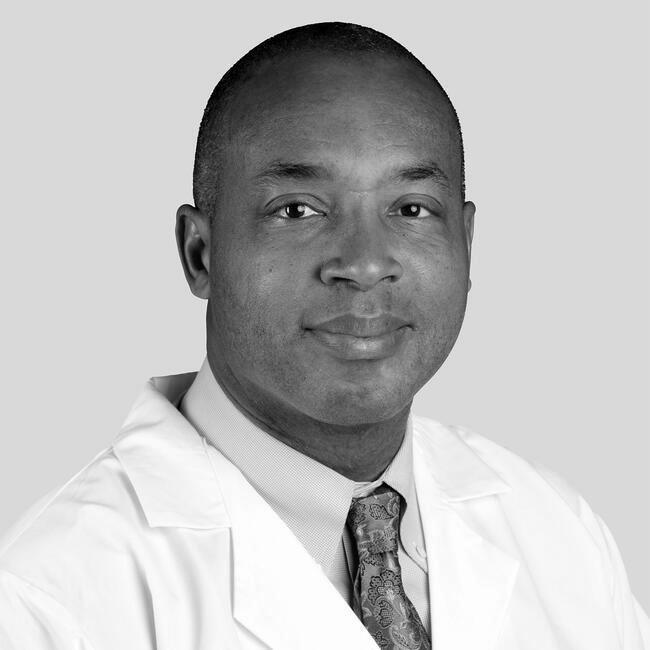
Dr. Selwyn Rogers is a trauma and critical care surgeon serving as the founding director of the University of Chicago Medicine Trauma Center. He is also the inaugural James E. Bowman Jr. Professor of Surgery, the Section Chief of Trauma and Acute Care Surgery, and Executive Vice President for Community Health Engagement at the University of Chicago. He previously served in leadership positions at Temple University, at Harvard University, and Texas University Medical Branch.
Dr. Rogers’s research focuses on understanding how race and ethnicity impact surgical outcomes with an emphasis on addressing health disparities in underserved populations. His upcoming book, Healing the Gun Violence Epidemic: Ending Violence, Rebuilding Communities, and a Trauma Surgeon’s Vision for Restoring Hope, draws on his experience leading trauma care on the south side of Chicago and is set to be released on July 7th. Dr. Rogers earns his bachelor’s and medical degrees from Harvard before completing both his surgical residency and fellowship at the Brigham and Women’s Hospital. He also holds a master’s degree in public health from Vanderbilt University.
First, I just want to welcome you to the podcast. I’ve spent the last few days watching some of your presentations online, and I’m just compelled by the fact that you’re able to practice trauma surgery, manage a busy trauma service, and at the same time be sort of a sociologist and a scholar looking at public health principles as they apply to violence and how do we tackle the violence epidemic in this country and specifically how it disproportionately affects marginalized and minoritized populations. I wanted to hear from you, since you’re writing this book or you’ve written this book right now, what is your hope that comes out of writing a book, which is one more task that most of us don’t get to do in our careers?
Selwyn Rogers: Well, first, Howie and Harlan, I want to say thank you for the opportunity. My good friend Dr. Albert Ko, who’s a public health specialist in his own right in the world of infectious diseases, introduced us. So I thank you for the opportunity to be on your show. I would actually say I was probably informed by all of those experiences, including Albert as my roommate in residency, but also having ties, having trained with Paul Farmer and Jim Kim in residency and medical school to really think more broadly about what role we can have in our society beyond the very important role of the patient-doctor relationship.
To address your question specifically, Howie, it started three years ago after a very awful night of trauma call. And a lot of what I write is informed from my personal experiences as a trauma surgeon on the South Side of Chicago. So it was one of those nights where you just pause and you reflect on the, if you will, the inhumanity of man to man, person to person and one more senseless death to gun violence in a teenager.
And it’s two o’clock in the morning, and I just felt like saying, “What the …”—and you can fill in the blank, but I was still on the call. And so it’s not like I could run away and do what I typically do, spend time with my wife and family to recharge, but I had to keep on going. And in that moment, something overwhelmed me. And I started using the note function on my phone and I wrote freeform several hundred words just to try to make sense of the moment, at least from my perspective. I couldn’t make sense of the moment for that family, that young teenage boy, but to make sense of where I was in that moment. And I put it away. It was a bit cathartic in some ways, and then my pager went off and I was back to doing what I was called to do that night.
And I went back to it several days later, and because of the impact that the event had on me, I reread it and I said, “Wow, this touches something that I didn’t quite know I had.” And that led to a perspective piece in The New England Journal of Medicine, where I served as an associate editor. And I don’t think it was my intentionality to write a book—that was a byproduct of three decades of being in this work, seeing up close and personal the impact of gun violence on people and on communities. And all along the way, I’ve always been informed that the best trauma center is one that you don’t need. You’re glad that it’s there, but ideally it’s something that you never actually use. And so the important role of prevention kept echoing in my mind. Every time I would see a young man or a boy or a girl or a woman affected by gun violence, I often thought, “Well, could this have been prevented?”
And a fundamental question I’ve always had was, not what happened, we often can focus on what happened, and that has a connotation that the person was at fault. It was their error, they were at the wrong place at the wrong time, whatever the narrative that we would like to put on that person so that we don’t make that person us. And in the context of that, I often ask the question more fundamentally, what was a person’s life like an hour before, a week before, a day before, a decade before? And I think those are the questions that I really tried to explore in the book through a combination of experiences that I personally have had, my trauma team, a dedicated group of professionals across many disciplines, anesthesiology, nursing, critical care, social work, chaplaincy that meet the moment every day for people on the worst days of their lives. Also, thinking really critically, how can we do something differently than we currently are doing?
Harlan Krumholz: I wanted to say, you’ve written really powerfully about the moments when you have to tell families that their loved one has died. I wonder for those listening who’ve never been in that room, can you take us into that room? Give us some sense of what that’s like, what words you use, how you handle it, and how you manage it as a human.
Selwyn Rogers: Thank you for that question, Harlan. It’s a profound one that gives me chills every time I try to answer it. And what I often start off with is what was going on the couple minutes before. So someone is violently injured, riddled with bullet holes. And in the moment, we trauma surgeons and the trauma team go through a very stereotype set of reactions. You go into this almost automatic mode, and it’s not a moment to talk about your feelings. It’s not a moment to be in your feelings, as the young people would say. It’s a moment to do the job. And that’s necessary because I have to dissociate the events, the tasks, the cuts, the incisions, the blood, the blood on my shoes, the blood of my socks. I have to disassociate that in order—
Harlan Krumholz: I mean, seeing even a young person, it’s not that, and as being an older individual, it’s not that I… but there’s just something so powerful about seeing these young individuals. I mean, I can see why that dissociation is so important.
Selwyn Rogers: Harlan, I have three Black sons. They’re 30, 27, and 24, and they’re 6’2”, 200; 6’5”, 220— my son probably will get upset with me for saying he’s 220, but I think that’s right—and 6’5”, probably 250. And he’ll get upset for me saying he’s 250, he’s a big… I have big boys, but they’re my boys. They’re my sons. And sadly, whenever I’m in the trauma bay and I’m on the South Side of Chicago where 80% of our gunshot women victims are Black and men and boys, I see my sons in those faces. And it’s necessary for me to dissociate so I don’t break down because in the moment I could just see that this could have been my child and I’m grateful and thankful that it’s not, but somebody’s child, and I want to do everything I can to stand in the way of that person’s death.
And I will do everything in my power and my training and my expertise not to hear the screech of a mom, a dad, a brother, a sibling around sharing the worst news I’m about to share. And since it’s a podcast, I can extend a little bit more since it’s not a soundbite.
Harlan Krumholz: No, no, because we want to hear this. What is it like when you then talk to those families?
Selwyn Rogers: I always give a moment to the room because we are traumatized too from that experience. And I ask for us to give a moment of silence as long as we are not expecting more incoming. And that moment of silence is short, it’s nondenominational, but it’s just a moment to honor the death of another human. And then I collect the chaplain or some person in our group who basically is going to serve what I’m going to tell you happens next. And we often, sadly, also include someone from our security team because you never know how people react to the worst news of their life.
And then we go to a very sterile room, it’s no bigger than an oversized hotel bathroom, and we give people the worst news of their life. But before I go into that room, I stop. I always stop. I slow myself down. I slow down my breathing. I slow down my heart rate as much as that’s possible because I got to go from that dispassionate, focused trauma surgeon, and I have to become the human. I can’t be doctor-speak, “We cut this, we severed that.” That’s not what people want to hear, at least that’s not what most people want to hear. They want to hear that you did everything. But more before that, when you open that door, we call it the quiet room, when you open that door to the quiet room, which is a misnomer because it’s never quiet, they look at your face and most people before you say anything, anticipate what you’re going to say.
And I’m always struck by that moment because I’m 6’4”, 200 pounds myself, so I always make myself small in that moment. The first thing I do is I sit down. I don’t want to hover over people. I don’t want to tower over people. I sit down. I extend my hand, I introduce myself, and I ask, “Who are you, related to this person?” Now, before this, we always confirm that we’re talking about the right person, because sadly on this South Side we often have multiple shootings at the same time, the same event. So we want to make sure that we are in the right space, and we do that with 100% fidelity. But I always start with, “Who are you and what do you know?” It’s striking how it varies from knowing nothing, “I just got told to come here” to “I was there and I saw him breathing” to “I fear what you’re going to tell me” to silence. But I always start with, “Who are you?” And then I ask a question that’s an open-ended question to give them back some power. “How did you learn of this tonight?” It’s often night.
And that gives me a little bit of insight because as they’re talking, I’m trying to read them as much as I can read a human that I’ve never met before. And in that moment, I give pause. And because of having done this way too many times, I am direct, I look them in the eye and I tell them their son, their daughter, their dad, whatever relationship they said they had to this human is dead. And I use that word. I am explicit about that word, not a euphemism, not “passed”—dead. And I stop. I don’t say anything else. I wait. And sometimes I wait, it’s very uncomfortable, but in that space, you give people an opportunity to process and people do many different things. I’ve seen people literally get up and not say anything and walk out the room, and I never see them again. Other people demand that I go back and save their loved one. “You didn’t do enough. Why are you here?”
And many people then ask the next question, “What happened?” And that question I can’t answer. I can tell them the technical things of what we did, what we observed, how many holes the person had, how alive were they when they arrived or were they not alive at all when they arrived. And then the next question always, especially from parents, “I want to see my child.” And sometimes that’s the most difficult request and the hardest demand to make because in the case of violent crime, it’s a crime scene and they, from [an] edict of the Chicago Police Department, actually can’t touch their loved one. They can see them, but they can’t touch them. There are times then that the devastation of the remaining body, because at that point it’s not a life anymore, it’s just a body. It’s so awful that as a parent, I will say something like, “I don’t know if I want your last memory of your child to be this, but that’s your choice. I wouldn’t make that choice, but you have to make that choice for yourself.” So I try to humanize it as much as possible.
I brought up the faith-based person that we bring in, and they come from many different faith traditions, the full spectrum. There’s no denomination that’s not represented in our chaplaincy group, but it’s because I know that whatever I say won’t be enough. However I say it, no matter how I say it, it won’t be enough. And I can’t, sadly, give that family what they want most, their loved one back. So then there are lots of other logistical things that our chaplain and our violence recovery program team do to try to fill that gap. How can I see the body? Where’s the body going to go? Funeral services—who else needs to know? Or just the beginning of a grieving process. And then my pager goes off and I’m often—
Harlan Krumholz: You know… Howie, I almost feel like we need a moment of silence. Just to honor all those people that you’ve seen so, and I want to hand it over to Howie for the next question, but how many of those deaths have you seen? Hundreds? I mean …
Selwyn Rogers: Leriche once said—a French surgeon at the turn of the last century—“Surgeons take their deaths to their grave”—the deaths of their patients. And the worst ones are the ones, for me, who are young, who come in talking, who say, “Am I going to die?” And I say, “No,” because I don’t have any other thing to say. I’m trying to build a therapeutic relationship with this human who is clutching to their life, and I need to give them that moment of hope, whatever … So I say no, but I’ve learned that’s the worst thing I could say because I can’t predict the future. And when those people who came in talking, who asked that question and they die, I hold onto those until I die.
Howard Forman: How do you process this degree of moral trauma, of personal trauma that you experience in your work routinely? How are you able to recover from that? Are there strategies that you take that would allow you to be able to get out there and fight another day?
Selwyn Rogers: It’s a great question. Howie, I’ll tell you, at the beginning of my career, I trained in Boston at the Brigham Women’s Hospital. It’s where Albert and I met. And as a young faculty member, I vividly remember, just like it was yesterday, so I was probably 32, 33, junior faculty. I was on trauma call and a 30-year-old, so not that much younger than me, came in shot in the head and progressed very rapidly to death, but brain death. And for those in the listening audience, brain death is when the brain dies, but the body still functions, the heart beats and in this case, he had a ventilator breathing for him, so his lungs rise and fall with each tidal volume. Skin’s warm. It’s like you’re sleeping except you have a devastating traumatic brain injury from which you will never wake up again. You’ll never be the essence of who you are again. And that’s the patient that I was faced with.
However, I had to do the next step, talk to the mother of this dead person, and I struggled. How was I going to tell a 50-something-year-old mother who could be my own mother, that their son was dead? And when I went to the quiet room, the waiting room to meet the mom, she was clutching a five-year-old girl in her hand. And it was like three o’clock in the morning. I don’t know why three o’clock, two o’clock is always time that these things happened, but it was kind of surreal because it was just the three of us. And at the time, I was a young father myself. I had two kids, my third son wasn’t born yet—actually, he was just born, so he was like one year old. And I was like, “What am I going to say? I got to do this complicated thing, explain brain death. The mother doesn’t have anyone else to leave the five-year-old with, so what are we going to do with the five-year-old?” I mean, I was doing all these calculations in my head.
The mother looked at me and said, “I want to see my son and I want his daughter to see her dad.” And I recoiled initially. I said, “That five-year-old girl does not need to see her dad this way because he’s no longer with us.” And I began to try to explain what brain death was, and she looked at me with steely eyes. “I need to see my son. Who denies a mother that right?” I said, “Well, what about the little girl?” “She needs to see her father.”
So I took them back, prepared some time with the nursing staff to let them know what was going to happen. And then I saw the most beautiful thing I’ve ever seen. What I saw was a mother take her grandchild into that room, held her son’s hand the last time, had her granddaughter hold her dad’s hand and told her granddaughter to say goodbye to her father.
Harlan Krumholz: Oh, my God.
Selwyn Rogers: That’s 30 years ago.
Harlan Krumholz: Oh, my God.
Howard Forman: It stays with you.
Harlan Krumholz: Let me ask you this, and I just feel the need to say what a privilege it is to have you share this with us and be able to share with others. After all these years, has your view of responsibility changed? Do you think differently now than maybe when you started about who’s responsible for these outcomes? So often society, people want to focus on individuals, but what about communities and systems and structural racism? And what would have happened for these people to be in safer environments versus the environments that they’re in? What do you think about responsibility now when you’re seeing this?
Selwyn Rogers: Yeah, we have this very American exceptionalism and individualism and this belief that people can literally pull themselves up by their bootstraps, by their grit and their independence and their talents. Over the three decades that I’ve been a trauma surgeon, I’ve come to the conclusion that that’s a myth. We are all, as the great Martin Luther King Jr., had said, “a web of intertangled humans.” And every time you see someone who is “successful,” however you want to define successful, a good father, a good mother, a good doctor, a good lawyer, or a good actor, a good basketball, whatever, everybody could tell you stories of people who made a difference in their life. People who touched them, who motivated them, who inspired them, to see something in themselves they didn’t see by themselves.
And the great Alex Haley also said, “If you see a turtle on a fence post, know the turtle had help.” And we all have help. And I get to see people struggling every day and doing the best they can in a highly dysfunctional society. And it’s so easy to make it us versus them. Gun violence in this country is not a “them” problem, it’s an “us” problem. It’s a “we” problem. It’s larger than any individual. There is this assault on “diversity, equity, and inclusion.”
Those on the podcast may not know I’m a Black male. I’m also a birthrighter. My parents are immigrants to this great United States of America. My mom’s from Antigua, my dad’s from Anguilla. They met on Saint Thomas in the US Virgin Islands, and that’s where I was born. I’m a birthright citizen of this country. Egg and a sperm 60 years ago landed on Charlotte Amalie, Saint Thomas, and there I am. It’s a great country, lots of opportunity, but the playing field ain’t level. And it probably has never been. But can we level it a little bit more and be “angels of our better selves” like Abraham Lincoln aspired us to be back at the turn of the Civil War?
Howard Forman: I can’t thank you enough for bringing these issues up. It is for our listeners to know that today is the day that the Supreme Court is hearing the birthright testimony in the case trying to repeal birthright citizenship. There are so many structural reasons why people end up where they are. Our ability to control our own destiny is obviously very, very limited by so many others around us, many of whom don’t have any interest in seeing us succeed. And so you are a champion of those who are not able to pull themselves up by their bootstraps because people are actually stopping them from doing that.
I want to remind our listeners that the book, Healing the Gun Violence Epidemic: Ending Violence, Rebuilding Communities, and a Trauma Surgeon’s Vision for Restoring Hope, is going to come out in a few months. We will avidly and actively promote that with our podcast and the book at the time. I just want to give you a last minute to speak to your own enthusiasm and excitement for the book as it comes out. What are your hopes?
Selwyn Rogers: I’ve actually been reflecting on that. In some ways, the book has been a labor of love over the past two in-depth years, but it reflects three decades of lived experience. I’m hopeful that the book can engender conversations that I think oftentimes are isolated one on one. And I think if we can get to a point where we have some broader dialogue in this country about what the impact of gun violence is on all of us, not just communities of color, not just young Black boys, but all of us. Because even though it’s easy to demonize certain people, still in this country, more people die of gun violence in the form of self-violence and gun-related suicides among mostly white older men. And the article of our destruction is a gun, but the mechanism by which we get there is varied. So I think we need some more rational discussions about how we can make the society in which we live safer.
When I grew up, we didn’t have school drills for safety. It wasn’t a thing. It just wasn’t a thing. And now we’ve made it so commonplace that we think it’s—
Howard Forman: Expected, right. Yep.
Selwyn Rogers: … normal. And even though we talk about mass shootings as if they’re the epitome of gun violence, they’re less than 1% of all shootings. Most shootings are self-inflicted or one person against another person. And until we look at this as a holistic “our” problem that we have to work together across ideologies, across race, ethnicity, across political affiliations, I think we have to really acknowledge that this is our unique American problem and we’ve been blessed to be able to solve some of the world’s problems to date, so let’s rally together and work together to solve this one.
Harlan Krumholz: Let me ask you just one closing question, Howard, if you’ll let me?
Howard Forman: Of course.
Harlan Krumholz: I think this is worth letting us go a little bit longer. And I also wanted to just say for our listeners, my goodness, you didn’t realize you were going to be in Shanghai when you were going to give this interview. You’re talking to us in the middle of the night. It’s a gift you gave us not to cancel on us and to share that your wisdom. And I just want to thank you for that. But the book, Healing the Gun Violence Epidemic, your subscript to that is, as Howie said, “Ending Violence, Rebuilding Communities,” but it ends with this, “A Trauma Surgeon’s Vision for Restoring Hope.” Can you just in a very short bit, just say, what is your vision for restoring hope? Because I want to end here on a positive note. This has been a very powerful and highly emotional for all—I mean for you, for us, I mean, we’ve all, this has touched all of us, but give us, what is your vision for restoring hope?
Selwyn Rogers: Thank you, Harlan. I need to say I’m pathologically optimistic. I’m riddled with optimism.
Harlan Krumholz: Even after all this, even after all this.
Selwyn Rogers: It’s what makes me go to sleep crying in bed and wake up the next day thinking that today is going to be better than yesterday. And that pathological optimism is a hope that I bring. What I think is that when we work together, we could solve big problems. And what we have to get over is the siloing that’s happening across America. We got to think, we’re all in this together, be it first generation, seventh generation, it doesn’t matter. We’re all in this together.
Harlan Krumholz: So your vision for hope is …
Selwyn Rogers: My vision for hope is working together for a common cause. The common cause is being the best of all of us.
Harlan Krumholz: We can beat this problem. We can beat this problem.
Howard Forman: If we work together, if we work together. Yep.
Harlan Krumholz: Thank you.
Howard Forman: We appreciate you so much.
Harlan Krumholz: You’ve honored us with this podcast. You’ve honored us with this podcast.
Howard Forman: We really appreciate it.
Selwyn Rogers: Thank you for this opportunity, Howie and Harlan.
Harlan Krumholz: Thank you.
Howard Forman: Thank you so much. And we look forward to seeing the book come out in July, and hopefully we’ll see you again.
Oh, that was very touching. I mean, he is an incredible person and an eloquent speaker.
Harlan Krumholz: I think I need a minute to collect myself. I mean, it was such a powerful, powerful interview.
Howard Forman: Yeah.
Harlan Krumholz: But let’s get on to your segment, Howie. I always look forward to this.
Howard Forman: Thank you. So we’ve occasionally talked about conflicts of interest on the podcast before. No doubt we’re going to talk about it again, but there’s an interesting story that has so many fascinating elements flowing from a simple retraction in the journal Lancet. And I thought it might be good for us to briefly chat about this through a different lens.
In 1977, an unsigned commentary—no authorship—was published in The Lancet. Now, Lancet’s a very prestigious British medical journal, and that commentary mostly suggested that these small amounts of asbestos or other minerals that are occasionally found in talcum powders are of no clinical significance and should not raise concern that they might cause disease. And remember, this is coming at a time when there was major asbestos litigation that was basically being resolved and ultimately leading to the bankruptcy of a company called Johns Manville and impacting other companies as well. The concern that asbestos in commercial or cosmetic personal hygiene products could be harmful was not a small worry.
And so you fast-forward several decades and Johnson & Johnson, which most people are familiar with and they make Johnson & Johnson’s Baby Powder, they’ve now been dealing with multiple massive damage assessments from the claim that talcum powder, their talcum powder has caused ovarian cancer, among other diseases. And I am not here to referee the evidence because there is very little direct evidence of causation, there is only faint evidence of increased risk and plausible biological mechanisms that do make this possible, but I will neither argue that it can’t cause ovarian cancer, nor that it does cause ovarian cancer. So put that aside.
In some of the lawsuits, the defendants have used the Lancet article as one small piece of evidence to suggest that there’s no causation and one must imagine to at least say that intelligent people at the time could not have known. It was in The Lancet. I don’t think this short piece was a material piece of evidence, but it did show up from time to time, which brings us to two professors of history in New York City. One is at John Jay, one is at Columbia, and through their sleuthing and investigatory efforts, they discovered that the commentary in The Lancet was written by a cancer researcher in England who, lo and behold, was paid by Johnson & Johnson as a consultant, including direct evidence that he was paid for this commentary. Not only that, but he himself referenced his own commentary without acknowledging that he had even authored it.
So one, I am happy that The Lancet has acknowledged this rather bad conflict. And two, I’m glad to hear that The Lancet does not allow for this practice any longer and that they’ve obviously retracted this, but it really highlights the challenges that can exist when conflicts exist and are not disclosed. We are always going to find conflicts, but at least we should know what they are and approach with skepticism when appropriate. I think we have made much progress in this area over the last five decades, but I wonder if it’s even enough at this point. And I’m just open to your thoughts, Harlan, because this is much closer to your area than mine.
Harlan Krumholz: No, it’s great to surface it, Howie. Well, it’s an extraordinary story and to think about it being leveraged. I’ll just say I’m following this talcum case and one of my favorite lawyers, Mark Lanier, was actually one of the lawyers on behalf of plaintiffs in these cases. And Mark, by the way, and maybe next week we’ll talk about the Meta lawsuit because Mark was in L.A. and actually was cross-examining Mark Zuckerberg. And I think that’s actually got a lot of implications for health. So I’ve been interested in what’s going on in that case. I’m interested in this case and I’m interested that …
I mean, when you first told me about this, I said, “What do you mean? The Lancet was publishing commentaries without attribution, let alone disclosure?” They don’t do that now. And I think it just points to the importance of transparency and also the need for science to be progressive and self-correcting. Somebody wants to make a claim, it’s fair game out there for people to contest, to discuss, to try to figure out—
Howard Forman: Totally agree.
Harlan Krumholz: … what the right thing is. And yeah, this was amazing. I mean, and also that it just shows that they’re retracting it now, but the thing has lingered in the pages of The Lancet all this time.
Howard Forman: And I love these historians. I mean, if anyone wants to look into this, we’ll have it in the show notes, but they have the receipts for everything 50 years ago.
Harlan Krumholz: But this is like also, I think now in this era, everyone’s a detective.
Howard Forman: Yeah, that’s true.
Harlan Krumholz: And so it’s hard to hide. And I think maybe increasingly that’ll be good for transparency.
Howard Forman: Yes.
Harlan Krumholz: But, it’d be good. So thanks for doing that.
Howard Forman: Thank you.
Harlan Krumholz: You’ve been listening to Health & Veritas with Harlan Krumholz and Howard Forman.
Howard Forman: So how did we do? To give us your feedback or to keep the conversation going, email us at health.veritas@yale.edu or follow us on any of social media, including our Instagram account.
Harlan Krumholz: And we still have our listener challenge. Every single listener should leave us a comment, let us know what you think.
Howard Forman: We love it.
Harlan Krumholz: Help people to find us. It gives us guidance about how we can improve the podcast, and we look forward to it every week, too.
Howard Forman: And by the way, speaking of that, Harlan, there were a few really great comments to your LinkedIn post, and one in the last day, about Arya Singh. So I want to make mention that I’ve noticed those. I’m going to make sure you see it. It just happened in the last day.
Harlan Krumholz: No, that’s good.
Howard Forman: They were great comments.
Harlan Krumholz: And that was an extraordinary interview and just like this week’s, so I mean, we’ve got great content, Howie. We’ve got great content.
Howard Forman: Yes, we do. I love it. It makes me feel better about life.
Health & Veritas is produced with the Yale School of Management, the Yale School of Public Health. To learn more about Yale SOM’s MBA for Executives program, visit som.yale.edu/emba, and to learn more about the Yale School of Public Health’s Executive Master of Public Health program, visit sph.yale.edu/emph.
Harlan Krumholz: And a hat tip to our superstar students, Gloria Beck, Donovan Brown, Tobias Liu, and to our wonderful producer, Miranda Shafer, and I get to work with the best in the business, Howie Forman.
Howard Forman: I say right back at you, and I’m grateful for all of our team.
Harlan Krumholz: Talk to you soon, Howie.
Howard Forman: Thanks very much, Harlan. Talk to you soon.
“The Yale School of Management is the graduate business school of Yale University, a private research university in New Haven, Connecticut.”
Please visit the firm link to site