


Transcript
Harlan Krumholz: Welcome to Health & Veritas. I’m Harlan Krumholtz.
Howard Forman: And I’m Howie Forman. We’re physicians and professors at Yale University, and we’re trying to get closer to the truth about health and healthcare. Our guest today is Dr. Deborah Proctor. But first, we’re always checking in on hot topics in health and healthcare. What do you have today, Harlan?
Harlan Krumholz: Checking in on hot topics. Well, I’ve got a hot topic for you. It’s an unusual one, but bear with me on this one.
Howard Forman: Okay.
Harlan Krumholz: So there was a pretty striking development this week that I think is worth paying attention to even though it wasn’t framed as healthcare news. So Anthropic, the AI company responsible for Claude, announced, I don’t know if you saw this, they’ve developed a new model that they’re not releasing publicly.
Howard Forman: I did hear this. Yeah. Yeah.
Harlan Krumholz: Yeah. They’re making it available to a limited group of about 40 companies, including some of their competitors, to identify vulnerabilities in critical software systems. This coalition, known as Project Glasswing, will include some of Anthropic’s most fierce competitors. I mean, this is unprecedented. They’ve come up with something that’s astounding, amazing. And one of their first moves is to convene their competitors and share it and also commit up to $100 million in usage credits so that they can sort of figure out what this thing might do adversely to them if it gets into the wrong hands. Now, you may say, “This Glasswing thing, what the heck is that?” Well, it comes from the glasswing butterfly, which uses its transparent wings to hide in plain sight.
Howard Forman: I see.
Harlan Krumholz: And the idea is that they’ve created something with AI that’s now so good that it can identify vulnerabilities in current systems. And so essentially, they said many of today’s most critical software programs have bugs and vulnerabilities that have existed in the open for years, but they have such complex systems nobody could really find them. So we talk about these hacking and bad actors causing problems. We’ve talked this week. There was news that Iran as part of their war strategy was going to be attacking systems in the U.S. Well, many of the things we depend on have a lot of these vulnerabilities, ways for people to write code that can get in. And this can surface them now. And what they say is that this new AI system they did is such a leap forward. It’s already capable of carrying out autonomous security research, scanning for and exploiting what they call “zero-day vulnerabilities.”
You know what “zero-day” means?
Howard Forman: Find it before somebody penetrates it?
Harlan Krumholz: It means they don’t even know these vulnerabilities exist. So when it first surfaces, they’ve had zero days of preparation.
Howard Forman: Right. Wow.
Harlan Krumholz: So it means that they’re going after vulnerabilities that people don’t even have on a blackboard that says, “These are things that we need to fix or worry about” yet. And so, one of the leaders of Anthropic called this a real “reckoning moment.” He said that the starting point for what we think will be an industry change point with what needs to happen now. Now, I’m bringing this up because a couple reasons. One is these companies are moving forward so fast, not just an incremental advance. It suggests a step change in capability. And so on one hand, the upside’s enormous. I mean, they’re making amazing progress. They’ve now created something so amazing. They have to sit down with their competitors to make sure it doesn’t hurt them because it could be used in that way. But at the same time, that must mean that they’ve made the kind of advance that could dramatically improve the possibilities in our field in healthcare.
So that’s kind of exciting. But this thing about the vulnerabilities and hitting infrastructure, there’s nowhere more vulnerable, I think, than healthcare for providing critical services and not having probably done enough work to protect the systems. I don’t know if you read this week, Brockton Hospital in Massachusetts. It’s about a 200-, 300-bed facility is almost brought to its knees. They’re using pen and paper now because they’re diverting ambulances. They’re really disabled by this. Our own place was hit by this. Almost every health system at some form or another has seen this. And so this is creating a tension in healthcare because at the same time, we’re trying to create free-flowing data. We’re trying to create better access to data. This starts layering on barriers because they don’t want bad actors to be able to hatch these attacks. And even again, at our own place, the amount of authorization that’s required now to get into the system remotely was escalated.
And it adds another layer of friction. It adds another layer of… so I think all this signals that the pace of change is accelerating, the tools needed to defend and attack systems are becoming more powerful very quickly. In healthcare, that’s a big deal. We have to balance access and security. This is going to be one of the critical issues in healthcare to face. And then also we need to be alert for these, what is this going to enable positively for us as we move forward? But I think we need to stay tuned to this. This is just one of those stories. Tom Friedman wrote about it. So a lot of people who read Friedman will notice this. And Kevin Roose, who does Hard Fork, I really recommend Hard Fork as a podcast too. If you want to keep up on technology, The New York Times puts it out.
But many people may not have noticed this. It wasn’t at the top, but I’ll just finish with this. Friedman, who writes a lot about geopolitics, said, April 7, 2026 may be a day in history people remember not because of the ceasefire that was brokered with Iran but because of this little news story that actually may grow into be something quite substantial where AI took a step leap in its capability and revealed vulnerabilities in our infrastructure that we didn’t even know existed and they put in the hands of bad actors capabilities that we couldn’t have imagined.
Howard Forman: I still think Anthropic among the companies right now is the one that seems to be taking the highest moral stand on how they deploy their own technology.
Harlan Krumholz: Yeah! Applause to them for this action, right?
Howard Forman: Yeah, exactly.
Harlan Krumholz: They didn’t say, “Well, we’re coming out with this anyway.” They said, “We’re going to sit down with a bunch of others who may be vulnerable as a result.” Yeah,
Howard Forman: Yeah. I agree.
Harlan Krumholz: Yeah. Yeah. By the way, I heard you use Claude now.
Howard Forman: I am using Claude now. I’ve decided to actually make the plunge and try to use it in various ways and—
Harlan Krumholz: Oh, my God. I’m going to say “World, be ready. Howie Forman on Claude, that’s going to superpower him.”
Howard Forman: I’m convinced.
Harlan Krumholz: “That’s going to superpower him.” All right, let’s get onto our interview.
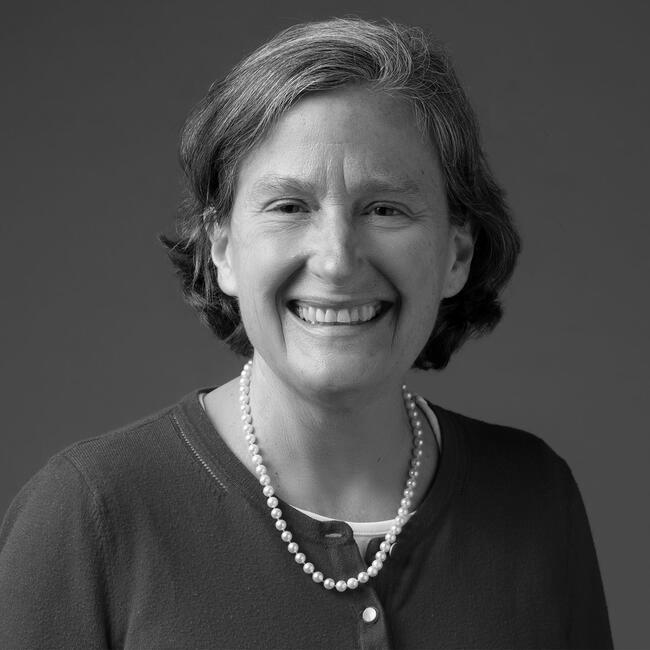
Howard Forman: Dr. Deborah Proctor is a professor of medicine in digestive diseases at the Yale School of Medicine and the gastroenterologist for Yale’s hereditary hemorrhagic telangiectasia center. She founded the Inflammatory Bowel Disease Program at Yale in 2005 and directed it through 2024, building one of the region’s most comprehensive multidisciplinary centers for inflammatory bowel disease care. Dr. Proctor has been a central figure in medical education at Yale, serving on the progress committee for most of her years here. And I could spend a lot of time talking about the numerous awards and honors she has received, but there is only so much time and too much to cover here.
Beyond her clinical work, Dr. Proctor is president of the Honduras Children’s Project, a nonprofit supporting the education of children at the Copprome Orphanage in Honduras. Her book, Every Child Counts: Breaking the Cycle of Poverty by Educating One Child at a Time, tells the story of her work there and has many important messages that we’re going to get to in just about a minute.
She earned her bachelor’s degree in biology from the University of Toledo and her medical degree from the University of Cincinnati. She completed her residency and fellowship in gastroenterology at Beth Israel Hospital through Harvard Medical School. And of note, during her time there, she was awarded “the intern most likely to be smiling at three in the morning.” She then served as a general medical officer in the United States Navy, followed by faculty and leadership roles at the East Carolina University School of Medicine before joining Yale about 28 years ago. She was recalled to active duty during Desert Storm/Desert Shield in 1991 as a lieutenant commander. And if there is one theme that comes to me when I read your bio and when I’ve looked into everything that you’ve done, it is service. You are the epitome of a service-oriented physician. You have served our nation proudly in the military, and I thank you for that service, but you have also served your community in Durham, Connecticut.
You have served the medical school, and you have served this orphanage in Honduras. And before we get to discuss more about the orphanage, I just wanted to know what motivated you from such an early age to be drawn to service?
Deborah Proctor: So what motivated me to start off with service? Oftentimes it’s just… somebody asking you if you want to do something, being not afraid to say yes, and then going and doing it.
Howard Forman: But let me just follow up really quickly on that and please call us by our first names. I can’t not call you Debbie. I’ve known you for all these years, and so you are done.
Harlan Krumholz: He prefers to be called “the Howie,” by the way, if you—
Howard Forman: Well, I used to. Used to. I know very few physicians in this part of the country that have a military background, very few women, particularly of our age. You’ve done so much and this orphanage, which we’ll get to, the work you’ve done is not just modest one week of service, it is a commitment of a lifetime. How does one commit so much time to that?
Deborah Proctor: Well, you start off small. I started in 1991, my husband Robert and I were married and we, by happenstance, went to a church service on Cape Cod, a minister who ran an orphanage in Honduras, not the one that we’re going to talk about or that I’m familiar with, Copprome, but another one. And he told a story that just tugs at you and you want to sponsor a child there. I’ve come to realize that stories like that are at best exaggerated and at worst flat-out lies, but it works. You get people to open their hearts, open their purse strings for you. And time went on and we decided to sponsor a child, and I’d always had an interest in Honduras. I loved to travel and always was somewhat interested in going to Honduras.
And my first job was down at East Carolina University in North Carolina. We moved down there. We had our two boys, and in 1998, we moved to New Haven, where I became faculty at Yale. In 2005, always keeping in mind that I wanted to go to Honduras—Where was this Honduras? Where was my $25 a month always going?—I met a patient of mine whose wife’s brother and his wife were—so their in-laws were dentists. And one thing led to another, we started talking. They said, “We do dental missionary trips to Honduras. Would you like to come as the medical arm of that?” And I said, “Yes. Why not?” Having no idea what I was getting myself into.
So six months later, four Yale medical students and I are heading down to Honduras. We are at the Hartford Airport at three in the morning, which means that you basically don’t get any sleep, with all of our stuff. And we land in San Pedro Sula at noon, go and set up our medical dental offices in a school room, and we’re told we’re going to see about 1,000 to 1,200 patients over the next five days. And we went back to our hotel where we were going to have dinner and I basically panicked. I’m not a panicky kind of person. I basically panicked. I said, “I can’t do this. It’s really, really hot. I don’t speak the language. I don’t know any of these people. I’m a gastroenterologist. I don’t know how to take care of diabetes and high blood pressure, and I can’t do this. I’m going to go back home.”
So I went and I talked to Mary, my friend the dentist who had suggested that I come with her, and I said, “I can’t do this, Mary.” So she sits me down and she says, “Okay, that’s fine, but just do the best that you can.” And that line has stayed with me for 25 years now. And I knew at that point in time that I maybe wasn’t going to do as well as somebody else could do, a Spanish speaker, a doctor, a general internist, etc., but I could do the best that I could do. And so I stayed. We did see about 1,100 patients that the next five days, and then it morphed into meeting the children at the orphanage.
Harlan Krumholz: Wow. These podcasts are so great because we get to learn about people in ways that we didn’t know. And in the book and in your interviews, you talk about when helping isn’t helping. And you go down to Honduras, this is the beginning of the story you’re telling us, you see a thousand patients in a few days, which sounds pretty impactful, but at some point I get the sense you start asking yourself, “Am I really helping and what’s the difference between really helping and what would that look like?” And I just wonder if you could talk about the moment that epiphany hit you and what was going on in your thinking because you’re busy, you are doing something other people aren’t doing, but you’re feeling maybe there’s more.
Deborah Proctor: I remember the very first trip we took, a man came in to see me and he told me he had all these things and he showed me all these medicines that he had. And I’m thinking, “Well, where do you get these medicines from?” And he said, “Well, I see a doctor in the town.” And I’m like, “Well, then basically, why are you coming to see me? Your doctor is pretty much prescribing high blood pressure diabetes medicines for you. Looks pretty good to me.” And he said, “Well, I heard the American doctors were in town, and we think you’re better basically than our Honduran doctors.” And I’m like, “This isn’t such a good thing because I’m only here for a week. I’m seeing you for literally about three minutes and I’m undermining the trust that you would have in your local physicians here.”
So all of those things started to eat at me and make me wonder, was I really helping the people that I wanted to do or was I hurting them? And then obviously I went seven more times, I went a total of seven times on these brigade trips about the… but I had this issue in the back of my head. So our very first trip, one of the nurses knew Sister Teresita, who I talk about extensively in my book, and I’d be happy to talk about her. She founded Copprome Orphanage now about 35 years ago.
And so on Friday afternoon, we went to the orphanage and we met the children, and they’re just lovely, lovely children. And we would do that every trip that we had. And I very quickly fell in love with them. So my older son, who’s now 31, and my younger son, now 28, when they were each 12, they came with me to our brigade work. And my husband came with me also one of those years. And they wanted to keep coming to Honduras, but the brigades went in October, which was during school session, and they didn’t want to miss a time of school when they were in junior high and going into high school.
So we decided to go in the summertime. And in 2009, ’10, ’11, we went for a couple weeks in the summer. And when we went in the summer, we would go specifically to the orphanage. And it was then that, to their credit, they pointed out, “You know what, Mom? If you really want to break the cycle of poverty, we really need to get these kids educated. They go to public school where there’s 40 kids in a class, maybe more than that, kind of walking around. They’re lost, they need special education help, etc.. What are we going to do about that?”
So they started our nonprofit in 2011, and we took it over from there. Slowly with time, I morphed into realizing that, and I think maybe the good way to put it is to tell you a story. So we’ve all pretty much heard the saying, “If you give a man a fish, he eats for a day. You teach them to fish, he eats for a lifetime.”
Well, the first part of that saying is really what I label as “charity” in my book. Philanthropy, the second part of that saying is about halfway to philanthropy, but real philanthropy is you ask the person what they want to eat, and then you help them develop the tools, the storage so that they can learn and they can feed their family. And that’s really what I call philanthropy in my book. Anybody can do it. We oftentimes think of philanthropy as what really wealthy people can do. Anybody can do it. But what it really is, it’s really taking the time to ask somebody what they want and then helping them to develop that and to get those skills. So that’s the…
Harlan Krumholz: One thing I wanted to ask you about this, and I’ll go back to the beginning again, because we make this distinction again between charity and philanthropy. You do in some ways talk about this hero phase of when people come in with intent to do good. And of course, there’s different flavors of this in medicine. I mean, I do think that when a bunch of ophthalmologists parachute in and do a thousand cataract surgeries, that’s a good thing, or people come in and are fixing cleft lip, I mean, that’s a thing.
But when you’re talking about providing internal medicine care, for example, or thinking about the infrastructure that’s there and the conditions around it that are creating stress and lack of opportunity for people and you want to try to fix that, that’s a different thing. Maybe you can just take us through your thinking a little bit about… because you want to honor whoever makes any contribution, in a way.
But on the other hand, you’re highlighting this issue that, at least in your thinking, there was an evolution in your thinking about that. I just wonder if you could just explore it just a little bit more, because I do think anyone who wants to spend time and devote their time and donate their time deserves credit, but you’re saying for sustained investment, that’s something different.
Deborah Proctor: Yeah. No, thank you, Harlan. Those are really good, excellent points. And first of all, I want to say, and I say in my book that I am grateful to the people that introduced me to Honduras, because without them, I wouldn’t have been doing this at all. I also believe that there is nothing wrong with going in a one-and-done time to another country because voluntourism, as we call it, is actually important economically for underresourced countries. People come in, they stay in hotels, they eat in restaurants, etc.. It’s important.
But on the other hand, I think it’s really important that the individual who’s going needs to at least do some reflection about why they are going. So what I’ve seen is, people come from Canada, the United States, light-skinned people to dark-skinned countries, Europe down to Africa. A local leader has arranged for somebody to come dig a well, see many people in a brigade, a medical brigade, a dental brigade, etc..
Those group of people come in, they do what they do, and then they leave. And we’ll take the example of a well, and these are things that I have seen happen. The well works for about six months. The village leader is seen as a hero, as they should be seen, but then the well breaks, and now the people are left without the parts, without the ability to get the well to work. And now the village leader is seen as the villain.
So that’s not good for the local community, and it’s also really not good for the little children, because what the children of the community see is, they see those of us coming down from the United States and Canada or wherever we’re coming from as the heroes, and they want to grow up looking like us. They want to grow up being like us.
And that is not necessarily helpful for a country like Honduras or a lot of other countries for that matter, in my opinion. So that’s one issue, as I see it. The other issue is that literally trillions, trillions of dollars have been spent on this voluntourism and underresourced countries and look around the world and you can ask yourself how beneficial it is. So we need to change. We need to change what we’re doing, is the bottom line.
Harlan Krumholz: Let me just ask you one other quick thing just because people listening might… I know you must have heard this before, but what about New Haven? What about, you’re going down to Honduras, you’re doing all this work, we have the same issues next door to us. Again, want to honor what you’re doing, but I know you must hear that sometimes. How do you engage with that conversation?
Deborah Proctor: Absolutely. And I do stuff in New Haven as well, and I do stuff up in my town. I couldn’t agree with you more. I think it’s really important. In my town in Durham, we have people … 20 years ago, there was an economic crisis in 2008 when President Obama was taking over his office, and I started community suppers at our local church. And I realized that a hundred people came in my town that’s reasonably… I think of being kind of middle-class, not necessarily affluent, but middle-class. And I realized that when you don’t have food, not only you’re going hungry, but you’re also socially isolated. So that was also part of the sort of opening my eyes to what’s going on around us in our own communities. I feel that we have so much going on in our own communities. You really do not need to look very far to see issues that are going on.
And I jump in whenever I can. I do have to say there’s only so many hours in a day, so I tend to not do—
Harlan Krumholz: You actually have a day job. You have a day job.
Deborah Proctor: I actually have a day job.
Howard Forman: That’s right. That’s right.
Harlan Krumholz: Yeah. No, I mean, it’s amazing just to hear what you’ve done. It’s crazy. You’re so good.
Howard Forman: So before we get to the end, I want to give you an opportunity to tell about some of the outcomes. I know from knowing you over the years that there are some good stories, already 20 years out. Do you want to just give us some sense of personal stories that have warmed your heart and proven that there’s some good that comes from this?
Deborah Proctor: Oh, yes, I sure do, Howie. So I want to tell the story of Delmy, who’s a prominent character in my book. I have seven children that I’ve highlighted at the end of the book, and she’s one of them. And Delmy was one of the genesis, the stars at getting our project started. So we all met her when she was about two years old. And I’m going to back up for just a second. I’m not sure I mentioned this, but children come to Copprome through one of two mechanisms. One is that their parents are just so poor, they can’t afford to feed them. Giving a child or two to a 24/7 orphanage opens up that much more food for the people who are left at home. And the other way is they literally are abandoned on the street and they come with no known family members.
Delmy’s family fell into the former category where she’s so poor, she lived up in the mountains and her parents just couldn’t feed her. So she came down to Copprome when she was about two or three years old. She was the most adorable little thing that you’ll ever see. She’s 20 years old right now. She just had a birthday and she’s still a beautiful, beautiful young lady, both inside and out. So she used to love to play and I used to love to play with her. But we realized that when she went to kindergarten and first grade, she didn’t know her colors, she couldn’t read. And she would literally just walk around through the schools. And we all said to ourselves, “You know what? She’s cute, but cuteness only goes so far. And if she doesn’t know how to read or write when she’s 15, 16, 17, 18, she’s going to have a problem.”
So we sent her to this—we hired our first real teacher, Reina Elizabeth, who’s still with us, and we sent Delmy to Teletón, which is a special education place for about four or five years. So about three months after we hired Reina, I went down there, and I had been there before, and I knew Delmy could not read. She was in the first grade. I knew she couldn’t read. So I go down there and she comes running to me and she has this book that she wants to read to me. And I’m like, “Oh, this is good. Someone’s been reading to her.” So she opens the book and she reads. And you know how children read? They see a picture and they kind of say what the adult has repeated to them. And she reads a book. I’m like, “Okay, this is good. I’m happy.” The teachers are reading to her, someone’s reading her the book.
So then she goes, she gets another book and she comes back and she’s reading this book again and she makes a mistake and she goes back and she corrects herself. And I had my epiphany. I’m like, Delmy’s reading. She’s reading. So I take the book and I take Delmy and I go over to Reyna, our teacher, I go, “Reyna, Delmy’s reading.” And she goes, “Yeah.” I’m like, “No, no, no. You don’t understand. Delmy’s reading.” She goes, “Yeah, Delmy’s reading.” And I said, I repeated a third time. I go, “Reyna, Delmy is reading.” And she looks at me like I had two heads and she basically said, “What have you been paying me to do? What do you think I’ve been doing? Yes, Delmy is reading.” So by this time, the rest of the kids had caught on that I was excited that Delmy was reading.
So they now all come to me with their books, and they’re reading out loud and everything. And I was just like, I’m crying. I’m just like, I can’t believe this. Our kids are reading. They’re absolutely reading. So I’ve had the honor of and privilege of being with many of the children when they got their aha moment to read.
But the second part of this I want to tell you about Delmy that is not in my book because it just happened a couple weeks ago when I went to Honduras. So Delmy a year ago, so she graduated from high school, first in her family to even get past the third grade, went to beauty school for a year and then decided she wanted to move back into the mountains to be with her mom and her family. She hadn’t lived with her mom for 20 years or 18 years at that point.
So I said, “But I really want to see Delmy.” So I sent her some money via Western Union to come and visit. She goes, “I want my mom and my brother to come also.” I’m like, “Okay, fine, that’s no problem.” Bus money and everything, come down, put her up in a hotel. And so she comes down and her mom and her brother, her brother is seven years old, and he had this look on his face. It was just like this little kid in a candy shop. He had never been on a bus before. He’d never left their town. Here he is in the big city of Progreso, which is about the size of New Haven. And he was just so excited. It was like this big trip to the big city.
And I felt so privileged and honored to have been able to bring her and her family down to this visit. And of course, I loved it to death. We went out to Copprome. We spent time with everybody that she had known at some point in her life in Progreso, and it was just so wonderful. And soon as she gets back, she goes, “When are you coming back? I’d like to come visit him again.”
Howard Forman: Yeah, that’s wonderful. That is great.
Harlan Krumholz: I think, Howie, everyone’s going to enjoy hearing this. This is an extraordinary thing. And like I said, we haven’t even touched on where you spend a lot of your time, which is you founded the inflammatory bowel disease program at Yale. This is also such an important area over too many people affected. We still don’t really understand the causes exactly. Multifocal, it can be highly disabling. With skilled clinicians, you and your team are able to bring multidisciplinary teams, you’re helping people to manage what can be a very challenging illness and disease. So I mean, you haven’t picked easy areas, you haven’t picked easy areas to try to solve for, but I think we’re all fortunate that you’ve devoted your time, effort, and energy, both professionally and personally, to such a wide range of areas that need attention and the kind of caring, love, and expertise that you can bring. So thank you, Debbie, for joining us today.
Howard Forman: Yeah, thank you so much for being here and to sharing the story. And for our listeners one more time, the book is entitled Every Child Counts: Breaking the Cycle of Poverty by Educating One Child at a Time. It’s available on Amazon and other venues as well. And again, we’re going to put it in the show notes about the Honduras Children’s Project and just really proud to know you and to be affiliated with that.
Harlan Krumholz: Thank you so much.
Deborah Proctor: Thank you so much. It’s been a real honor and privilege to be on your podcast, so I’m grateful. Thank you.
Howard Forman: Thanks. She’s wonderful.
Harlan Krumholz: Well, that was terrific. Yeah, she’s just a wonderful person. Amazing what she’s contributed in so many different ways, in so many different ways. Okay, let’s get onto one of my favorite parts of the podcast, the Howie part. What’s going on with you?
Howard Forman: It is National Public Health Week, and we are taping this on World Health Day. We hear a lot about what’s going wrong with health in this country and in the world, but step back 200 years and the story is one of the most extraordinary triumphs in human history. Life expectancy in 1800 was roughly 35 years. Today, it’s over 70, globally. That doubling didn’t happen by accident. It happened because of public health. And so I’m going to just go through some big achievements that really got us to this point. Let’s start with something we take completely for granted. Clean water. In the nineteenth century, cities were killing machines. Cholera, typhoid, dysentery swept through urban populations year after year. The fix wasn’t a drug. It was sewers.
When London overhauled its sewer system after the so-called Great Stink of 1858, cholera cases collapsed to near zero within a decade. Cholera once killed roughly one in 20 Londoners after the sanitation overhaul essentially disappeared.
Edward Jenner’s smallpox vaccine in 1796 launched the most powerful tool in medicine. From that one insight, that exposure to a mild disease could protect against that deadly one, we built a platform that now prevents more deaths each year than almost anything else. The World Health Organization estimates vaccines prevented four to five million deaths every year. Of all those vaccines, none produced a more dramatic result than the one against smallpox. A coordinated global campaign, the largest international health effort ever undertaken at the time, hunted the virus down country by country. The last natural case on earth occurred in 1977. Three years later, the World Health Organization made it official. Smallpox was gone. Smallpox killed an estimated 300 million people in the twentieth century alone. We eradicated it. It is the only human disease ever fully eliminated.
Before antibiotics, a scratch could kill you. Pneumonia was a near death sentence. Childbirth fever routinely claimed young mothers. Then penicillin arrived. Mass-produced starting in the 1940s, it became the calculus of infection changing overnight. Before penicillin, pneumonia killed roughly 30% of people infected. After that, the rate fell below 5%. In 1900, for every thousand babies born in the United States, about 165 died before their first birthday. Today, that number is around five. That’s not a rounding error. That’s a revolution. Better obstetric care, antiseptic practice, prenatal nutrition, and neonatal medicine rewrote what it means to be born. U.S. infant mortality has fallen 97% since 1900, from 165 deaths per 1,000 births to roughly 5.4 today, and we’re still hopefully going to make progress.
In 1964, the Surgeon General published a report linking cigarettes to lung cancer and heart disease. It triggered a decades-long campaign, warning labels, advertising bans, smoke-free laws, cigarette taxes. Smoking, once glamorized by Hollywood and endorsed by doctors in ads, became the most significant preventable cause of death, and then it was cut in half. U.S. adults smoking fell from 42% in 1965 to under 11% today, averting millions of premature deaths. We may in fact be down to 9%.
Sometimes the intervention is quietly invisible, adding iodine to table salt, essentially eliminated goiter and iodine deficiency brain damage across the developed world. Adding folic acid to flour beginning in 1998 reduced neural tube defects in newborns by more than a third. These were regulatory decisions, not medical breakthroughs that saved millions of lives.
Cars killed at a staggering rate in the mid-century of the twentieth century. The response was systematic. Seatbelts, airbags, speed limits, drunk driving enforcement, road engineering. The result is one of public health’s quieter victories. Traffic deaths per hundred million miles traveled fell from 5.1 in 1960 to under 1.3 today, even as the number of drivers exploded.
So in summary, none of these things happened on their own. They required science, policy, political will, and public cooperation. They’re a reminder that when we decide as a society that preventable death is unacceptable, we can actually do something about it. The story of public health is the story of a world that chooses to survive.
Harlan Krumholz: Wow. What a tour of public health. So there is lots to be grateful for. There’s also some retreat, as you know, in some areas. As you rightly remind us of now and almost every week when we talk about this, what do you think are going to be the next triumphs of public health?
Howard Forman: Well, look, we haven’t even addressed social media or how people interact with their screens. We’re starting to see that there are real harms that come from those things. And I think we’re going to start to see public health interventions that help. And we talked about Australia, for instance, as an example, but that’s still an open test. We’re going to have to see how these things work their way out, but issues around loneliness. I think we’re just tackling some issues for the first time now. Alcohol is another one we didn’t talk about today. I think we can make huge progress with alcohol.
Harlan Krumholz: Yeah, and I’ll put in two more. I do think that air quality around the world could be a big public health intervention. And I’ll use my favorite word from the movie The Graduate: Plastics.
Howard Forman: Plastics. I love it. That’s great.
Harlan Krumholz: Removing microplastics. I think that there may be some breakthroughs in understanding how things that have gotten into everything may be adversely affecting health, and there may be some public health interventions that will be necessary to address that. And I would like to say climate change, but we seem to be going the wrong direction on that, at least here.
Howard Forman: Sadly true. That’s sadly true.
Harlan Krumholz: But that’s another public health frontier, in my view. But hey, great job, Howie. Great job. That’s really good. And really upbeat too. Thanks. So you’ve been listening to Health & Veritas with Harlan Krumholz and Howie Forman.
Howard Forman: So how did we do? To give us your feedback or to keep the conversation going, email us at health.veritas@yale.edu or follow us on LinkedIn, Threads, Twitter, Instagram, wherever you can find us.
Harlan Krumholz: And we’re still on a listener challenge. Put in a comment. We want to see how many comments we can get. We want to see how many people can compliment Howie but still give us constructive comments about how we can improve.
Howard Forman: To that point, there was some really nice feedback on the Selwyn Rogers podcast last week. I appreciate those comments. Those were to you, Harlan.
Harlan Krumholz: And they’re still coming in about Arya.
Howard Forman: That’s right.
Harlan Krumholz: We’re on a roll. We’re on a roll.
Howard Forman: Yes. Health & Veritas is produced with the Yale School of Management and the Yale School of Public Health. To learn about Yale SOM’s MBA for Executives program, visit som.yale.edu/emba. To learn about YSPH’s Executive Master of Public Health program, visit sph.yale.edu/emph.
Harlan Krumholz: And a hat tip to our superstar students, Gloria Beck, Donovan Brown, and to our graduating senior, Tobias Liu, to our wonderful producer, Miranda Shafer. And every week I say it, it’s so true. I get to work with the best in the business. Thank you to Howie Forman.
Howard Forman: It’s true right back at you, and I appreciate everybody so much.
Harlan Krumholz: All right. Talk to you soon, Howie.
Howard Forman: Thanks, Harlan. Talk to you soon.
“The Yale School of Management is the graduate business school of Yale University, a private research university in New Haven, Connecticut.”
Please visit the firm link to site