Carnegie Mellon University has named six faculty members as University Professors, recognizing their exceptional contributions to research, education and interdisciplinary collaboration. Linda Argote(opens in new window), Jon Cagan(opens in new window), Rebecca Nugent(opens in new window), Roni Rosenfeld(opens in new window), Richard Scheines(opens in new window) and Kannan Srinivasan(opens in new window) join a distinguished group of scholars whose work spans disciplines and drives impact across fields.
The University Professor(opens in new window) designation is the highest distinction a faculty member can receive at Carnegie Mellon, awarded to individuals whose research, teaching and leadership transcend traditional academic boundaries. From advancing how organizations learn and how products are designed to shaping data science education, language technologies and decision-making, these faculty members are influencing both scholarship and real-world practice.
Together, their work reflects Carnegie Mellon’s commitment to addressing complex challenges through cross-disciplinary innovation, with applications that extend from classrooms and laboratories to industry and society.
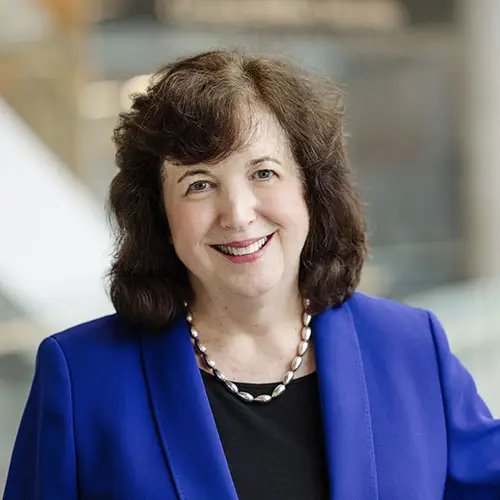
Linda Argote is the Thomas Lord Professor of Organizational Behavior and Theory and director of the Center for Organizational Learning, Innovation and Knowledge(opens in new window) in the Tepper School of Business(opens in new window). An internationally recognized leader in the study of group and organizational learning, Argote’s research explores how knowledge is created, transferred and retained within teams and organizations.
With a background in organizational psychology and management science, she brings a rigorous, data-driven perspective to questions of learning and performance. Her work examines the dynamics of learning, memory and knowledge transfer, with applications in industries ranging from healthcare to manufacturing and technology.
At Carnegie Mellon, Argote mentors students and collaborates across disciplines, advancing understanding of how organizations can learn more effectively. Her research has influenced both scholarship and practice, helping organizations harness knowledge to improve performance and sustain competitive advantage in complex, evolving environments.

Jon Cagan is the David and Susan Coulter Head and George Tallman and Florence Barrett Ladd Professor of the Department of Mechanical Engineering(opens in new window) in the College of Engineering(opens in new window), and a leader in design research and product development. His work spans engineering, design and innovation, with an emphasis on how ideas move from concept to implementation.
Cagan’s research focuses on computational design methods, including the use of artificial intelligence to support creativity and decision-making in engineering. He develops tools and frameworks that help teams explore design spaces, generate novel concepts and make more informed choices during product development.
A longtime educator and collaborator, Cagan has played a central role in building interdisciplinary efforts that connect engineering with business and design. He co-founded and co-directed the university’s Integrated Innovation Institute. His research and leadership have shaped how organizations approach innovation, influencing practices that balance user needs, technical feasibility and application constraints.
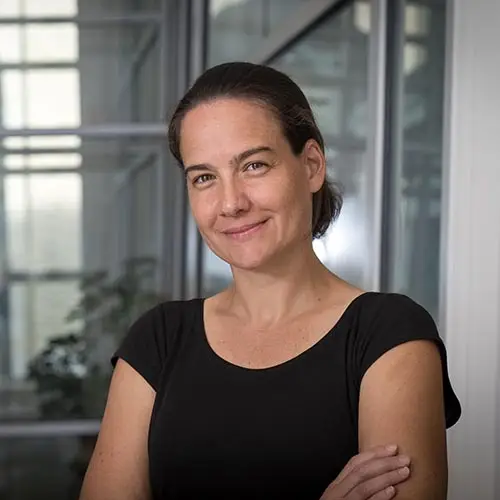
Rebecca Nugent is the Stephen E. and Joyce Fienberg Professor of Statistics & Data Science and head of the Department of Statistics & Data Science(opens in new window) in the Dietrich College of Humanities and Social Sciences(opens in new window). Her work centers on statistical learning and the application of data science to complex, real-world challenges. Over the past decade, she has played a leading role in shaping data science education and research at multiple levels, from undergraduate and graduate programs to professional and public-facing initiatives. She has been instrumental in launching and revitalizing graduate-level programs and certificates in data science, as well as building continuing professional education programs that bring AI and data science training to the broader workforce.
Her efforts extend beyond the classroom to the development of research centers and institute-level initiatives, helping to position Carnegie Mellon as a leader in interdisciplinary data science and AI. Nugent’s vision of “students” spans the full spectrum — from pre-college learners to working professionals — and her work emphasizes expanding access to data science knowledge across these communities.
Through her leadership in program development, research and outreach, Nugent has helped define how data science is taught, studied and applied at scale, equipping learners at every stage to engage critically with data and drive informed decision-making.

Roni Rosenfeld is a professor in the School of Computer Science(opens in new window) and former head of its Machine Learning Department(opens in new window). A longtime leader in speech and language technologies, his work has advanced speech recognition and natural language processing and their use in developing countries.
Beyond speech and language, Rosenfeld is widely recognized for his pioneering work in computational epidemiology. He developed innovative models that use data to predict the spread of infectious diseases, including influenza, enabling public health officials to anticipate outbreaks and respond more effectively. By translating complex data into actionable insights, his work has helped bridge AI and real-world decision-making in times of public health need.
At Carnegie Mellon, Rosenfeld is also known for his mentorship and commitment to interdisciplinary innovation. His leadership continues to shape the future of AI, fostering collaboration and preparing the next generation to tackle complex global challenges.

Richard Scheines is the Bess Family Dean of the Marianna Brown Dietrich College of Humanities and Social Sciences and a professor of philosophy and machine learning. His work sits at the intersection of data science, philosophy and social science, with a focus on the problem of establishing causal claims.
Scheines is widely known for advancing computational methods for causal discovery, developing tools that help researchers uncover causal structure in complex data. His work has applications in fields ranging from public health to economics and education.
As dean, Scheines champions interdisciplinary research and data-informed inquiry, fostering collaboration across the humanities, social sciences and technical fields. His leadership reflects a commitment to integrating rigorous analytical methods with questions about human behavior, decision-making and society.

Kannan Srinivasan is the H.J. Heinz II Professor of Management, Marketing, and Business Technology at the Tepper School. His research focuses primarily on quantitative marketing, with an emphasis on using data and analytical models to understand consumer choice behavior and to characterize market outcomes. He has also worked on emerging technology implications.
Srinivasan’s work examines numerous topics, including pricing, product positioning, market response, policy implications of AI, crowdsourcing, open-source strategies, explainable AI, and algorithmic bias and its implications for income inequality. These research efforts help organizations make more effective decisions in competitive environments. He leverages econometric, statistical and machine-learning methods to use both structured and unstructured real-world data to address business problems. He has been granted several patents.
At Carnegie Mellon, Srinivasan teaches marketing analytics and mentors students in data-driven decision-making. His research and teaching contribute to a growing emphasis on analytics in business education, preparing students to navigate increasingly complex and data-rich marketplaces. He has mentored several doctoral students who have gone on to serve as faculty at leading universities such as The University of Chicago, Columbia, Duke, Harvard, Michigan, Northwestern, NYU, Stanford and Yale.
“Carnegie Mellon University is a private research university in Pittsburgh, Pennsylvania. The institution was originally established in 1900 by Andrew Carnegie as the Carnegie Technical School. In 1912, it became the Carnegie Institute of Technology and began granting four-year degrees.”
Please visit the firm link to site