

The Fellowship of the Academy of Medical Sciences comprises some of the UK’s leading medical researchers, each of whom has made substantial contributions to advancing patient health and care through research.
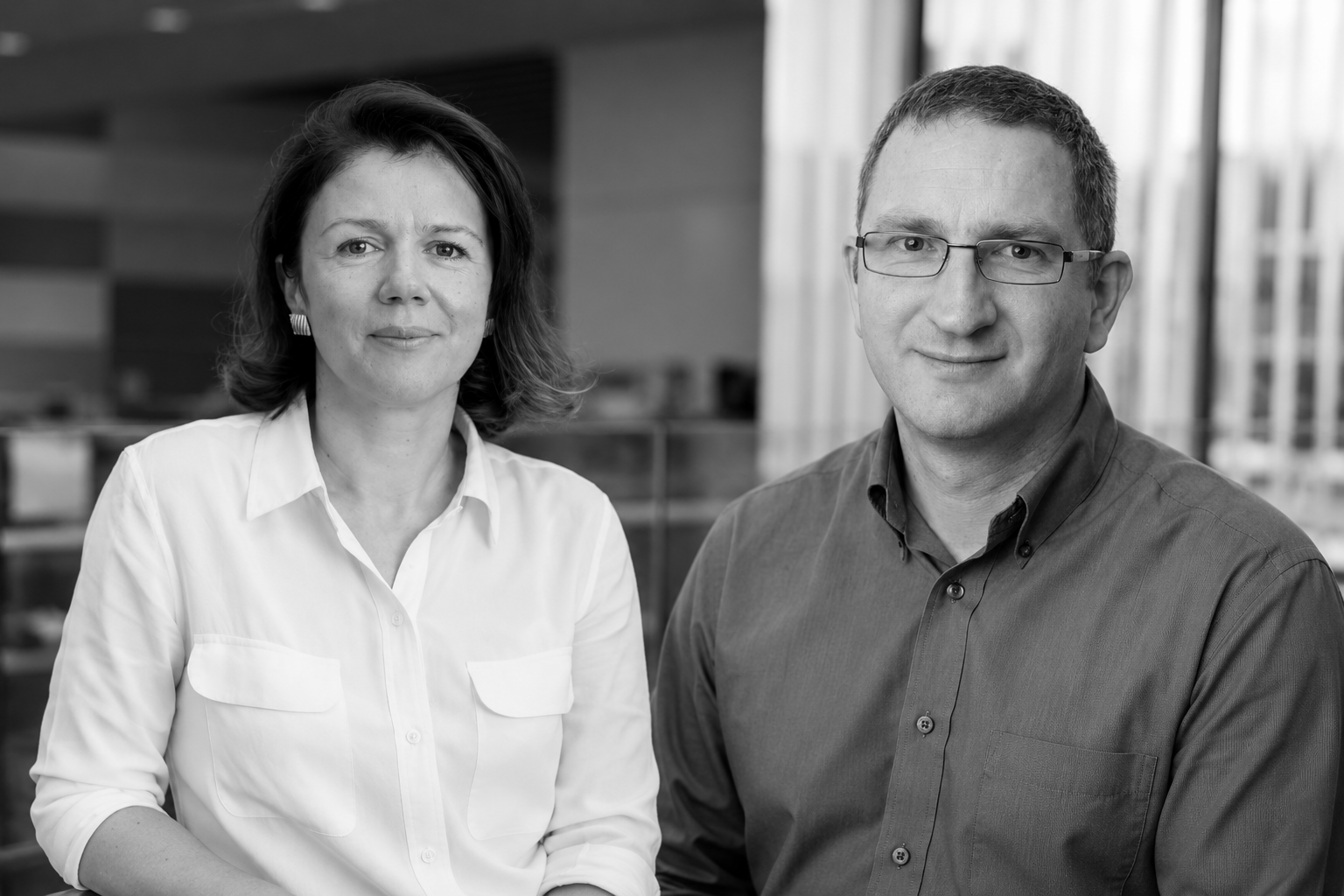
Election to the Academy recognises excellence in science, leadership and the translation of research into real-world impact. This year we’re celebrating two such additions to the Academy – Professor Samra Turajlić and Professor Tim Somervaille of the Cancer Research UK Manchester Institute.
The Cancer Research UK Manchester Institute is a part of the University of Manchester core funded by Cancer Research UK. It forms the discovery engine within the Manchester Cancer Research Centre in which world-class, basic, translational and clinical research takes place to save lives from cancer.
Professor Samra Turajlić
Professor Turajlić is Director of the Cancer Research UK Manchester Institute and leader of the Institute’s Cancer Dynamics group. She has been elected to the Academy for her leadership in cancer medicine and genomics, and spearheading of major national and international research programmes to better understand tumour evolution and improve cancer treatment. These include large-scale studies of renal cancer and multiomic approaches to immunotherapy, all undertaken alongside her work as a clinician at the Royal Marsden and Christie hospitals. Within Manchester she is now steering the future of integrated basic, translational, and clinical research initiatives in the pursuit of fresh innovations to save lives from cancer.
“I share this moving recognition with the extraordinary scientists that have passed through my research groups and my many collaborators without which our work would never have been possible. The rapid advances we’re seeing in solutions to cancer are enabled by and depend on a culture of deep collaboration between academics, clinicians, technological specialists and industry. It is in this collaborative cross-disciplinary research both in Manchester and across the many sectors represented in within the Academy of Medical Sciences, where our shared knowledge and expertise can be applied to save lives.”
Professor Tim Somervaille
Professor Somervaille’s election to the Academy recognises his leadership in blood cancer research and clinical practice as Senior Group Leader at the Cancer Research UK Manchester Institute’s Leukaemia Biology group, Professor of Haematological Oncology at The University of Manchester and Honorary Consultant Haematologist at The Christie NHS Foundation Trust. His work has advanced understanding of the molecular mechanisms driving myeloid blood cancers and broadened treatment options through a sustained commitment to translating biological discoveries into innovative therapies and clinical trials.
“This recognition by the Academy of Medical Sciences reflects the extraordinary dedication of everyone who has worked alongside me over the years — the scientists, clinicians and, above all, the patients who make our research possible and meaningful. I am also deeply grateful to the many members of the public who have supported Cancer Research UK and Blood Cancer UK, whose funding has underpinned my research throughout my career. In Manchester, everything we do is ultimately about finding better treatments and improving outcomes for patients, and I have been proud to see my team contribute both to advances in our understanding of leukaemia and myeloproliferative neoplasms, and to the development of new therapeutic approaches. Within the Academy of Medical Sciences, I hope to support a strong culture of collaboration and translation, and to help champion the next generation of researchers who will build on these discoveries in ways we cannot yet imagine.”
Recognition for Manchester
This substantial recognition reflects not only Samra and Tim’s achievements, but also the contributions of Institute staff across research groups, facilities and operational teams. The collaborative environment within the Institute plays an essential role in enabling the research that ultimately benefits patients and makes achievements such as this possible.
The Cancer Research UK Manchester Institute comprises of 14 research groups investigating solutions to an array of cancer challenges, and 11 core facilities in which cutting edge research technologies are being applied to innovate and improve cancer treatments.
“The University of Manchester is a public research university in Manchester, England. The main campus is south of Manchester City Centre on Oxford Road.”
Please visit the firm link to site