


Transcript
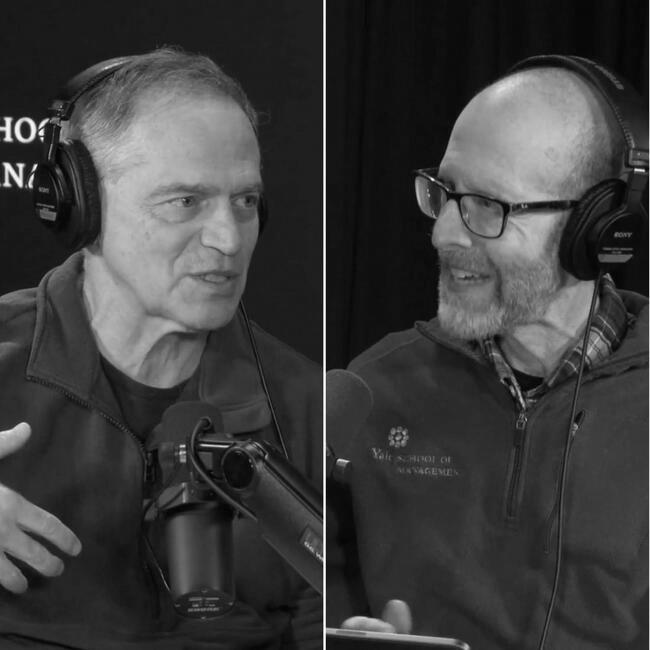
Harlan Krumholz: Welcome to Health & Veritas. I’m Harlan Krumholz.
Howard Forman: And I’m Howie Forman. We’re physicians and professors at Yale University, and we’re trying to get close to the truth about health and healthcare. Ordinarily, we have a guest. Once a month we go into the studio, we catch up on the incredible volume of news around us. This week we are taping a little bit early because I have the good fortune to go on to see my daughter graduate, and I appreciate everyone accommodating me, but why don’t you kick us off?
Harlan Krumholz: I want to see my daughter graduate.
Howard Forman: Is that right? We both have graduations this week?
Harlan Krumholz: We have graduations this week.
Howard Forman: Wow.
Harlan Krumholz: We’re in sync.
Howard Forman: Different levels. Your daughter—
Harlan Krumholz: Graduating from medical school.
Howard Forman: Medical school. Congratulations. Another Dr. Krumholz.
Harlan Krumholz: Another Dr. Krumholz.
Howard Forman: That’s amazing.
Harlan Krumholz: She’s amazing and happy to be there. Howie, I want you to teach me something. So you got 100,000 views on Instagram. I mean, I just think it’s that when people look at you, they trust you. And somehow you’re exuding this. You’ve become a master at communications.
Howard Forman: Look, I think we’re micro influencers at best, but I do think the nice thing, the feedback I get on Instagram and TikTok for the most part from people, is that they know that I’m not trying to sell anything and I’m also not trying to paint anything of an extreme picture. I try to give the balance to it. You do as well, but I’ve been trying to do a lot of these public health posts, and hantavirus, influenza, measles have been topics that people I think thirst for knowledge and they want knowledge to be understandable by them, for them to make their own decisions, not for me to tell them what they should understand.
Harlan Krumholz: Yeah. I think what’s great, you do the homework. You spend the time. And I think what’s interesting is on X, there’s a valence to your—
Howard Forman: Oh, yeah, my X I’m political.
Harlan Krumholz: You’re a political person.
Howard Forman: Absolutely.
Harlan Krumholz: But you’re able to then move over to other venues and actually just educate, just educate.
Howard Forman: Absolutely. And look, X is extremely polarized. The nice thing about LinkedIn, Instagram, TikTok is that while there are polarities among the people, there’s a fairly, at least as far as I could tell, an equal number on both extremes. And I’m not appealing to people on the extremes, or at least I don’t think I am, appealing to people who want to understand things and want to get the facts right.
Harlan Krumholz: Yeah. When I hear people say they want to get off social media, that they’ve had it, they’re disgusted with it, I think that they’re missing an opportunity because still there is a large audience out there. People are looking for credible information. And even if you get a thousand, two thousand, I mean, those are people that you wouldn’t speak to otherwise.
Howard Forman: That’s how I look at it.
Harlan Krumholz: It ends up being something that is useful. And I think there can be parts that you feel disappointed in that it’s not being as much… it couldn’t be what it could be, but you can still be a force for good, and why not use the vehicle if it’s still available?
Howard Forman: I really feel strongly about it. I just talked to someone this past week about exactly that, that even when I’m replying to people who may have an extreme view, my goal is not to change their extreme view. My goal is to make sure that anybody reading their extreme view knows there’s another viewpoint.
Harlan Krumholz: That’s a good point. I hadn’t thought about it like that. No, that’s good. I wanted to talk to you about something that I’ve been experiencing lately that I’ve found to be very interesting. Even as deep as I am in AI and all the kind of technology, I’m very technology-average, trying to look at the next new thing. I was a little slow to pick up Claude code, cursor, codex.
Howard Forman: No, I don’t use that at all. I know what it is, vaguely.
Harlan Krumholz: It is insane, Howie. It’s insane. So I was visiting my son who’s, he’s a PhD economist, works Department of Justice in antitrust, but in his—
Howard Forman: Apple didn’t fall far from the tree.
Harlan Krumholz: No, no, no, no. But I mean, in his free time, believe it or not, he still is working on some projects. So we were visiting him, and he was showing me the Claude code. And of course I knew exactly what it could do. The large language models have a chat function where you’re able to either talk or write and you get questions answered.
Howard Forman: And 90% of what I use Claude for is that.
Harlan Krumholz: Most of our audience is in that game. The Claude code enables you to do projects and to produce actions in ways that, you know, it’s very different from that. And the reason I’m bringing it up is, so I started going deep into it. I’ve done research projects in the last month that would have taken me six months. And I’ll just give you an example. I began as sort of little hobby projects. As you know, I’m editor of JACC, I’m editor of the journal, and I was just curious about some of the issues around citation trends and comparative performance of different journals and what’s driving the performance, where the citations are ending up, what’s really responsible for it, how different sources of information for those citations. I mean, it’s a little hobby project. I don’t code in Python. I mean, I’ve always said I probably should learn Python. I just haven’t had the time.
Howard Forman: Yeah. I don’t know how to code in anything.
Harlan Krumholz: So with this, I’m able to architect a project, fetch hundreds of thousands of records that are publicly available, pull them into a database, organize them, process them, analyze them, and produce an output and a report that is pretty damn good. And like I said, basically in a weekend that would have taken me months just trying to figure out a student who would help me fetch all these records, organize them, the processing, the coding. I’m only signaling this because there’s a really interesting conversation going on now, which is that it used to be research. Now, I’m talking particularly about secondary data analysis, not prospective experimentation, but secondary data analysis that you would have to make an investment in doing this. Now, actually the friction’s been released. I mean, your ability to move quickly and now it’s just, if you know English, you can execute these projects. Now it’s better if you have a little bit of understanding of study design and how you set this up.
Howard Forman: I think a lot better.
Harlan Krumholz: But it’s changing everything, Howie. So then one of the issues that’s coming up is, as people are now able to do research at scale so much faster, there’s a whole nother thing going on where AI is actually doing the research, but this is you, instead of having to code, being able to use a program that’s doing the code. And like I said, I’m deep in this. I’ve had a lot of cool projects. I’ve developed websites and apps now. I always wanted to learn how to do that. I do it easily now.
Howard Forman: Wow.
Harlan Krumholz: And where’s this going? So on medRxiv, one of the things we’re confronting is—
Howard Forman: And again, that’s the platform that you co-founded with Joe Ross and others that allows people to submit manuscripts before they’ve been peer-reviewed so that the public can have access to them.
Harlan Krumholz: That’s right. So it’s a way to rapidly post your work for comment even as it’s going through peer review or it hasn’t been published yet. And it came from the fact that physicists used to take papers they were working on and tape them to the front doors of their offices. And when people came by, their colleagues came by, they would sometimes grab it, write some comments on it, put it back on the door. As technology evolved, the physicist who started this with medRxiv said, “We can automate this so that essentially, virtually, people can pull down your stuff, comment on it, and put it up.”
And then it became at scale. The innovation Joe and I did was bring this to clinical medicine. Let’s put this up and put some guardrails to keep it safe. But my point is that we’re starting to see large numbers of manuscripts submitted from groups and the questions, “Is this AI-generated? Are these individual-generated?” The volume is going to be great. How are we even going to organize this? Can we handle the volume? And what I’ve said to the group is, “Just because someone’s submitting a lot doesn’t mean it’s just AI, because individuals involved in the research are able to produce such volumes now.”
Howard Forman: If somebody submitted an article to you right now at JACC and said that Claude was used for coding, etc., etc., and also helped with the first draft and several subsequent drafts of the manuscript such that I would consider Claude to have been a collaborator on this paper, how would you respond to that?
Harlan Krumholz: Yeah. So we’ve actually taken a different view than a lot of journals. First of all, we don’t require people to disclose the use of AI. I say that because I think it’s a tool and honestly, I think if you’re not doing what you just described, you’re going to be left behind.
Howard Forman: That’s a great point. That’s what I’m getting at.
Harlan Krumholz: So this is where people are saying, “Well, where’d the idea come from? Did Claude help with the idea?” Even NIH on the grants is saying, “Well, you shouldn’t be using AI to generate the ideas.” And I’m going like, “Are you nuts?”
Howard Forman: Why not?
Harlan Krumholz: Why not? I mean, it’s still, somebody has to take responsibility for the product you’re producing.
Howard Forman: That’s the key point. That’s the key point, that somebody that has some track record has to be able to take responsibility for the output. I mean, if somebody submitted to you an amazing paper and it was written by a 12th grader alone, how would you deal with that?
Harlan Krumholz: Well, I mean, these are the vexing issues that are coming. What I’ve said to our editors is, “Just judge what’s in front of you.” And we ought to do that because we know that there’s implicit bias about names you recognize or famous people or things like that. And I’ve said, “What we have to be as disciplined to say, evaluate for the quality of what’s in front of you. If that works, then we should proceed with it, and we shouldn’t be looking at who the person is.” But this is interesting because on medRxiv, there were high school students posting. At one point, people were saying, “We shouldn’t be taking those posts.” And I was saying, “Well, why not?”
Howard Forman: I think that’s right. You have to continue to have a strong peer review process, and it may require at some point for us to have some slightly greater guardrails in terms of reproducibility to be able to prove that what’s being submitted actually could be done.
Harlan Krumholz: So here’s my idea about this. The past, and even on our promotion committees, I’ve heard people say this at the promotion committee, that to be an associate, you have to have 40 to 60 papers or some number of papers. I think that that’s ridiculous.
Howard Forman: I agree.
Harlan Krumholz: It shouldn’t be about that. I think this is going to lower the bar to be able to produce papers, actually papers that are worthy of being published. I’m not talking about AI slop, I’m talking about actually good papers. But you know what we should be promoting on? Impact.
Howard Forman: Yeah, absolutely.
Harlan Krumholz: Somebody should be able to say, “What has my work produced?” And so it’s not about numbers, it’s not about… anyway, that’s how I think we should go. It’s going to be about impact.
Howard Forman: That’s a nice lead-in to the first segment I want to talk about, I think, which is an impact paper that was in The New England Journal of Medicine last week. It asks some really important questions at the frontier of stroke treatment. We know that mechanical thrombectomy, that’s threading a catheter into the brain to physically remove a clot, is one of the most effective acute interventions in all of medicine for large vessel occlusion strokes. But what about medium vessel occlusions? These are clots in somewhat smaller, more distal arteries, still causing strokes, real strokes, but in vessels where the evidence has been much murkier. And by the way, I think this is broadly done, we just don’t know what the outcomes are. So here we now have a randomized trial at 48 centers in China, eligible patients presented within 24 hours with a moderate to severe stroke score.
It’s the NIHSS score of six or higher due to a medium vessel occlusion and were randomized to thrombectomy plus medical management or medical management alone. Among 563 patients, functional independence at 90 days was 58.6% in the thrombectomy group versus 46.6% in the control group. That was a statistically significant shift of about 1.24, an adjusted rate ratio of 1.24. That’s clinically meaningful. Symptomatic intracranial hemorrhage on the other hand was 4.7% versus 2% in the non-surgical group, and 90-day mortality was about the same. So just to sum it up, slightly greater risk of hemorrhage, same mortality, better functional outcomes in the treated group. There have been other medium vessel occlusion trials with more mixed results. So this adds to an evolving picture. The key here may be patient selection by requiring moderate to severe deficits. This trial focused on exactly the patients who have the most to gain.
To put this in broader context, the stroke field has been on a remarkable run. And let me just say, I’ve said this many times, it is built on the shoulders of so many accomplishments in cardiovascular health, including a lot of the work that you have done on door-to-balloon time. The 2015 thrombectomy trials for large vessel occlusion were transformative. Then came extended time windows using perfusion imaging, better bridging thrombolysis data, and now we’re moving further down the vascular tree and that trajectory, systematically asking “Who else can we help?” is worth stepping back to appreciate. Thirty years ago, acute stroke was essentially untreatable. Today we have highly effective reperfusion strategies, and we keep expanding who benefits from them. Medium vessel occlusions represent hundreds of thousands of strokes a year. If this result holds up and generalizes, that’s a lot of people walking out of the hospital who otherwise might not have. That’s progress.
Harlan Krumholz: Yeah, that’s a really good point, Howie. And I think it also points to this thing that we’re often talking about, which is the faster someone comes in, the more likely they’re going to be able to—
Howard Forman: This is your work. I mean, you may not have been the first person, in fact, Eugene Braunwald, who just recently died, and I think who was a mentor to you and so many others, probably started that thinking, but it was your work that opened the doors to people thinking about how fast can we make this happen and what is stopping us from doing it fast?
Harlan Krumholz: Yeah. And also when I hear you talk about that, it makes me wonder, are we being equitable in the distribution of this technology? Because it does require rapid reflexes, people moving, being able to do it. But it’s good news when we’re getting evidence that we can actually help even more people.
Howard Forman: I think it’s a huge advancement that we continue to make. And I think back when my grandmother had a stroke 42 years ago, it was just a death sentence for her. It was a major stroke, and I think now it’s probably a treatable stroke.
Harlan Krumholz: Great. I wanted to just jump on another topic. I saw an interesting newsletter from a guy by the name of Paul Keckley. Paul used to be at Deloitte. He’s a big thinker about healthcare and fashions himself as a bit of a futurist. And he was making a very interesting argument. His thesis was that as we move on, the future of healthcare may be shaped less by traditional insiders—hospitals, doctors, insurers, academic professional sites—than by forces outside of medicine. And you and I have seen that. Sometimes we’ve said we think that academic medicine, for example, has not moved forward to provide the leadership about what’s next. But what he’s saying is that if we look around, what we’re seeing is that it really is that technology, capital markets, employers, regulators, consumers that are driving the current changes that we’re seeing in healthcare and that people with the most leverage over healthcare future may increasingly be people who aren’t providing the care.
And that’s a change. That’s something that’s different before. And then he goes on to really talk about how the technology companies are building tools that are reshaping diagnosis, documentation, billing, scheduling, patient communication, clinical decision-making. Private capital funding is really forcing efforts into new models of care and that employers, increasingly frustrated by the current situation and the amount of money that it’s really costing them, even though they’re getting the tax benefit, are finding this to be ultimately unaffordable and that their employees are finding it confusing and hard to navigate. So I just thought this was an interesting… I wonder what your take is on this.
Howard Forman: I’m a little bit at odds with that in the sense that I still see fundamental worsening of health in our country from our diet, from lack of awareness of illnesses that are present and quite frankly, can generally only be diagnosed in a doctor’s office. And so I still think that healthcare per se is central to all of this, but I do think the one thing that gives me a little bit of comfort right now is the ability, the democratization, as we’ve talked about it, of pre-healthcare access has grown enormous. It used to be if you knew a doctor, you could get advice about whether you should go into the hospital or you can wait, you can do this or you can do that. I think consumers are increasingly wanting to take control of their own healthcare, and I think the systems that are evolving around them are going to allow them to do that.
Harlan Krumholz: Yeah. I think the question for me is whether or not we’re going to continue on this same path. I mean, in a way, I don’t mind that there’s a lot of efforts by outsiders to try to disrupt a system that—
Howard Forman: I don’t either.
Harlan Krumholz: …needs to be improved. But I think the question will be, if we stay in a private market for healthcare in this country, then I think it will be shaped by these forces. And the question will be, are we going to pivot to a Medicare for All to some kind of… It’s a funny thing, single payer freaks people out. They say Medicare for All, it doesn’t freak them out the same way. And I saw AOC talking about this the other day trying to… again, she’s on a mission for this Medicare for All. I think it’s funny, but most people like Medicare.
Howard Forman: Oh, yeah. Look, I think that if you could plop the National Health Service of England into the United States in any possible version or plop Medicare, fee-for-service Medicare in any version across the United States, I think we’d all be better off in so many ways.
Harlan Krumholz: Well, but those are very different. By the way, people in the UK are calling NHS a nightmare right now. I mean, it’s in big trouble and—
Howard Forman: You look at the outcomes, you look at the breadth of access and you look at the equity issues. They’re so far ahead of us in that way. I know it must be very frustrating.
Harlan Krumholz: But there’s a lot of unhappiness by the docs and patients.
Howard Forman: And that’s the point in the United States is that our stakeholders are enormously powerful, whether it’s the hospitals, the medical device industry, pharmaceutical industry, the physicians, all of them have such enormous stakes in this right now that you try to upset anybody and the backlash is enormous. And I’m going to bring that up a little bit later in the podcast as well.
Harlan Krumholz: Yeah. And I think the issue about the Medicare for All is, what if you’re on the hospital side, what you’d say is, “We’re being floated by commercial insurer rates.” And if everything defaulted to what Medicare… it will definitely change what we’re doing. It would require a big difference.
Howard Forman: Yep.
Harlan Krumholz: All right. What you got next?
Howard Forman: So this is a little controversial, maybe a lot controversial.
Harlan Krumholz: All right. I can’t wait.
Howard Forman: Yeah, I know. And it ties into my last segment. I want to pick up on something that’s been getting a lot of attention this month. Our Yale colleague, Zack Cooper, published a piece in The New York Times arguing that hospitals are the primary villain in American healthcare inflation, or at least a big villain. And look, he is a serious economist doing serious work, and a lot of his numbers are just right. Hospital prices have risen twice as fast as drug prices, three times faster than overall inflation over the last 25 years. That’s real. It matters. But here’s where I think the argument has a gap, and I think it’s a big one. When Zack compares hospital prices today to hospital prices 20 or 30 years ago, he’s essentially comparing two different products and calling them the same thing, and that’s a problem. Think about what a hospital actually does now that it couldn’t do in 2000.
Patient arrives having a stroke; we just talked about this. We can now intervene in ways that prevent permanent paralysis. Someone comes in with a massive heart attack. We can open that artery in minutes. We perform complex cancer surgeries and procedures that might have been inoperable a generation ago, often with shorter stays and better outcomes. These aren’t marginal improvements. These are categorically different services. The analogy I keep coming back to is cars. Car prices have also risen faster than inflation over the last several decades, but today’s car is safer, more fuel-efficient, has features that didn’t exist, and keeps you alive in crashes that previously would have killed you.
While some people think cars are less affordable, others rightly note that there’s genuine increased value for these newer cars. Now, and this is important. None of this means hospital consolidation and market power aren’t real problems. They are. Price transparency gaps are real. Anti-competitive mergers are real. Those deserve the scrutiny that Zack is bringing, but conflating price increases with pure profiteering without accounting for what you’re actually buying isn’t the full picture. Before we regulate hospital prices, we owe it to patients to ask how much of that increase reflects innovation and how much reflects market failure. Those require very different policy responses.
Harlan Krumholz: But if you’re going to start rising at rates so much greater than inflation, do you need to show that your outcomes are improving?
Howard Forman: I think you do, but I think that we also should be very careful to understand that there’s a counterfactual there. What would outcomes have looked like if we didn’t have the change in price or the change in product? Because let’s face it, the population has been getting sicker in a lot of ways.
Harlan Krumholz: So let me ask you this. I mean, again, you brought this up already when you talked about UK. So when you compare our spend versus other people’s spend, I mean, we’re way out there.
Howard Forman: Way out there.
Harlan Krumholz: So where’s the fat? I mean, because it’s not—
Howard Forman: Oh, I think everybody’s—
Harlan Krumholz: … [inaudible 00:23:02] better outcomes. So where do you think it is?
Howard Forman: I think it’s everybody’s to blame. I absolutely do. I think—
Harlan Krumholz: Well, let’s not even use that word blame, but where is the excess that’s at the margin not producing benefit?
Howard Forman: The general point that Zack makes, which goes back to Uwe Reinhardt’s point, “It’s the prices, stupid,” I think was the phrase. It’s still the prices. The prices of almost everything in our country are higher. Some of it is because we have earlier access to things. Some of it is because we are quicker to put a pacemaker or a defibrillator into somebody. Some of it is because… I’ll give you an example for me, very personal example, but I’m happy to talk about it. I had AFib starting in 1990, 36 years ago. At the time, the only treatment for AFib was anticoagulation and rate control drugs. And I was able to manage my AFib for well over a decade after that.
By 2012 was the first time that a cardiologist said to me, “We should do an ablation on you. We could cure this.” And I wasn’t ready for it, and I stayed on medication for the next, like, 11 or 12 years. As you know, I had this treated late in ’24.
Harlan Krumholz: So Howie, just to be clear for our audience, what is ablation?
Howard Forman: So AFib ablation is when they feed catheters into your heart and try to eradicate foci that are creating atrial fibrillation and propagating a bad arrhythmia. And in my case, and in most people’s cases, it worked. Now, the ablation was something like $70,000.
Harlan Krumholz: It was $70,000.
Howard Forman: Something in that range. Yeah.
Harlan Krumholz: A day in the hospital.
Howard Forman: A day in the hospital.
Harlan Krumholz: Did you stay overnight?
Howard Forman: I did, but you didn’t have to. Plus the procedure plus the testing plus the CTB4 and the payment to the cardiologist, about $70,000, I believe. The medication I was on for the 12 years leading up to that was probably about $200 a year. Why did I finally give in? Because the medication was starting to lose its efficacy. So I had exhausted it. A lot of people said to me, “Why did you wait so long?” Now, if you’re in the UK, they might actually say to you, “You’re going to wait. We want to use medication until it doesn’t work, and then we might consider ablation.” In the United States, ablation is an early option for people. That’s an example of where we are willing to spend more to make the patient feel better, but where outcome is not necessarily better.
Harlan Krumholz: Yeah. I think one of the brilliant things that Zack’s done, and I really do want to salute him in, and he’s put together a lab now for looking at affordability of care, is to say that there are real societal costs for our large bill in healthcare, and that that affects jobs, wages—
Howard Forman: Education spending.
Harlan Krumholz: … everything. So I think the nice thing that Zach’s doing is showing these trade-offs with the impact.
Howard Forman: Oh, his work in general, people should absolutely look at it. I’m not diminishing his work. All I’m saying is, I think, and perhaps it’s because it’s an op-ed and you have to be somewhat reductive. I think it should be highlighted for people that if you want to blame hospitals, at least look at their amazing progress they’ve made over these decades.
Harlan Krumholz: Great. I want to just pivot here a little bit and talk about something that I think is becoming this major shift. I’m talking about what Keckley said was this idea of these outside forces and they’re coming in a lot of different ways. So take a look at the wearables now. So for a year the wearables were really about fitness, sleep, heart rate, stuff like that. And maybe they would alert you to something going on.
Howard Forman: And in full disclosure, you have worn an Oura ring.
Harlan Krumholz: Oura ring, WHOOP.
Howard Forman: And I wear an Apple Watch.
Harlan Krumholz: I wear an Apple Watch. I tried them out. I’ve tried all of them. I’m interested in all—
Howard Forman: You’re a techie.
Harlan Krumholz: I’m avid toward it. Well, I want to learn about it. I feel like I need to be educated about. Actually, I feel it’s part of my job if I’m going to talk about it that I’ve actually used this stuff.
Howard Forman: Oh, I love that you do. That’s why I ask you.
Harlan Krumholz: But what I’m saying is that it’s interesting this wearable fitness side is starting to blur with healthcare. And I don’t know if you saw this, but WHOOP, who makes the band that people wear that is a fitness band, has just announced that it’s adding an on-demand video visits. So they’re doing telehealth now, and they’re also syncing with the EHR. By the way, everybody’s thinking of the EHR.
Howard Forman: Everybody.
Harlan Krumholz: I know I was onto this early, but—
Howard Forman: You were very early on this.
Harlan Krumholz: Early, but I, maybe too early, but they’re syncing with your EHRs. They’re now getting into the medical side, not just about your metrics, but it’s saying what’s going on. It’s going beyond that. And I don’t know if you saw that ChatGPT said we can dig in. They’ve got ChatGPT Health, but it also can dig into all of your files, all of your information and say we can start to help.
This is very different than what the old wearable thing was about. And it’s not just WHOOP, it’s all of them. By the way, Fitbit’s just come out with a $99 WHOOP-like analog. It’s going to be very interesting that competition’s going to heat up. But there was also this wonderful essay by Myoung Cha who used to work at Apple Health, is now Verily, who was reflecting on Tim Cook’s famous 2019 statement where he said that Apple’s greatest contribution to humanity would be in health. And Cha says in this blog that at the time people inside Apple were not entirely sure what Cook meant, that the iPhone was already one of the most consequential consumer products ever. How could health become a bigger contribution? And what Cha argues was that Cook was not saying Apple would become a healthcare company in the usual sense and Apple didn’t try to become a hospital and insurer, pharmacy, PBM [pharmacy benefit manager].
By the way, Amazon and others, as you know, acquiring companies that are doing that. It did something different. It built a device people were willing to wear and an operating system that could organize the health data and created a trusted consumer relationship at enormous scale, opening the gates toward people now being able to interact with things like WHOOP or Amazon or their own healthcare system. And I think what’s interesting is this: Apple wasn’t trying to own healthcare, it was trying to help strengthen its ecosystem, but these other technology companies now are actually moving in, Amazon with One Medical, WHOOP now saying they’re going to do televisits. I don’t think Google’s probably, may not be far behind. There’s going to be this blurring, and again, getting back to this thesis that Keckley had, and I think it’s what are hospitals going to do? How is this going to change? And there’s one other thing, which you may have seen that Mass General in Boston is trying to have a relationship with CVS and MinuteClinics and—
Howard Forman: They got a little backlash on that.
Harlan Krumholz: They got a little backlash on because the state of Massachusetts is going to increase cost. But again, it’s this blurring of, CVS isn’t a technology company, but it is different than the traditional healthcare systems. Now the MinuteClinics become part of Mass General Brigham and it’s a very interesting change.
Howard Forman: The one thing I worry about with this, there’s probably a lot of things to worry, but the thing that keeps coming back to me with Amazon and with others is are they truly making this accessible for everybody or is this going to be picking off the commercial cash patients who can afford these things, leaving those without resources to have to fend for themselves going to community health centers and so on rather than having a video visit or so on. And I hope that these extremely well-funded companies will actually consider that seriously as they go through the process.
Harlan Krumholz: Yeah. But even our traditional healthcare systems have several tiers depending on what your resources are and who you know.
Howard Forman: That’s right. So a little over two years ago on this podcast, I talked about the public health crisis of e-cigarette and vaping use, particularly among adolescents and the associated lung injuries we were seeing in young people, that’s EVALI or “e-cigarette- or vaping use-associated lung injury.” We talked about nearly 2,800 hospitalizations, 68 deaths, median age of just 24. And I ended that segment with a warning. Even if Juul collapsed, the threat would remain: new companies, same playbook. Well, here we are. We saw two senior federal health officials resign in consecutive days over flavored e-cigarettes. Let me walk you through what happened. On May 6th, not that long ago, the FDA authorized fruit flavored vaping products for the first time in the agency’s history. The products are made by a Los Angeles company called Glass Incorporated, and they come in mango and blueberry sold under the names Gold and Sapphire, which tells you something about how eager the company was to distance itself from what those flavors actually are.
The approval came only after reports that President Trump personally pressured FDA Commissioner Marty Makary to sign off, pressure Makary had reportedly been resisting for weeks. According to The Wall Street Journal, Trump’s advisors had told him that Makary was blocking the vaping agenda and that he was a problem for the administration. On May 12th, Makary resigned. One source familiar with the matter told CBS News that Makary didn’t want to approve the flavored varieties but had been forced to by other members of the administration and chose to resign rather than publicly defend the position he didn’t support. Then the very next day, Rich Danker, RFK Jr.’s chief spokesperson at HHS also resigned. In his resignation letter, Danker wrote that senior HHS officials had sought FDA marketing approval of e-cigarette flavors that would appeal to children and expose them to nicotine addiction, potential lung damage, and higher risk of cancer. As of this week, four senior public health positions are now simultaneously vacant. Surgeon General, CDC director, FDA commissioner, and the assistant secretary for public affairs at HHS.
Now, the FDA’s defense of this decision rests on an age verification system. The Glass products require Bluetooth connection to a smartphone with a verified ID for users over 21. I’ll let you decide how reassured you are by that. Flavors called mango and blueberry, even if they’re being marketed under gemstone names, have one well-documented track record with teenagers. We’ve lived through it. Here’s the deeper irony. This is an administration that ran explicitly on making America healthy again, and yet it just overruled its own FDA commissioner accepted the resignation of its own HHS communications chief and opened the door to fruit-flavored nicotine products following a lunch with tobacco executives at the President’s golf club. That launch on May 3rd in Jupiter, Florida, featured tobacco executives and lobbyists urging the president to intervene in the FDA’s approach to vaping. Less than a week later, the approval came. I said two years ago that the threats would remain even if Juul went out of business. Same company, same flavors, same kids.
Harlan Krumholz: A lot to unpack here. We’re recording this a little bit ahead of our release, so this represents what we know a couple of days before the release. Did he resign? Or was he fired?
Howard Forman: He officially resigned.
Harlan Krumholz: Was there a letter? Has he released a letter of resignation?
Howard Forman: That’s a good question. I don’t know. I know that Trump said he accepted his resignation, but…
Harlan Krumholz: On Jeremy Faust’s blog today, what I saw was that still there’s been no communication, but his picture came down.
Howard Forman: Yeah.
Harlan Krumholz: So I’m just saying I’m only just trying to fact-check you a little bit.
Howard Forman: No, no, no. I’m happy for you to.
Harlan Krumholz: You’re saying he resigned on principle. What I read in the news was Trump decided to fire him and didn’t actually fire him and then actually he left and his picture’s down.
Howard Forman: I totally get what you’re saying.
Harlan Krumholz: I’m only just saying.
Howard Forman: I agree. I like that you’re saying that. I do believe that the publicly released information suggests he resigned, but we don’t know.
Harlan Krumholz: And by the way, while he was commissioner, these were approved.
Howard Forman: Absolutely.
Harlan Krumholz: So I’m just saying it wasn’t that he said, “I’m not going to do it. I’ve got to fire you in order to get these approved.”
Howard Forman: Let’s be very—
Harlan Krumholz: He was commissioner when they were approved.
Howard Forman: Let’s be very clear. I am not going to defend this man.
Harlan Krumholz: No, no, but I’m just trying to—
Howard Forman: This man and I did not have a good relationship.
Harlan Krumholz: No, no. And I’m not trying to undermine him either. I’m just trying to say, I think that—
Howard Forman: No, the facts will come out eventually.
Harlan Krumholz: … whatever pressure from the administration to approve these while he was commissioner succeeded.
Howard Forman: That’s right. That’s right.
Harlan Krumholz: And so that was one thing.
Howard Forman: I shouldn’t martyrize him.
Harlan Krumholz: Within days there were leaks about the decision had been made to fire him, and then several days later, he was no longer commissioner.
Howard Forman: Right, right.
Harlan Krumholz: And it was reported as a resignation, but unlike other people who would, like, pen a letter or give it. So it’s murky exactly what happened.
Howard Forman: And I think I’ll let you say it, but there’s a lot of press on him leaving there right now.
Harlan Krumholz: Yeah. And I mean, I know him. We’ll see what happens to the next commissioner. It’s a very challenging situation because there’s lots of people with strong feelings about what should happen at the FDA. The FDA is not being allowed to have the usual independence that it has had.
Howard Forman: So that’s what I want to say is that I think that if you’re going to accept a position in this administration, you have to be willing to resign when you feel that on principle you can’t support them anymore. And you otherwise have to understand that the administration itself is extremely conflicted on science. They use science when it helps them. They oppose science—
Harlan Krumholz: But I also use “independence” with quotation marks. Every administration has exerted some pressure on the FDA.
Howard Forman: Correct.
Harlan Krumholz: And if you talk to every FDA commissioner, they are always tangling with the administration. It’s just a question of, is the personality stronger in the presidency now and the forces stronger that are pushing it. But that’s one thing. And then the other thing is I just wonder what you think about this, Howie. I mean, is vaping more dangerous than alcohol? Because there’s an interesting series on Stat News this week, which just reminds us the toll of alcohol on health in our society still.
Howard Forman: Yeah. Look, I don’t want to compare beds and I do think that vaping has a role in getting people off of cigarettes and that’s why the flavor of vaping is less of concern to me than the unflavored e-cigarettes that people can use. I know enough people who have done vaping where they’re not drinking, so maybe it’s a substitute.
Harlan Krumholz: No, I’m not saying you do one in substitute, but I’m just saying in this society we allow people to make choices about alcohol right now.
Howard Forman: Not under the age of 18.
Harlan Krumholz: So then you’re asking can we—
Howard Forman: This is really about those under the age of 21 for the e-cigarettes.
Harlan Krumholz: Yeah. But I’m saying, you’re saying that that’s part of the deal, that you’re not going to be able to purchase.
Howard Forman: No, but the concern is that this is so easily available that you can imagine that a 15-year-old will figure their way around this.
Harlan Krumholz: But that’s true with alcohol too.
Howard Forman: It is, but alcohol’s bulky. Alcohol, you have to carry… I mean, alcohol is not something you can stick in your pocket.
Harlan Krumholz: Somehow people figure it out.
Howard Forman: I know. I know.
Harlan Krumholz: So anyway, I’m just saying we’ve got to figure out in this society—
Howard Forman: That’s a good point.
Harlan Krumholz: Where are we exerting paternalism? Where are we allowing people to make choices? What risks are we allowing people to make? My thing is, have we made clear enough the risks? And also have we stopped preying—the problem with cigarettes, there are a lot of problems. I wish no one smoked, but they were preying on teenagers and often very young people, addicting them to the substance and putting them in a position where they had lifelong addiction to nicotine.
Howard Forman: That’s the concern with the flavored vapes.
Harlan Krumholz: And that’s why people should be old enough to make a choice. There’s one more thing, Howie. It goes with my theme that I’ve been watching this Hims & Hers. We’ve talked about it from time to time. And I think what fascinates me about this is just the entirely new model. I mean, it was one thing when they came out and said, “We want to talk about things that are stigmatized—erectile dysfunction, baldness, things like that.” And you can just get an easy prescription, but they’ve continued to kind of move out with the GLP-1s, the issue about the compounding. They are moving in a way that is enlarging their footprint in healthcare. Now they’re still losing money, but what’s interesting in the investor materials that they released this month—you know, this is this month—the company describes its mission as helping people “feel great through the power of better health.” And it says the platform is built to “democratize access to high-quality personalized care” through “frictionless customer experience.”
And I think that’s really interesting because you have to think like, where is it going to go? They have over 2 million people who are already using them and they address many of the things that frustrate people about traditional healthcare. But on the other hand, how much oversight are they providing? You come up and say, “I want a prescription for X, Y, or Z.” There’s not maybe a lot. Just so you know, so in the first quarter of 2026, they had, just to put a real number on it, 2.6 million subscribers up 9% from the prior year. Revenue about $600 million, up 4% over the year and the company raised its revenue guidance to between $2.8 billion and $3 billion for the entire year. So this isn’t a fringe phenomenon. It’s a large and growing consumer health business. It’s really competing in the end with the more traditional players. And the same quarter though interestingly showed how complicated and fragile this model can be.
Gross margin fell from 73% to 65%. They reported a net loss of about $92 million compared to net income of about $49 million a year ago. And that’s when the GLP-1s were really, I think, taking off. Their adjusted EBITDA fell from about $91 million to $44 million. And the company described a strategic shift in the U.S. weight loss offering as moving them around on this. And they’ve got now an agreement with Novo and so forth. But I think this gets to the heart of the story. They’re not just selling convenience. It’s operating at the intersection now of telehealth, pharmacy, compounding, branded medications, GLP-1 demand, regulation, consumer marketing data, artificial intelligence. I mean, this is a company that’s poised to put that pressure that Keckley talks about. Questions: What are the traditional medicine people going to do? Are we going to just give up this segment of the market? And as that continues to expand, will they get on a stronger foundation? Will it grow? Will something supersede it? I think it’s a really interesting area.
Howard Forman: Do we believe they’re doing anything on the diagnostic side, or are they basically dealing with people who come to them knowing what they want?
Harlan Krumholz: So very interesting, Howie. They are going toward the diagnostic, but also WHOOP, Oura. I don’t know. I mean, as a subscriber to these services, they are now offering me panels of medication, plus function, superpower. These wellness companies are coming out saying, “We can get you panels of testing. We can have AI explain it to you.” So again, you talked about, I wonder if Amazon’s going to be slicing off this market. These are at least I think the 2.6 million they’ve got, the people that WHOOP, Oura have. These are the well-insured—
Howard Forman: So far.
Harlan Krumholz: … probably at this stage, and they are carving that out from the traditional care ecosystem. And I think it’s going to be very interesting to see how this is going to play out.
Howard Forman: It’s going to create pressures in the market, and we’ll see how they respond.
Harlan Krumholz: And I don’t think it’s going to be long to say, “Well, do you want an MRI of your head? Do you want an MRI of your body?” And again, they’ve got docs, so you basically come in and say, “I’m willing to pay.” We already are seeing whole-body MRIs for wellness. So I think between the labs, the imaging, the meds, the telehealth, the AI, this is filling the void that people have felt for primary care. And again, you and I have talked about this. You want a primary care doctor in New Haven? Good luck. Well, six months if you’re lucky.
Howard Forman: If you’re lucky.
Harlan Krumholz: Good luck. So these are actually saying, “We’re going to fill this void and the people that they’re going to take are probably going to be people—”
Howard Forman: Totally. Yep. So let me just wrap us up with one last segment. I want to spend a few minutes on the surgeon general saga because I think it actually tells us something important about where public health and politics intersect now. We’re now on the third nominee of this term. The first, Janette Nesheiwat, had serious credential misrepresentation issues and that ended things quickly. The second, Casey Means, was a different kind of problem. She doesn’t currently have an active medical license and during her confirmation hearing, she declined to recommend flu measles or hepatitis B vaccines, wouldn’t rule out vaccines as a contributor to autism. In the end, even Senators Collins and Murkowski opposed her, effectively tanking her confirmation. Now we have Nicole Saphier. And look, her views are not my views, but I want to be honest about this. Elections have consequences, and the president gets to choose someone who reflects his agenda.
On that score, she does. She’s promoted key parts of the Make America Healthy Again (MAHA) agenda, removing food additives, cutting ultra-processed foods, encouraging exercise, all things that we generally agree with. She wrote a book in 2020 literally called Make America Healthy Again. This is not a mystery nomination, but she also brings some things that make her more confirmable and potentially more credible than her predecessors. She’s an actively licensed physician practicing at Memorial Sloan Kettering affiliate in New Jersey, which her predecessor simply wasn’t. She did both a residency and a fellowship after medical school, her licensure, active practice and training appear strong. And here’s something I find genuinely interesting from a historical viewpoint. If confirmed, Saphier would be the first radiologist ever to serve—
Harlan Krumholz: Oh my God. Are we going to have a radiologist?
Howard Forman: Can you imagine? When you look at the modern era, the stuff you use—
Harlan Krumholz: I thought you were going to be the first radiologist.
Howard Forman: Yeah, no, not a chance. All over the map, pediatric surgery, trauma surgery, preventive medicine, pediatrics, pediatric nephrology, internal medicine, anesthesiology, family medicine. Radiology has never been among them. The role is really about communication, credibility, not clinical practice. So I’m not sure it matters here, but it’s a notable distinction. Now, there is a legitimate concern. She tweeted a false claim that the CDC was preparing to mandate COVID vaccines for school children. That was debunked.
Harlan Krumholz: When?
Howard Forman: This was six years ago. She’s questioned the childhood vaccine schedule and called the evidence of linking vaccines to autism, limited and inconclusive, a characterization that puts her at odds with scientific consensus. And she sells her own line of herbal supplement drops that aren’t FDA-reviewed for effectiveness.
Harlan Krumholz: But she probably wouldn’t have been nominated if she didn’t say, “I’m not sure about autism.”
Howard Forman: That’s right. It’s something we should think about.
Harlan Krumholz: The administration wouldn’t have gone behind her.
Howard Forman: She also has shown a willingness to push back on the administration that neither of her predecessors would seem to have done. She called the administration’s first MAHA report pretty embarrassing after its cited studies that didn’t exist. She said Kennedy’s abrupt firing of his first CDC director was “a mess.” And she wrote an op-ed in The Wall Street Journal last year directly criticizing Kennedy’s vaccine autism claims saying, and I think this is the most important line, “When it comes to autism, we can’t afford to chase ghosts.” That’s not the language of a true believer. No hearing’s been scheduled yet, but she’ll face the same help committee that sank Means. My sense is she has a real path to confirmation whether she can use that office to actually speak truth to power. That’s the question that both of us will be watching.
Harlan Krumholz: That’s a good segment, Howie. I mean, I think we’ll have to watch closely. Again, you have to think, is this the best of what you are going to get? Given that this administration’s going to be the one nominating. And the closer that we have people who are science-based, I think better off we’re going to be.
Howard Forman: Yep.
Harlan Krumholz: You’ve been listening to Health & Veritas with Harlan Krumholz and Howie Forman.
Howard Forman: So how do we do? To give us your feedback or to keep the conversation going, email us at health.veritas@yale.edu or follow us on any of social media.
Harlan Krumholz: And give us feedback, let us know how it’s going. We always love to hear from folks.
Howard Forman: Health & Veritas is produced at the Yale School of Management and the Yale School of Public Health. To learn about SOM’s MBA for Executives program, visit som.yale.edu/emba. To learn about the Yale School of Public Health’s Executive Master of Public Health program, visit sph.yale.edu/emph.
Harlan Krumholz: And we always like to give a hat tip to our superstar undergraduates, Gloria Beck, who’s with us here today, to Donovan Brown, to our great producer, Miranda Shafer, and thank you, Howie. I get to work with the best in the business.
Howard Forman: It’s so great to be with you in the studio, Harlan.
Harlan Krumholz: It’s great to be here. Talk to you soon.
Howard Forman: Thanks, Harlan. We’ll talk to you soon.
“The Yale School of Management is the graduate business school of Yale University, a private research university in New Haven, Connecticut.”
Please visit the firm link to site