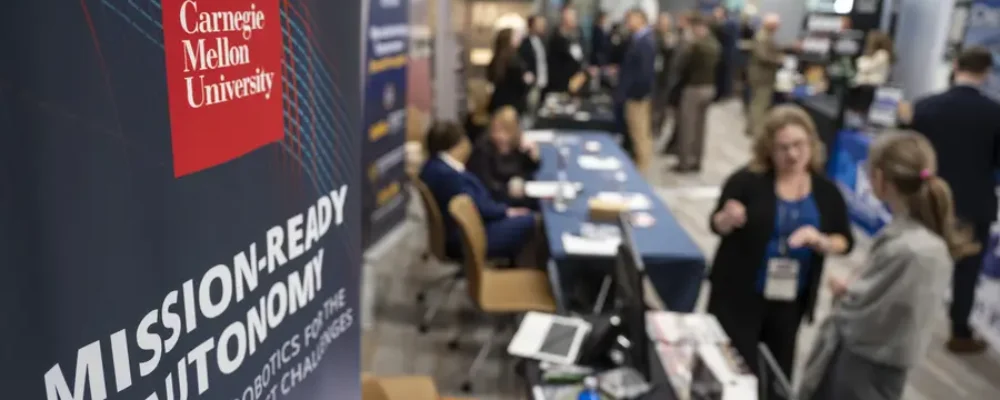

In the summer, Carnegie Mellon University opens its doors to K-12 students locally and from around the world, offering a firsthand look at its classrooms and community.
Carnegie Mellon’s Pre-College programs(opens in new window) will begin on June 20, bringing a premier on-campus opportunity to rising high school juniors and seniors from around the world. The programs, which invite around 800 students to campus each year, allow students to explore their interests and passions while receiving instruction and support from Carnegie Mellon’s world-class faculty and staff. Offerings extend across all seven of the university’s schools and colleges, giving a window into nearly every field of study available to undergraduates at CMU.
[embedded content]
For those interested in STEM (science, technology, engineering and math) careers, the Summer Academy for Math and Science(opens in new window) makes college-level expertise more accessible. Future innovators can explore theory and application through the AI Scholars(opens in new window), CS Scholars(opens in new window) and Computational Biology(opens in new window) programs. And both the competitive National High School Game Academy(opens in new window) (and newly-introduced EDG:E pilot program for local students) allow aspiring game developers and interactive technologists to learn how the entertainment industry is evolving.
In addition to the sciences and humanities, students interested in the arts can explore their field of interest across a variety of pre-college offerings. Students can enroll in programs, such as art(opens in new window), architecture(opens in new window), design(opens in new window), drama(opens in new window) and music(opens in new window), as Pittsburgh continues to serve as a major regional hub for expertise and community engagement in these areas.

Because of the scale of CMU’s efforts to bring college-level education to eligible high schoolers, Yang Liu, director of the university’s program, explained that it functions as a “mini university within a university,” working with departments to craft a curriculum and developing its own admissions cycle. Pre-College students enrolled in the Summer Session(opens in new window) program can even learn alongside undergraduate students, taking the same courses during the summer and earning credits that count toward a later education at CMU.
Liu said that the opportunity to provide access to all disciplines allows students to explore the myriad fields available to them in their future careers. From the humanities and business, offerings like Writing and Culture(opens in new window), Leadership Development(opens in new window), and Global Cultures and Emerging Technology(opens in new window) let those with an interest in the humanities and civics to work and network with professional changemakers.
“We have a great reputation in areas like AI, but it’s important to highlight that CMU also offers cross-disciplinary, creative, critical thinking skills that students can get from other programs,” she said. “They integrate the tech side into the program so it’s more cross-disciplinary, and that attracts more and more students,” she said.
Community impact before college

In addition to the university’s pre-college offerings, faculty across CMU’s seven schools and colleges are constantly working to create opportunities for young students. The Leadership, Excellence, Access, Persistence (LEAP)(opens in new window) program is striving to empower local high school students to become agents of social change through storytelling.

LEAP, which now reaches 100 students across multiple schools, helps teach participants how to have an impact through the arts and humanities. Faculty and staff from across Carnegie Mellon work with the students throughout the academic year to help them build their artistic, academic, and civic skills and provide insight into potential career paths.
The latest student cohort, which concluded on June 6, includes 16 graduating seniors and a future CMU student.
“Through LEAP, CMU is creating and sustaining long-term partnerships with Pittsburgh schools and communities. It’s a way for the university to build trust and accountability with our neighbors while uplifting local expertise,” said Sarah Ceurvorst(opens in new window), program director for LEAP.
Investing in future Keystone State scientists
For Pennsylvania students interested in STEM careers, the Pennsylvania Governor’s School for the Sciences (PGSS)(opens in new window) brings rising high school seniors from across the state to campus for a five-week residency program in the summer. The program, which will begin June 21 and run until July 25, allows students to attend college-level lectures and labs in biology, chemistry, mathematics, computer science and physics for free. Alumni of PGSS have gone on to become scientists, professors, doctors, authors, software engineers and entrepreneurs.
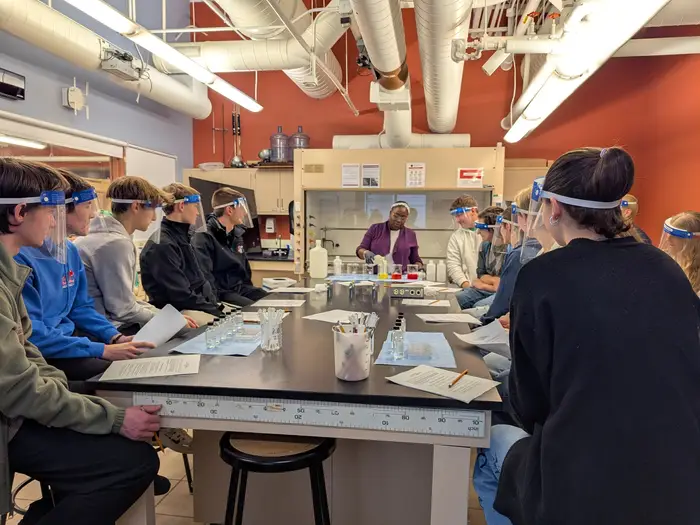
CMU’s outreach initiatives also involve traveling off campus to meet students where they are. Faculty frequently provide live science demos, activities, and workshops to K-12 classes through the ChemZone(opens in new window) program as well as workshops for teachers. Most recently, CMU faculty shared their expertise with visiting students from a high school in Erie, Pennsylvania, and helped the students engage through hands-on experiments.
Through their work in ChemZone, faculty members like Associate Professor Subha Das(opens in new window) and Teaching Professor Gizelle Sherwood(opens in new window) help to bring chemistry expertise directly to classrooms. Sherwood also brings instruction to elementary schools through the weeklong Summer of Chemistry(opens in new window).
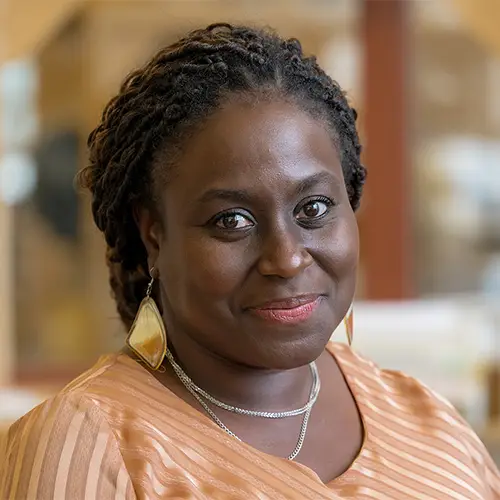
Sherwood said the outreach is a natural extension of their work in higher education.
“At the end of the day, we are educators, and it is important for us not just to educate our core audience, but everyone as part of the vocation of teaching,” she said.
Efforts like these, she said, serve as a chance to plant the seeds for the future success of students.
“It’s important that students are exposed to STEM pretty early on. Kids, when they’re really young, play with art and colors, but they don’t know that there may be chromatography in play; you build with blocks, and you don’t know you’re an engineer.”

Due to financial disparities, classrooms around the country may not have access to the same resources that make it possible for students to explore their curiosity and excitement for subjects. To help solve this, Das explained, ChemZone lends out free kits for Pennsylvania teachers(opens in new window) to use in classrooms, made possible through initial funding from the PPG Foundation; and that despite every classroom’s differences, the passion that students show for learning make the outreach efforts worthwhile.
“What I’ve been really happy to see is, regardless of the environment, how excited and how enthusiastic the students get when you go to the classroom,” Das said.
“Carnegie Mellon University is a private research university in Pittsburgh, Pennsylvania. The institution was originally established in 1900 by Andrew Carnegie as the Carnegie Technical School. In 1912, it became the Carnegie Institute of Technology and began granting four-year degrees.”
Please visit the firm link to site