


Characters in fairy tales rely on crystal balls to see into the future. In 2026, the world has prediction markets, in which traders bet on the likelihood of real-world events such as election outcomes or the winner of the Eurovision song contest—often with surprising accuracy.
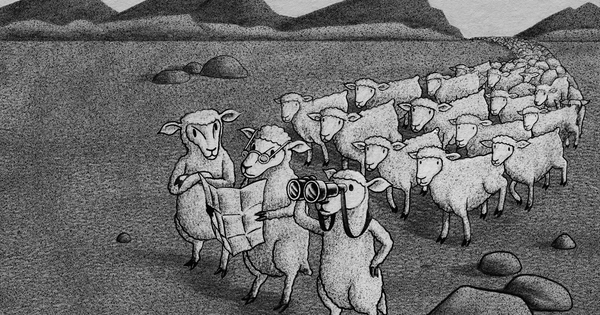
The founders of these markets, which have grown by orders of magnitude in just the past two years, attribute their accuracy to the wisdom of crowds, the idea that, in aggregate, large numbers of bets by diverse people will ultimately trend in the right direction. “Everyone has skin in the game, and a very strong incentive to state their true beliefs,” explains Yale SOM’s Theis Ingerslev Jensen. “It feels reasonable when people say, ‘Oh, they work because of the wisdom of crowds.’”
But, he noted, prediction markets look a lot like traditional financial markets, which are shaped by the small minority of people trading with higher-than-average skill or information. “We wanted to test the conventional explanation for prediction markets against a more standard explanation that would apply to traditional financial markets,” says Jensen.
For a new working paper, Jensen and his co-authors, Roberto Gómez-Cram, Yunhan Guo, and Howard Kung of the London Business School, tested the “wisdom of crowds” view of markets by looking at publicly available trading data from Polymarket, which bills itself as the world’s biggest prediction market. They found that, in fact, prediction markets’ accuracy derives from the bets of a handful of skilled traders—who, unfortunately for the overwhelming majority of participants, also reap the lion’s share of the financial winnings.
In prediction markets, traders buy binary yes-or-no contracts on the outcome of events that often have nothing to do with the real economy. For example, in “mention markets,” traders bet on whether a public figure will mention a given word in a speech. (President Trump’s Thanksgiving Day speech had multiple separate markets, in which traders could bet on such questions as whether he would mention the word “stuffing” and which of two turkeys would receive a pardon.) A decentralized committee decides whether the event has occurred, leading to a payout of $1 per contract if the event occurs (a Yes), or nothing if it does not (a No). A higher likelihood of an event happening raises the price of the contract.
Figuring out who drives trading on Polymarket and who profits from it was simplified by the fact that the market records transactions in a public blockchain. Jensen and his co-authors drew on two years of trading data, covering 1.72 million accounts whose owners collectively traded on 98,906 events and 210,322 markets, for a total trading volume of $13.76 billion.
The records made it easy to see which anonymous accounts were profiting from each trade. The hard part was distinguishing luck from skill. To identify traders with a consistent edge, they took each trader’s actual sequence of trades—including the markets traded, timing, prices, and bet sizes—but with one aspect randomized: whether they bought or sold the contract. By repeating this process 10,000 times, they simulated what each trader’s profit and loss (PnL) would look like if they simply tossed a coin when deciding whether to buy or sell—in other words, in the absence of any skill. They then compared the trader’s actual PnL to this simulated coin-toss benchmark to test whether the trader out- or under-performed.
Their analysis found that just 3% of accounts could be classified as “skilled,” with significantly positive PnL that could not be explained by random chance. About twice as many accounts performed even worse than the benchmark, a group they designated as “unskilled.” For the vast majority of traders, their outcomes were virtually indistinguishable from chance. The skilled group, alongside an even tinier group of market makers—traders who primarily provide liquidity by posting buy and sell orders—“represent fewer than 3.5% of all accounts, yet capture over 30% of total gains,” the authors write.
Where did the rest of the gains go? Another 29% of traders, who the authors call “lucky winners,” managed to make money without any statistically discernible skill —that is, they made a profit, but not one significantly larger than what the researchers’ randomized simulations suggested might occur by chance alone. Those traders captured the remaining 69% of gains within the two-year period.
Might the skilled traders simply have been unusually lucky? To avoid falling into the circular argument that “skilled people made more money than the unskilled ones,” Jensen says, they further scrutinized actual trades to see which accounts consistently performed better than chance.
They divided the events that each trader bet on in half at random. A truly skilled trader would outperform the benchmark in both sets of trades—and indeed, they found that 44% of traders classified as skilled based on the first set of trades are also classified that way in the second. That’s a significantly higher share than in, say, the mutual fund market, where just 10% of fund managers consistently outperform the overall market.
“Most people think that if you beat the market in one period, then that was just luck, and so you’re not going to continue beating the market,” says Jensen. “We found that for prediction markets, there’s an unusually high level of persistence. It appears that if you classify someone as skilled in one period, they are much more likely to be skilled in the next period than random chance would suggest.”
To test the “wisdom of crowds” hypothesis, the researchers also needed to determine which traders were responsible for the markets’ accuracy. They set out to see how each of the different groups—skilled and lucky winners, market makers, and unskilled and unlucky losers—contributed to contract prices, which proxy the likelihood of an event. They looked at how each group traded around two recurring pre-scheduled events: the Federal Reserve’s Open Market Committee (FOMC) meeting announcements, and quarterly corporate earnings reports.
And indeed, they found that the traders they had deemed skilled consistently moved contract prices in the direction of the final outcome, by buying more contracts that ultimately resolved Yes and selling contracts that ultimately resolved No. Skilled traders also reacted more quickly to news. For example, following FOMC meetings or corporate earnings announcements, skilled traders quickly bought contracts in the direction of the announcement before the contract settled. “The remaining majority does not produce accuracy; rather, it funds it,” the authors conclude.
Despite some recent headlines, their study finds that insider trading has only a small impact on prediction markets. “From observation, we know there can be high frequency arbitrageurs, market makers, and real-time news trackers,” says Jensen. “While we do find evidence of insider trading, it’s sporadic, it’s small, and it’s not something that we think is systematically driving price discovery.”
“The Yale School of Management is the graduate business school of Yale University, a private research university in New Haven, Connecticut.”
Please visit the firm link to site