

Carnegie Mellon University’s National Science Foundation AI Institute for Societal Decision Making(opens in new window) (NSF AI-SDM) and Meta’s AI for Good program are announcing a partnership to develop dynamic situation reports aimed at helping first responders better address natural disasters like wildfires, hurricanes and severe winter storms.
NSF AI-SDM researchers will analyze aggregated mobility and connectivity data already collected through Meta’s AI for Good program and incorporate it into clear, simple visualizations to provide actionable insights for emergency managers and responders to use on-the-ground during a disaster. The research team will also incorporate other sources such as satellite imagery, to be combined with Meta’s open-source AI models including Segment Anything, DINO and large language models. These tools could help determine compliance with evacuation orders, show where populations remain or when communities begin returning following a disaster.
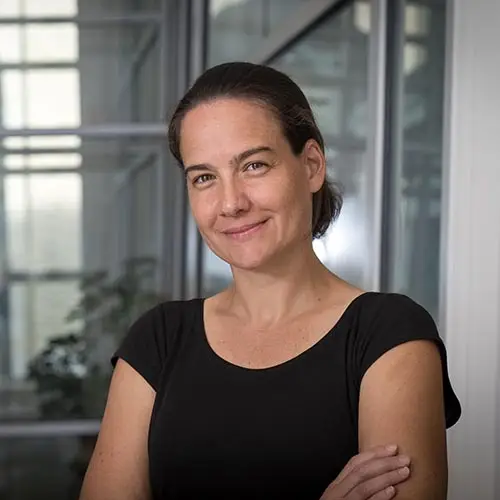
“This NSF AI-SDM-Meta collaboration is an excellent example of how academic-industry partnerships can impact social good,” said Rebecca Nugent(opens in new window), head and Fienberg University Professor of CMU’s Department of Statistics and Data Science(opens in new window). “This outreach project aims to help emergency responders better understand population mobility during disasters as well as provide additional related resources to the public.”
NSF AI-SDM is a National Science Foundation-funded institute that brings together AI and social sciences researchers to develop technologies to assist with complex, often lifesaving human decision-making. NSF AI-SDM researchers examine people’s perceptions of risk and trust and how the uncertain, dynamic and resource-constrained circumstances of critical situations shape decision-making.
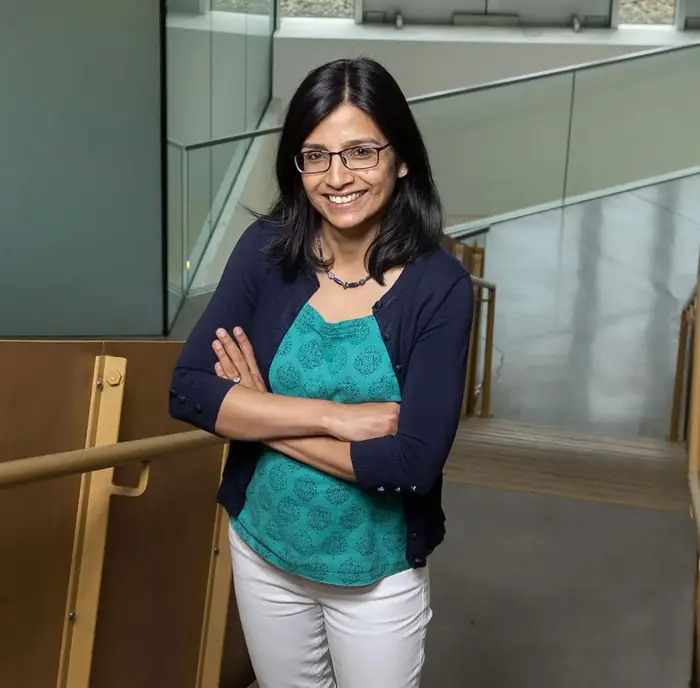
“Our partnership with Meta solidifies an important informational piece relevant to AI-SDM’s effort on designing effective disaster risk communication by understanding human mobility and networking behavior,” said Aarti Singh(opens in new window), NSF AI-SDM director and FORE Systems Professor in CMU’s Machine Learning Department.
The project will evaluate the tools during natural disasters occurring in 2026 to better determine which tools work best in emergency situations. NSF AI-SDM already works with several state and local emergency management agencies and will share this work with them to gather feedback. These efforts will help with future work to develop even more useful, interactive and perhaps automated data tools.
“Leveraging tools like AI and real-time mobility data has the potential to transform the way governments and nonprofits respond to natural disasters,” said Laura McGorman, director of Meta AI for Good. “We’re excited to work closely with the experts at Carnegie Mellon to support emergency responders throughout this year’s hurricane and wildfire season.”
Once finalized, AI-SDM and Meta will disseminate the tools via the Humanitarian Data Exchange(opens in new window) and the NSF AI-SDM website(opens in new window).
“Carnegie Mellon University is a private research university in Pittsburgh, Pennsylvania. The institution was originally established in 1900 by Andrew Carnegie as the Carnegie Technical School. In 1912, it became the Carnegie Institute of Technology and began granting four-year degrees.”
Please visit the firm link to site