

Honorary graduates 2026
Professor Dame Nancy Rothwell
Professor Dame Nancy Rothwell served as President and Vice-Chancellor of The University of Manchester from 2010 to 2024, becoming the first woman to lead the institution. Her leadership strengthened the University’s role as a leading global-civic university, deepening its engagement with the city, region and international partners.
An internationally recognised neuroscientist, her research has advanced understanding of brain injury and contributed to improved treatment outcomes. Alongside her academic work, she has played a key role in shaping the UK’s research and innovation landscape, while championing the role of universities in addressing global challenges and delivering local impact.
Sir Richard Leese
Sir Richard Leese served as Leader of Manchester City Council for more than 25 years, playing a pivotal role in the city’s regeneration and global rise. His leadership spanned defining moments in Manchester’s recent history, including the recovery following the 1996 terrorist bomb and the delivery of the 2002 Commonwealth Games.
Under his tenure, Manchester saw significant economic growth and the revival and repopulation of its city centre, helping to position the city as a leading example of inclusive urban renewal. He now chairs the Greater Manchester Integrated Care Board, continuing his contribution to improving outcomes for communities across the region.
Dr Maria Balshaw CBE
Dr Maria Balshaw is a leading figure in the cultural life of both Manchester and the UK. As Director of Tate Galleries from 2017 to 2026, she led a programme focused on artistic boldness, inclusivity and engagement with new audiences.
Her connection to Manchester is longstanding. She previously served as Director of The Whitworth at The University of Manchester, as well as Director of Manchester City Galleries and Director of Culture for Manchester City Council. Her leadership has helped position Manchester as a globally recognised cultural destination, where creativity and access to the arts play a central role in civic identity and social impact.
Sir Howard Bernstein (1953–2024)
Widely regarded as one of the architects of modern Manchester, the late Sir Howard Bernstein devoted his career to public service in the city he called home. As Chief Executive of Manchester City Council for 20 years, he played a central role in shaping Manchester’s recovery, growth and long-term vision.
He led the reconstruction of the city centre following the 1996 terrorist bomb and was instrumental in delivering the 2002 Commonwealth Games and the regeneration of East Manchester. His work extended across major developments in transport, culture and infrastructure, as well as securing Greater Manchester’s landmark devolution deal.
Sir Howard’s legacy reflects a lifelong commitment to civic leadership and place-making, helping transform Manchester into a confident, globally connected city rooted in strong communities.
Together, this year’s honorary graduates highlight the vital role of collaboration, leadership and creativity in addressing the challenges of our time and delivering lasting social impact.
Through Manchester 2035, the University is strengthening its commitment to being a global-civic institution, working in partnership to improve lives, advance knowledge and support the continued success of Manchester as a leading global city.
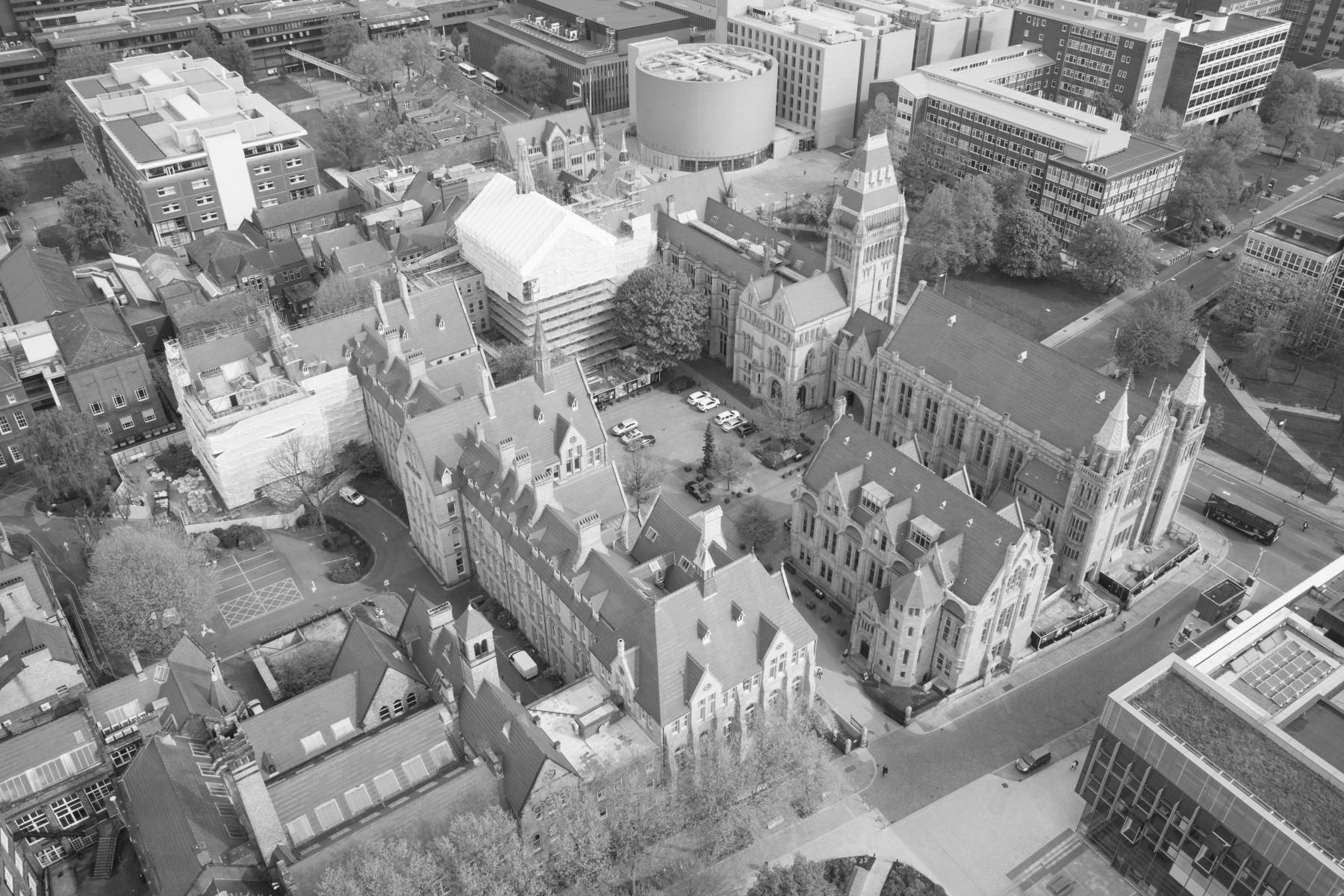
“The University of Manchester is a public research university in Manchester, England. The main campus is south of Manchester City Centre on Oxford Road.”
Please visit the firm link to site