

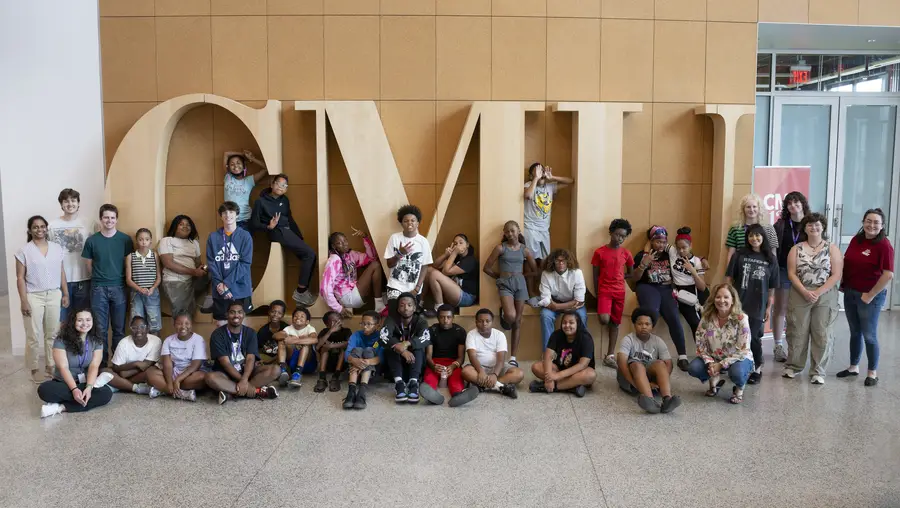
This summer, middle school students from Pittsburgh’s Hazelwood neighborhood stepped inside world-class research laboratories at Carnegie Mellon University, explored advanced manufacturing technologies, discovered robots that have traveled to the moon and built robots of their own — all within blocks of their homes. For many students, the experience offered something even more powerful: a chance to imagine themselves as future engineers, researchers and innovators.
Through a longstanding partnership between Center of Life(opens in new window) and Carnegie Mellon, 20 students in grades five through eight spent a week immersed in hands-on STEM experiences at CMU’s Robotics Innovation Center(opens in new window) (RIC) and Mill 19(opens in new window) in Hazelwood Green, gaining an up-close look at the technologies shaping the future of manufacturing and robotics.

“Having access to technology like that at such a young age is extraordinary,” said Sneha Prabha Narra(opens in new window), associate professor of mechanical engineering. “The equipment these students saw is worth millions of dollars. I didn’t encounter equipment of that caliber until I was in graduate school.”
From steel town to tech hub
Now in its fourth year, the camp marked a significant milestone by moving the program from the university’s main campus to Hazelwood Green. Organizers say the shift allows students to access cutting-edge technology in their own neighborhood while connecting Hazelwood’s industrial past with its innovation-driven future.
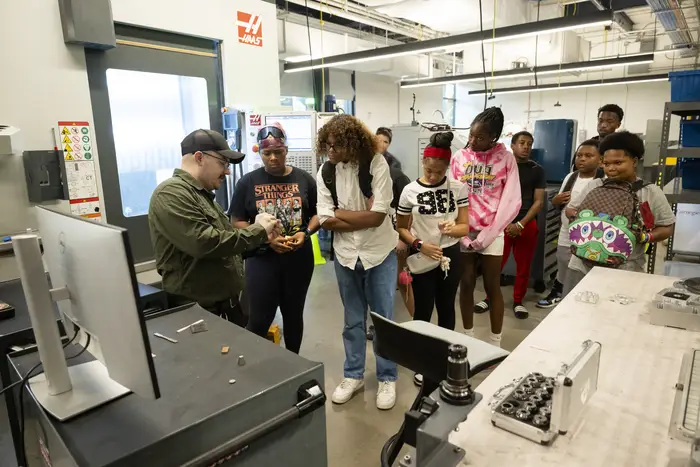
Adjacent to Mill 19, housed within the former Jones and Laughlin steel mill exterior, the RIC serves as a hub for robotics and advanced manufacturing research, providing a powerful backdrop for students learning how technology is transforming industry.
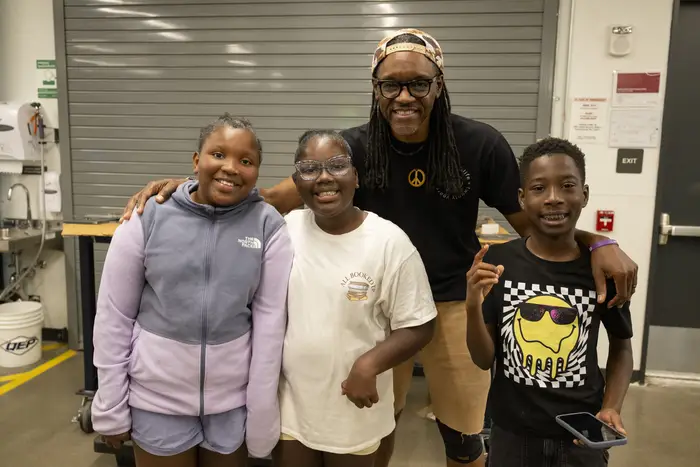
Pastor Tim Smith, founder and CEO of Center of Life, said his organization is thrilled to welcome the RIC to the Greater Hazelwood community.

“Carnegie Mellon is no stranger to Hazelwood. Since the early 2000s, Center of Life and CMU have partnered to create meaningful community engagement initiatives that have provided education, resources and opportunities for families, children and youth,” Smith said. “Over the years, hundreds of Hazelwood children have been introduced to CMU’s School of Design(opens in new window), College of Engineering(opens in new window), School of Architecture(opens in new window), Tepper School of Business(opens in new window) and world-renowned science and technology programs. Every time we brought our students to campus, they didn’t just feel like visitors — they felt like college students. Those experiences expanded their vision of what was possible for their futures.”
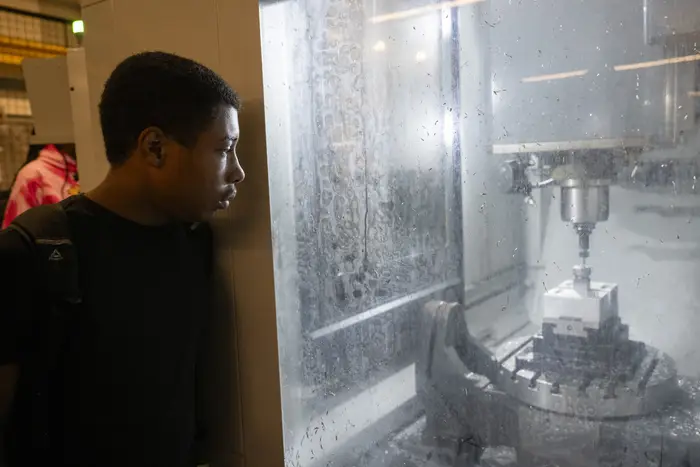
Hands-on engineering
The camp is designed to introduce young learners to engineering and manufacturing career pathways at an early age, helping to build interest in fields that are facing critical workforce shortages. The manufacturing outreach component is supported by Narra’s National Science Foundation CAREER Award(opens in new window), which includes efforts to strengthen the future workforce through education and community engagement.
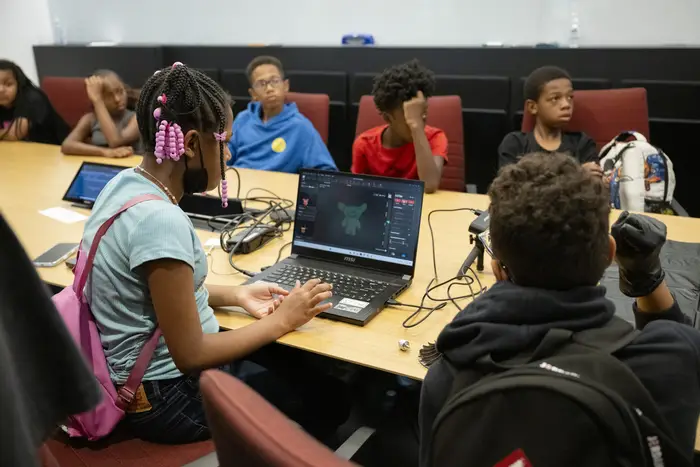
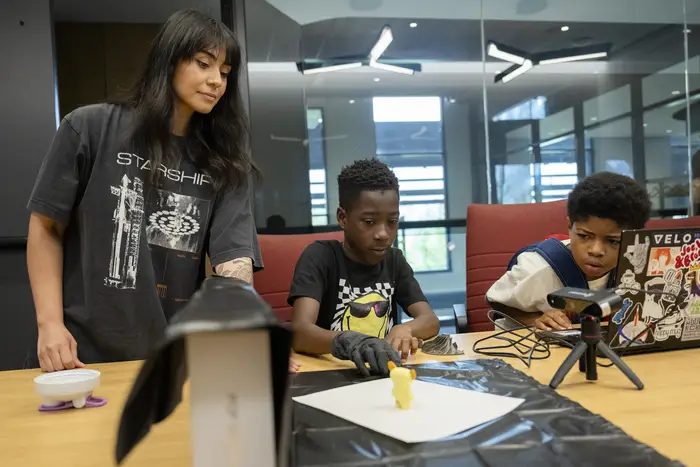
In the morning, students tackled hands-on manufacturing engineering activities and challenges led by Ph.D. students in Narra’s lab — Jacob McCauley, Jay Manolis, Gala Solis and Benjamin Hroblak. Students also had an opportunity to interact with manufacturing staff at Mill 19 — Ian Maclachlan and Scott Kram — and learn about their professional journeys. These activities enabled students to explore the principles behind advanced manufacturing and the lab tours exposed them to the latest technologies.
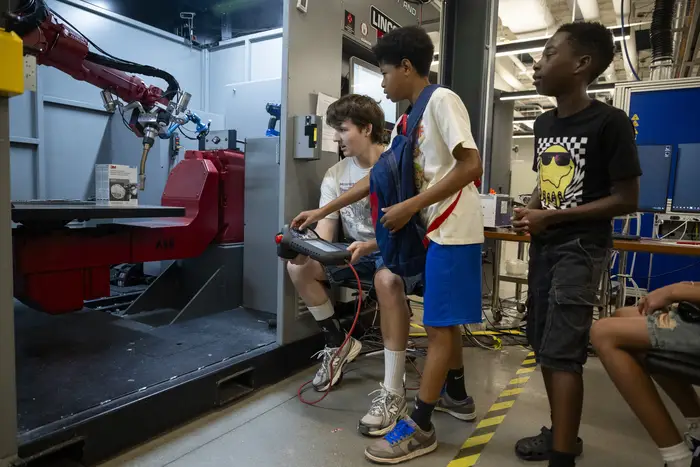
“Our activities focus on giving students hands-on experiences while also introducing the fundamental concepts behind the technology,” Narra said. “We want them to understand not just what these systems can do, but how they work. If they’re given the right resources and inspiration, they could become the workforce driving the next generation of innovation.”
Robots and role models

Afternoon activities, which are sponsored by the Robotics Institute(opens in new window) and George Kantor(opens in new window)‘s lab, were led by mentors from Girls of Steel(opens in new window), CMU’s competitive robotics program for K-12 students. Working in teams, the students designed, built, programmed and ultimately drove robots by the end of the week. The mentorship component of the program allowed campers direct access to role models who are already pursuing interests and careers in science, technology and engineering, helping make those pathways feel attainable.
“The Girls of Steel are wonderful mentors,” said Michelle Hyde(opens in new window), program manager in the Robotics Institute. “When students see older kids who look like them doing this work, they begin to realize they can do it, too.”
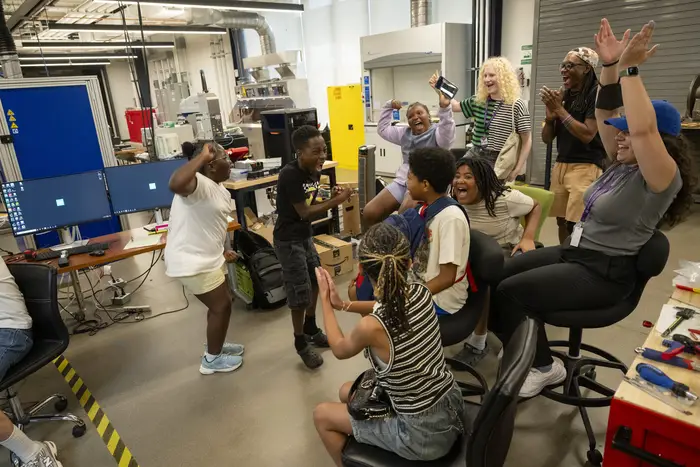
Inspiring the next generation
For Chelsea Blackburn Cohen(opens in new window), senior manager for Strategic Initiatives and Engagement in the Office of the President, the program reflects a broader commitment to connecting local communities with CMU’s research strengths and educational opportunities.

“This has been a wonderful partnership for Carnegie Mellon to extend its educational and research strengths with the Greater Hazelwood area youth,” Blackburn Cohen said. “To have hands-on experiences with world-class technologies and the people who’ve built them — right in your neighborhood — has the potential to be a truly transformative experience.”
Blackburn Cohen said the partnership is ultimately about helping young people in the broader Pittsburgh region envision themselves at places like CMU.
“Having tighter connections to the youth in the region who could then see themselves at a place like CMU one day — that’s kind of the dream,” she said. “You can be a roboticist. You can access world-class talent and resources right here in Pittsburgh.”
“Carnegie Mellon University is a private research university in Pittsburgh, Pennsylvania. The institution was originally established in 1900 by Andrew Carnegie as the Carnegie Technical School. In 1912, it became the Carnegie Institute of Technology and began granting four-year degrees.”
Please visit the firm link to site