

Transcript
Harlan Krumholz: Welcome to Health & Veritas. I’m Harlan Krumholz.
Howard Forman: And I’m Howie Forman. We’re physicians and professors at Yale University, and we’re trying to get closer to the truth about health and healthcare. Our guest today is Dr. Melanie Matheu. But first, we’re always checking in on whatever the current or hot topics in health and healthcare are. So, Harlan, where do you start?
Harlan Krumholz: Well, there’s a lot of hot topics, of course, Howie. But I wanted to just delve into this issue of AI in our current financial system in the United States. So, here’s a prediction. Artificial intelligence will make many kinds of clinical work dramatically cheaper, and American healthcare may end up spending more. The reason is not the technology; it’s the way we pay for care. Our payment system was built for a world in which clinical expertise was scarce. To produce more care, you need more physicians, more nurses, more appointments, more time. So we created a system that generally pays more when more things happen, the fee-for-service system. AI changes that underlying reality. AI systems can monitor patients continuously, analyze new information, make recommendations, potentially manage large populations without a proportional increase in human labor. The cost of producing each additional clinical action could become very low. And this sounds like a recipe for lower, cheaper healthcare cost.
But now the technology is really in a fee-for-service system. You can imagine, what’s that going to do? Because imagine an AI system managing hypertension, it reviews blood pressures every day, say. Sends messages, recommends medication changes, schedules follow-up, and generates alerts. Clinically, that could be enormously valuable. But suppose every review, alert, message, and adjustment becomes another billable event. We would have taken a machine capable of producing nearly unlimited clinical activity and connected it to a payment system that rewards clinical activity. The cost of producing care would fall, while the amount billed could explode. And we’re already seeing this.
This is the essential warning in a new report from the Peterson Health Technology Institute. Fee-for-service does not merely fail to capture the efficiencies of AI. It could transform AI into a new engine of healthcare inflation. And simply invoking value-based care does not make the problem disappear. Health systems still have to purchase a technology, redesign their workflows, train their staff, build oversight systems, and assume for responsibility when something goes wrong. The organization making that investment may not be the one that eventually benefits from the savings.
So, here’s a principle I think that should guide us. We should not pay AI for being busy. We should pay it for making people healthier. Payments should depend on better outcomes, wider access, or lower total cost, not on how many recommendations an algorithm can generate. And as AI becomes cheaper and more scalable, its price should fall rather than becoming permanently embedded in the healthcare cost structure. The larger lesson is that technological progress does not automatically produce economic progress. AI could help us escape the limits imposed by shortages of clinicians and clinical time, but unless we change the incentives, it could also allow the American healthcare system to do what it has so often done before. Take something that should make costs less expensive and find a way to make it cost more. In fact, you could call that right now, that’s the American way.
Howard Forman: That’s a great summary, Harlan, and you’ve framed it in a way I haven’t heard other people talk about it before. I do think it’s sort of at odds very much with most AI companies that are getting in front of the FDA right now and then immediately looking to get CMS to pay for the technology itself. Rather than what you’re talking about, which is paying for outcomes. But I do hope, like they say, from your mouth to God’s ears, I do hope that people are listening and thinking about, how do we prevent this from being an endless spiral of money as opposed to what it could be as a long-term spiral to lower costs, better access, and more affordable care?
Harlan Krumholz: And often at rates, it’s not even just that it’s replicating fee-for-service, but you’ve seen this in radiology. I’ve seen this in cardiology. Where the rates are actually higher than what they’re paying humans to do it, even though the marginal costs are so much lower. And so, we’ve got to figure this out. AI has tremendous possibilities. There are many other things to guard against, the safety layers. There’s lots of work to be done. But it really could explode healthcare costs. And that’s why you’re seeing CMS even in the last week start talking about they’re going to have to change their thinking about how they’re reimbursing for AI systems.
Howard Forman: I’m thankful for people like you for continuing to bring this up, because I think they need to hear that.
Harlan Krumholz: Yeah, and I don’t think it’ll decrease the amount of investment in AI. That’s the other thing people worry about. They go, “Well, if we take away that incentive, the investors, the capital won’t follow.” But I disagree, the total addressable market’s huge. These companies will do well.
Howard Forman: That’s right.
Harlan Krumholz: We just have to do this responsibly. Anyway, let’s get on to our guest. We have a tremendous guest today.
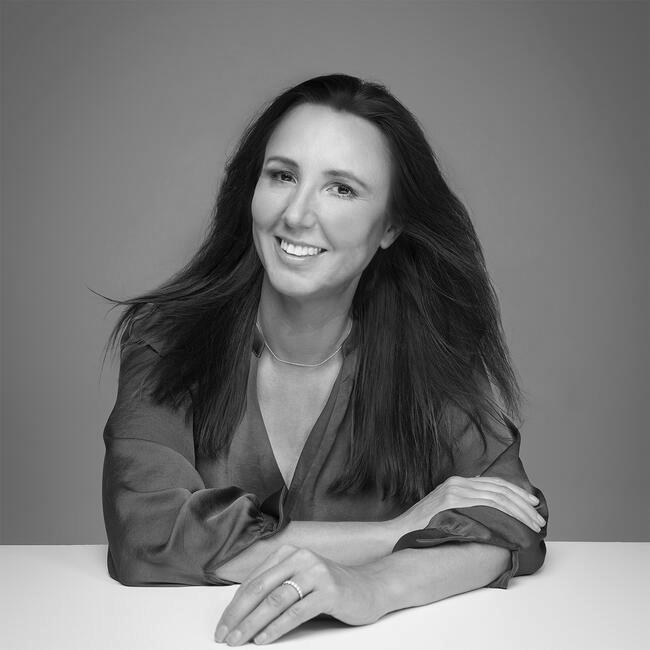
Howard Forman: Dr. Melanie Matheu is a research scientist inventor and entrepreneur serving as co-founder and chief scientific officer of Lyric Bio, a biotech company developing new ways to manufacture lifesaving therapeutics. Her work builds on a novel bioprinting technology she invented at Prellis Biologics, the company she founded in 2016. At Lyric Bio, she’s using that technology to grow human immune cells in a lab setting and produce antibody-based therapies at scale, reducing dependence on plasma donations for treating autoimmune diseases and other conditions. She earned her bachelor’s degree in biochemistry and molecular biology from UC Santa Barbara, and her PhD in physiology and biophysics from UC Irvine. She went on to complete postdoctoral research at UCSF before founding Prellis Biologics.
So, while her day job may be as a life sciences entrepreneur, to hundreds of thousands of individuals across the social media ecosystem, she is LaughterinLight. One of the most followed accounts on health and healthcare TikTok and a key source of information for individuals trying to navigate our besieged health and public health systems in order to gain honest information.
And so, I’m so happy to have you here. I’ve been following you for a few years right now. And I’ve learned a lot from watching your TikToks and seeing you across other social media as well. Can you just start off… I don’t want to skip over what your day job is. Can you start off and just tell us a little about the day job, though, first?
Melanie Matheu: Yeah, absolutely. And by the way, I am so happy to be here. I’ve been a fan of yours, Howie, on social media for a long time. I remember when you joined and I was reposting everything, I was so excited to have another health expert. The more health experts, the better that we can have on social media. It was fantastic. So, this is a real treat for me to be here. Genuinely excited.
So, my day job is as an entrepreneur, biotech entrepreneur. I love the idea of taking… I sit in that space where I’m basic science to real-world applications. And so that’s where I like to be really creative. I came from an academic background, and I was a little disappointed in how long it would take me to get something to a clinic to help people. And so, I kind of like sitting in that translational space where I’m like, All right, that is a very cool idea and a really interesting set of research findings. Let’s start a company around it. Let’s explore it a little further. And let’s see if we can actually move this forward to make life better for more people.
Howard Forman: And for our listeners, can you give us an idea of what the ideal end product is and how it solves problems for both clinicians and patients?
Melanie Matheu: Yes. And so, Lyric Bio, my current company, our goal is to make therapeutics that are derived from human donors—so let’s say blood donations, and I can go into some specifics there—more accessible. Because it’s a limited supply. So, there is one particular therapeutic called intravenous immunoglobulin (IVIG). Millions of people around the world depend on this. Either if they have a suppressed immune system, it kind of helps replace their immune response, or if they have autoimmune disease or an inflammatory disease, an influx of antibodies from other people flushes out the pathogenic antibodies and also has some effects that reduce inflammation across the board for those people. And so, the only way we can get this is by someone donating their plasma, and it is a massive therapeutic market. And so, it’s in very short supply.
When we first started the company, myself and my co-founder, his name is Kayj Shannon, we thought, “Hey, we’re going to help solve a cost issue here. We’re going to make it about a thousand times less expensive,” is our goal. And then what we realized is, we are solving a major supply chain issue. It’s probably four times or more underutilized than it would be if we had the supply. And so, there are a lot of people out there that can’t even get access to these therapeutics. So by growing this in high-density bioreactors, the cells that make these antibodies, we’re going after this market, and we hope that we can make life better for a lot of people out there.
Harlan Krumholz: It’s an audacious task to take on. It’s so interesting that you would go in that direction. Maybe I’d ask you, it’s like, why didn’t anyone else do that? What was it that led this to be a place that was still unsolved, something to be mastered?
Melanie Matheu: Yeah. I think there’s two ways to answer that question. First, it’s a question I’ve gotten more than once. I’ve been asked, why didn’t anyone do my first company’s idea either? And what I’ve learned about ideas is that if it’s a good idea, there are a lot of smart people out there who’ve probably had a similar idea or have had it before. And ideas aren’t the problem; it’s execution. And so, there are a lot of good ideas out there floating around in the world. And people hear them and they, “Oh yeah, that’s a great idea.” But that activation energy to put your life into a start-up company and to get it going is something not everyone has time for or is as dedicated to it. And you can only do one at a time. So, I think it’s not so much the ideas. I think it’s really the hard work behind getting something off the ground that can make a difference.
Harlan Krumholz: I was thinking, suppose the technology succeeds and immunoglobulin becomes dramatically less scarce, less expensive. And actually, it’s not just about giving people all sorts of immunoglobulins but specific immunoglobulins. People talked about that a lot in the pandemic. Does that, do you think, change the diseases we treat and how early we treat them? Does it actually, more than just provide this in greater amounts and at a greater price point but actually opens up thinking about a whole range of diseases that really haven’t been thought of for this therapy in the future?
Melanie Matheu: Absolutely it does. So, we’re kind of going after the blended immunoglobulins that are available as an IVIG product right now, but there’s a whole other space called hyperimmune globulin. Which, “hyper” just means that it’s focused at a particular protein or antigen. And so, it can really be a disease-shifting or disease-modulating therapeutic. And I’ll give you an example as to where this might be applicable. There’s evidence that hyperimmunoglobulin or IVIG is useful in Alzheimer’s disease.
And so, there have been clinical trials looking at different formulations of IVIG and if this impacts the progression of Alzheimer’s disease. Well, it turns out sometimes it does and sometimes it doesn’t. And so, some clinical trials have worked and some have failed. And so, scientists were interested in this and they started to ask the question, “Okay, why?” Of course—why is this working sometimes? It turns out some populations, so different formulations of IVIG have more anti-tau antibodies present. And we know if you get a hyperimmune product that’s directed towards that, we may actually be able to make some really good inroads in the world of Alzheimer’s disease in a way that has a better side-effect profile than maybe current monoclonal antibodies that are on the market. And so, that’s just one example of them.
But there are so many different diseases where you get the benefit, or you potentially get a better response by having what’s called a polyclonal antibody response, where there’s multiple different specificities of an antibody to target the same protein with maybe different binding rates. Just a mixture, if you will, like a batter versus one ingredient in a cake. So, something that just might work a little bit better because it’s capturing more of a native immune response or a natural immune response. So, there’s a way that we can definitely apply this to many different diseases.
Harlan Krumholz: I can imagine that I suppose the pathogens would have a harder time evading a multipronged approach than it might for one, right? That makes a lot of sense.
Melanie Matheu: Yes, exactly. And IVIG in general is still used for people who don’t have good immune responses or can’t make their own antibodies because it’s so good at protecting people from measles and diphtheria and polio and influenza, pneumococcal disease. All of these different diseases, because it has that multipronged approach where it can really get after that pathogen. And you’re right, the pathogens have a harder time mutating around that. And it’s much better than developing one monoclonal, one single antibody shot on goal every time a pathogen mutates.
Harlan Krumholz: Howie, I just want to get in one more thing here, just not to crowd it out. But one thing that I found very curious is we think about this as attacking invaders, but I’ve also seen it used for autoimmune disease in a way thinking that it’s going to modulate the immune system and flood the zone with these, like you were saying, the large number of antibodies across a wide range of things. What do you think about that strategy? Have you guys thought about it? Do you think that there’s anything to it? Because it’s all being done off-label. It’s all being done by people who have nothing else, everything’s failed. They’re willing to try anything. They try—“Okay, give me the immunoglobulin. Give me this shot of all this stuff.” What do you think of that?
Melanie Matheu: Yeah. I think it’s known to work quite well for many people with different inflammatory diseases, autoimmune disease, etc. And in fact, IVIG is a first-line therapy for something called Kawasaki’s disease. So, it’s one in 300 baby boys or so are born and they develop this autoinflammatory… I guess, just autoinflammatory disease of the vasculature, and it can be deadly. It’s very scary.
And so, this is why even though IVIG is often in short supply, hospitals keep it under lock and key because they can’t predict when a child is going to need that, and they need to have it in-house. It is the first line therapy for that particular disease, and it’s lifesaving.
Harlan Krumholz: That’s right. Yeah.
Melanie Matheu: Yeah. And so, we don’t actually know the exact mechanism there for why it works. I’ve heard a lot of physicians, and my husband’s a physician and he’s heard this too, say IVIG is kind of like the kitchen-sink approach. There’s something inflammatory going on, and we’re not totally sure what to do about it. We will try this. And often it works. Often it’s very helpful. So, there’s some mechanistic understanding of effectively flushing out the pathogenic antibodies, but there may be a little more to that. And I think science is still exploring how that works exactly.
Howard Forman: Before we pivot off of this, because I do think we could probably do a whole episode on just this.
Melanie Matheu: Oh, I’m having a lot of fun.
Howard Forman: No, no, and I love this topic. I’m curious, though, you come from a basic science background, you’re doing all of this work, but you also have to go out there and talk to investors and raise what turns out to be tens of millions of dollars. And you do it really well. As I’m listening to you—
Melanie Matheu: Thank you.
Howard Forman: …I’m like, I want to give you my money. But I’m curious to know, when I listen to you, it’s exciting. I wonder, how hard is it in the space where you’re talking to very, very well-educated investors? They may not have any basic science background, but boy, do they learn these topics well. What is that like for you, and what have you learned from that?
Melanie Matheu: Yes. So, it was very scary at first, I’ll be honest. I was an academic scientist coming off of a postdoc, and I actually turned down effectively an R01 grant to go out and start my own laboratory. I felt a little burnout from writing so many grants, if I’m honest there. And then, it was scary. And I say it’s hard at first, and you’re not really sure who to talk to. A lot of people already have big networks around this, and that makes it a lot easier. But when you’re passionate about an idea, it’s difficult at first, and it’s very scary. And I think the love I had for the ideas around the initial company, Prellis Biologics, where we had this ultra-fast way to print bio tissue that really made it something that could be built at an industrial scale and at a fine resolution, and we knew we could build tissue out of it.
I was like, “This has to go forward.” And it was almost this feeling of, I had to make this happen. And I was so in love with the idea and so passionate about what it could do for the world that it just kept me going. You’re going to encounter a lot of nos. And I think when you have that special idea or that special idea that you know you have to pursue, it makes it a little easier and a little less scary. And then, investors who have done this for many decades, they pick up on that. They can see the passion in the founders. And if it’s a unique idea, and the founders are really passionate about it, and they can explain it well, I think as you said, it comes across and it becomes infectious. You better at it over time, for all of my academic friends thinking about doing this.
Howard Forman: But it’s not easy work. I mean, it’s not like—
Melanie Matheu: No, it is not.
Howard Forman: … people are out there ready to hand you money. You have to work for it.
Melanie Matheu: Absolutely not. And you have to figure out how to get the idea in front of people. The more people you talk to and the more people hear it and the more people you can explain why it’s amazing, the more people have on your side. And maybe they make the right introduction. Going to lots of conferences, sharing different ideas, meeting people. It is, it’s a lot of work. And I would say there’s no particular straight-line path. And sometimes just sending a pitch deck that you’re really proud of to an investor directly will work. That’ll get you in the door a little bit. So, be bold with the ideas that you’re excited about.
Howard Forman: So, I absolutely want to pivot to your other job, which is a big job, and that is that you are a healthcare and public health communicator extraordinaire. You are covering some of the most important and timely topics. People rely on you. When I see the replies to you, they are genuinely, people are thankful for the work you do. And I think one good example right now is just how people should be dealing with cyclosporiasis, which is this… at the beginning, it’s just another public health outbreak. It’s not killing people, thankfully. Even the hospitalization rate’s relatively low. But here’s this parasite apparently living on lettuce. Maybe it’s raspberries, but this time it seems like it’s lettuce. And it is scaring everybody right now. Can you give us a little update on your take on what’s going on with it now? And then, how do you think about communicating that on your platform?
Melanie Matheu: Yeah, absolutely. So, I think we officially have the worst year on record for cyclosporiasis outbreaks. It is in 41 states. Lettuce is the primary suspect right now, but it may not be the only cause of this. But different states have this starting to show up at different times. So it is likely that there may be different distribution chains involved and/or different produce involved in this outbreak. As you said, the hospitalization rate is low, but it is not a pathogen that is great for anyone who is elderly, anyone who’s very young, anyone who is pregnant, and anyone who’s immunocompromised. It can do some real damage. And then, for those of us who could maybe get through a bout of this without going onto an antibiotic, it’s very uncomfortable for up to a month. And you can have recurrent cases and your stomach feels awful, and fatigue can set in around that too, and dehydration.
So, my take on this is that it’s unfortunate. I think that there’s been some damage to our public health and tracking systems, both at the state level and the federal level, that have disrupted a potential investigation here that could have saved us a lot of trouble. Right? So, that’s my current take on this.
And how I think about talking about this to my audience is, you want to get people timely information that’s actionable and meaningful to them. That’s the first question I ask myself before I post something that’s on a public health topic is, is it timely? Is it actionable? Is it meaningful? Who is it meaningful to? And how can they protect themselves from something like this? And a lot of people, a public health event will happen, and the first question is they just don’t know what goes on with something like this because it’s not a world that they think about often until they get sick or until someone they love gets sick. And trying to reach people to give them that information that can help them understand what’s happening too.
Harlan Krumholz: You do this exquisitely well. It’s remarkable the number of people also that follow you.
Melanie Matheu: Thank you.
Harlan Krumholz: The thing that I think is… well, you deserve it. Some people on TikTok, they play on the biggest fears of people. Or that if you want to push conspiracy theories, then you can get a lot of people to follow you. If you want to talk about truth, help people see a path and evidence in science, it’s harder. Science advances through uncertainty, qualification, changing one’s mind. Letting people know that’s not a failure, it’s progressive and self-correcting. But the social media seems to reward confidence and simplicity, strong declarations. People who seem so authoritative, they’re just convinced they’re right no matter what they’re telling you.
How do you keep the platform from having to change the science in a way that manages the people’s expectations? Oftentimes, if you really are honest, we don’t know the answer for sure, but this is what we think. But somebody else right beside you is saying with complete confidence, “This is the way it is,” whether that’s right or not.
Melanie Matheu: Yeah, I’ve definitely encountered that, even with the cyclosporiasis outbreak. And it is important to let people know this is the information we have now, subject to change, and this is the direction where we think it might change. I think that’s helpful for people. Because I think people don’t operate with uncertainty usually in the world, but they do understand that something can be uncertain. And something I like to use as a phrase often is “as time goes on, the cone of uncertainty widens.” I think that’s a good visual for people to grab onto.
And I’ve watched this happen with the cyclosporiasis outbreak, where people are very confident. It is lettuce, it is this brand, it is this company. And then the FDA had a positive test. It turned out to be a false positive. And now people are like, “Oh, we’re back to square one on the….” No, no, no, we’re not. We’re really not.
Harlan Krumholz: Seems like they destroyed that company in the process. Yeah.
Melanie Matheu: Yeah, exactly. And Taco Bell’s getting a really bad rap, even though they pulled it off their menu. They’re doing the responsible thing. It’s not Taco Bell; it’s the distribution system, guys. And so, having a false positive doesn’t mean it’s not there and it doesn’t exist. Cyclosporiasis can take up to 14 days to show up, and the FDA and the CDC are running around trying to find—and health departments—lettuce that’s still in people’s fridges after 14 days. And good luck. Hopefully you’ve gotten rid of it by then.
But it’s one of those things where if it’s going to be complicated or if you know that there’s some aspect of uncertainty, you have to make sure people hear that. Like, “Hey, this is what we think right now,” indicating that it could change. And then saying it could change. And for cyclosporiasis, yeah, it’s still likely lettuce. Is it still that brand? Highly possibly still that brand. And it’s still a TBD thing. And so, I think being very honest with people about that.
Harlan Krumholz: And so, I’m curious about your process. How long do you spend on each one of them? Do you craft it over time or is this your gut and you put it together? What is your process?
Melanie Matheu: So, when it’s a very complicated update, like when I’m talking about Ebola in the Democratic Republic of Congo. Which is still ongoing, but cyclosporiasis has taken over the center stage right now. So, when I think about it, I do as much research as I can to make sure I’m getting it right and I’m getting the details right. And so, often it takes me… I will, on a post that’s a little more complicated, spend an hour. At the height of the SARS-CoV-2 pandemic, I was translating health reports from Copenhagen. I think Omicron and the Danish Health Reports are really quick on that, with the first instances showing vaccine waning. Which is actually normal for some respiratory virus vaccines, they do wane. And I think it was a big misstep that people weren’t communicating that right away. This vaccine may wane, influenza vaccines wane. So, I think I was translating, I think it was the Israeli Health Department had a report in Hebrew, and I was trying to translate that.
So, I really do dig in and I really make a map and, “Okay, this is what I really think is happening. Here are my references, here are my sources. And then, here’s where I think it could go based on my knowledge of epidemiology, immunology, public health.”
Howard Forman: Before we get to the end, I want to just point out that you have a partner in crime as well.
Melanie Matheu: I do.
Howard Forman: And he also has a very well-watched podcast. And your compliments to one another, because Dr. Zachary Rubin is an allergist immunologist, and he’s a great educator. And he wears a bow tie in all the videos I’ve seen, at least. He looks like a right-out-of-central-casting pediatrician. But I want to point out that a few months ago you started a podcast with him.
Melanie Matheu: We did.
Howard Forman: Entitled From Bench to Bedside. Is that the right one?
Melanie Matheu: From Bench to Bedside. Yeah, that’s right.
Howard Forman: From Bench to Bedside.
Melanie Matheu: That’s right.
Howard Forman: I wanted to just hear, you’re piling on more and more work all the time. You have a Substack, we didn’t even mention that. He’s got a book coming out. What is the ultimate end result of this multimedia approach to communications?
Melanie Matheu: Yeah. And I actually—
Harlan Krumholz: She’s running for president. She’s running for president, I think. You can announce it on our show if you’d like, by the way.
Howard Forman: That’s right. That’s right.
Melanie Matheu: No, I’m very happy in the realm of the sciences. But, no, Zach has a wonderful…. He’s built out a wonderful social media career. And he really does wear a bow tie to work every day. He sees patients five days a week, still, and loves being a pediatrician. I think if any of his patients are listening, he’ll get down on the ground and make kids giggle, and it’s really cute. So, we started From Bench to Bedside. We’ve been planning to do that for a long time. Because in our personal conversations, we geek out all the time. We’re both immunologists, and he’ll be talking about one thing and he’ll be using the drug name. And I’m like, “Okay, wait, what is the target of that drug?” And he’ll say, “Oh, it’s like IL-17,” which is geeky immunology for one of the cytokines that influences responses. And then I’ll just launch into the pathways and all the implications and where else I think the drug could be used off-label.
And so, this is really the bench science and all the nerdy stuff, and we almost speak our own language there, translated into how a physician would think about things. So that’s the goal of our podcast. And I actually also have a book that I’m working on. I recently signed a book deal, which is exciting. So, it’s going to be a little bit more of diving into the language of our immune systems and how our immune systems are responsible for almost everything. And the deep complexity of it. And I don’t know if we have a goal in mind, I’ll be really honest. I don’t think we’ve paused to be like, what is our ultimate thing? We’re just having a lot of fun doing this. We met through doing this.
Howard Forman: Oh, wow. I did not know that.
Melanie Matheu: Yeah, that’s maybe a little bit of lore here. So, we met actually through a combination of… so we were both on TikTok giving timely information around the height of the SARS-CoV-2 pandemic. And then the World Health Organization had a group called Fides, where they invited different creators to be on a Slack channel where they would say, “This is what we’re seeing.” And they would just distribute the information that way. In no way did they tell us what to post or edit our content or anything, for any conspiracy theorist out there. This is really just a distribution mode. But then he DMed me on a Slack channel.
And he tells the story a little differently than I do. He asked for my phone number. And I thought I didn’t see it for a few days. He’s like, “You didn’t see it for two weeks, and I was waiting.” But I got back to him eventually, and then the rest is history. And anyone who knows me will laugh, because I’m pretty bad with my emails and stuff. But I don’t think we have a goal. We’re just really enjoying this. I think we like getting information to people they can use. We feel good doing that. And, yeah, we’ll see where it goes.
Howard Forman: That’s great. That’s a great story.
Harlan Krumholz: Oh, what a pleasure to meet you. I’m so glad that you and Howie connected on social media. I got a chance to learn about you. You’re incredible. I also think you talked about the deck, like when you were giving advice. But I also saw an interview with you when you started in the beginning of deck, what’s a deck? It’s like, you started at beginning at the bottom and really have built something beautiful, both entrepreneurially—
Melanie Matheu: Thank you.
Harlan Krumholz: … and influentially to be a voice of reason and science within our mixed ecosystem of social media. So, thank you for doing that.
Howard Forman: And let me just add also, for our listeners, you also are an incredible leader and role model for women in STEM. I noticed that a lot of the threads that evolve on social media are uplifting of other women who are facing challenges in their own careers in an area where they’re still grossly underrepresented. So, I just want to acknowledge that. And if any of our listeners want to follow you for just that, it’s worth it.
Melanie Matheu: That is so kind. Thank you so much. And happy to share with other women that you can do it too.
Howard Forman: That’s right. That’s right. Well, thank you.
Harlan Krumholz: Thank you. Thank you.
Melanie Matheu: Thank you. Thank you both so much. I’ve really enjoyed this.
Howard Forman: Boy, she is absolutely amazing.
Harlan Krumholz: She’s a superstar.
Howard Forman: It was great getting her on. And like you said, this is one of those people that we only met through social media. We got her on. And I’m so glad that—
Harlan Krumholz: Kudos to you, Howie. People notice you on social media, you’ve got a whole big community out there.
Howard Forman: We’re looking for people all the time.
Harlan Krumholz: Yeah. No, it’s great. Great promoting science. But, okay, Howie, one of my favorite parts of the show, what’s on your mind this week?
Howard Forman: So, we’re in the middle of what safety researchers call the “hundred deadliest days.” Memorial Day to Labor Day, when the teen driver crash deaths jump about 30% compared to the rest of the year, according to the AAA. So the timing is right for a World Health Organization report released July 20th. The global headline is genuinely good news. Road traffic deaths fell 21% between 2011 and 2025, even as the world added more than a billion motor vehicles. Still, 1.16 million people died on the world’s roads in 2025 alone, and road injuries remain the leading cause of death for kids and young adults aged five to 29. Progress is uneven. Europe cut deaths 36%, while Africa’s toll actually rose 17%. And more than half of all fatalities worldwide are people who weren’t even in a car; they were pedestrians, cyclists, motorcyclists. As motorcycle use more than tripled over the same period, driven partly by ride hailing and delivery apps.
Here at home, the trend looks better too. NHTSA’s preliminary count puts 2025 US traffic deaths at 36,640. That’s down 6.7% from the year before, and that is the second-lowest fatality rate in recorded history and the fourth straight year of decline. But one category is bucking that trend, e-bikes and e-scooters, the same devices powering the food delivery boom. The Consumer Product Safety Commission counted 533 micromobility deaths nationwide from 2017 through 2024, with the annual toll climbing from five to 135 over that span. E-bikes alone account for 58% of those deaths. New York felt it directly; eight of the city’s 23 cyclist deaths in 2025 involved e-bikes. And at least 10 delivery workers died on city streets in 2024 alone, prompting the city to roll out mandatory safety training and battery swap stations this year, 2026.
The World Health Organization’s new UN declaration, adopted the same day as the report, commits countries to a “safe system approach,” roads, vehicles, and speeds designed to survive human error, with a goal of halving deaths by 2030. Bottom line for the summer, helmets cut motorcycle death risk more than sixfold. Seat belts cut vehicle occupant deaths by up to half. And if there’s a new team driver or a food delivery e-bike in your family’s orbit, this is statistically the most dangerous stretch of the year to be on the road.
Harlan Krumholz: Wow. Well, let me index first of all on the good news, which is I hadn’t really realized that. So you think about motor vehicle fatalities down, just like homicides being down. There’s something going on in society, right? Maybe everyone’s staying inside on their screens. I don’t know what it is.
Howard Forman: No, I think if you look at it on a per-mile basis and other things, I think our technologies have helped us. The technologies that keep you on your road, that make you wake up when you’re falling asleep, the airbags, the seat belts. Things that when you and I were kids, let’s face it, we did not wear seat belts. When I started driving, I didn’t wear a seat belt, and now we do.
Harlan Krumholz: Yeah. I also worry about disparities too, because there are people driving old cars or cars that don’t have these features.
Howard Forman: That’s right. Totally true.
Harlan Krumholz: That’s something. Well, that’s great, Howie. Thanks, what a great segment. You’ve been listening to Health & Veritas with Harlan Krumholz and Howie Forman.
Howard Forman: So, how did we do? To give us your feedback or to keep the conversation going, email us at health.veritas@yale.edu, or follow us on LinkedIn, Threads, Twitter, Instagram, YouTube. You name it, we’re there.
Harlan Krumholz: Yeah, and give us feedback, we’d love to hear from you. Tell us what we can do better.
Howard Forman: Health & Veritas is produced with the Yale School of Management and the Yale School of Public Health. To learn about Yale SOM’s MBA for Executive program, visit som.yale.edu/emba. To learn about the School of Public Health’s Executive Master of Public Health program, visit sph.yale.edu/emph.
Harlan Krumholz: And hat tip to our superstar undergraduates, Donovan Brown, Gloria Baek. To our fantastic producer, Miranda Shafer. And to Howie Forman, the best in the business, who I get to work with every week. Thanks, Howie.
Howard Forman: I appreciate you a lot, Harlan. Thank you. Talk to you soon.
Harlan Krumholz: Talk to you soon.
“The Yale School of Management is the graduate business school of Yale University, a private research university in New Haven, Connecticut.”
Please visit the firm link to site