
A new hybrid quantum-classical computing platform led by the Pittsburgh Supercomputing Center(opens in new window) (PSC) will help researchers understand what the supercomputer of the future may look like.
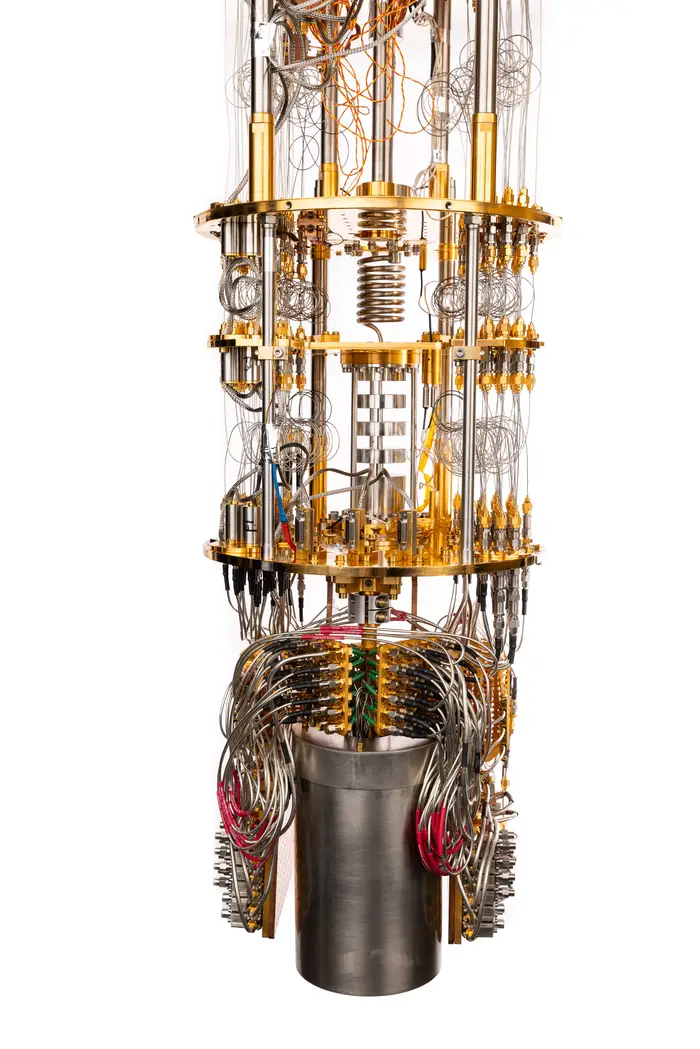
Supported by a $5 million grant from the U.S. National Science Foundation (NSF), in partnership with Hewlett Packard Enterprise (HPE) and Rigetti Computing, TangleLab will serve as a national testbed where researchers and educators can investigate how quantum computing technologies can be integrated with high-performance computing systems to advance scientific discovery and shape the next generation of cyberinfrastructure.

“Carnegie Mellon has long been at the forefront of advances in computing, and through the Pittsburgh Supercomputing Center we continue to invest in the infrastructure that enables the next generation of discovery,” said Theresa Mayer(opens in new window), vice president for research. “TangleLab creates a national platform where researchers can explore how quantum and classical computing work together, helping define the future of scientific computing while preparing the workforce that will bring these technologies into practice.”
Today’s most powerful supercomputers already combine multiple types of processors to accelerate scientific workloads. As quantum technologies mature, researchers anticipate that quantum processors will become another specialized resource within these heterogeneous computing environments. TangleLab will provide one of the nation’s first open platforms for investigating how these systems should be designed, programmed, managed and optimized.

“TangleLab continues PSC’s long tradition of making next-generation computing technologies accessible to the broader research and education community,” said Barr von Oehsen(opens in new window), PSC’s executive director and principal investigator for TangleLab. “Through our partnership with HPE and Rigetti, we are giving scientists, students and educators hands-on access to an integrated quantum-classical system, advancing discovery while helping build the quantum-ready workforce the nation will need.”
Unlike classical computers, which process information with bits represented as zeroes and ones, quantum processors use quantum bits, or qubits, that can exist in combinations of the zero and one states, a property known as superposition. Scientists expect that this ability to “calculate between the lines” will make quantum computers superior to classical computers at solving specialized problems, but researchers are still determining where they offer a meaningful advantage. TangleLab will provide an open platform for testing those possibilities alongside established high-performance computing technologies.
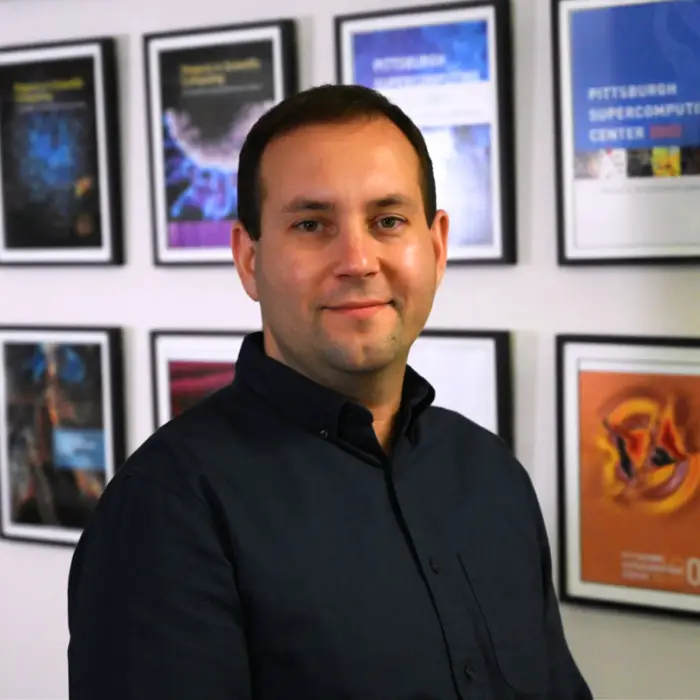
“With TangleLab, we are really looking into integrating quantum technologies into classical high-performance computing environments to enable hybrid quantum-classical workflows that can display flavors of quantum utility,” said Bruno Abreu, deputy scientific director at PSC. “We are not deploying a standalone quantum computer. Our goal is to make TangleLab the prototype open platform for a future where quantum information processing and distribution are core elements of advanced cyberinfrastructure.”
TangleLab represents the next evolution of PSC’s long-standing expertise in heterogeneous computing. Since 1991(opens in new window), the center has pioneered supercomputing architectures that combine multiple types of processors to accelerate scientific applications. By integrating quantum processors into these environments, TangleLab will provide an open platform for exploring how quantum resources can become part of tomorrow’s advanced infrastructure.
TangleLab also adds new infrastructure to a growing range of quantum research at Carnegie Mellon. The university is home to a broad range of efforts advancing quantum information science and engineering, from foundational research to technology development and workforce training. The Pittsburgh Quantum Institute(opens in new window), a collaboration among CMU, the University of Pittsburgh and Duquesne University, supports research, education and training in quantum information science and engineering. Carnegie Mellon’s NSF-supported Center for Quantum Computing and Information Technologies(opens in new window) brings together researchers, students, industry partners and government laboratories to explore practical applications in areas including quantum software, computing, communications and sensing. Across campus, CMU researchers are also investigating quantum materials and the fundamental physics that underpin emerging quantum technologies. In addition, CMU is a partner in the Keystone AI + Quantum Factory, a statewide effort to expand access to advanced computing resources and translate research into applications for Pennsylvania industries.
Researchers will apply for time on TangleLab through a flexible competitive proposal process. The system will support dedicated research use, as well as real-time access for classes and workshops. To help users of TangleLab come up to speed regardless of their level of experience with quantum computing, PSC will offer onboarding activities, training and in-depth research consulting.
In addition to von Oehsen and Abreu, project leaders include: Bruce Childers, dean and professor, School of Computing and Information, University of Pittsburgh; Masoud Mohseni, senior distinguished scientist and director of HPE Quantum at Hewlett Packard Labs; and Andrew Bestwick, Senior Vice President of Quantum Systems at Rigetti Computing.
PSC leaders expect construction of TangleLab to begin at PSC’s new data center on Sept. 1, 2026, with full operations expected in 2027.
PSC is a joint center of Carnegie Mellon University and the University of Pittsburgh.
“Carnegie Mellon University is a private research university in Pittsburgh, Pennsylvania. The institution was originally established in 1900 by Andrew Carnegie as the Carnegie Technical School. In 1912, it became the Carnegie Institute of Technology and began granting four-year degrees.”
Please visit the firm link to site