

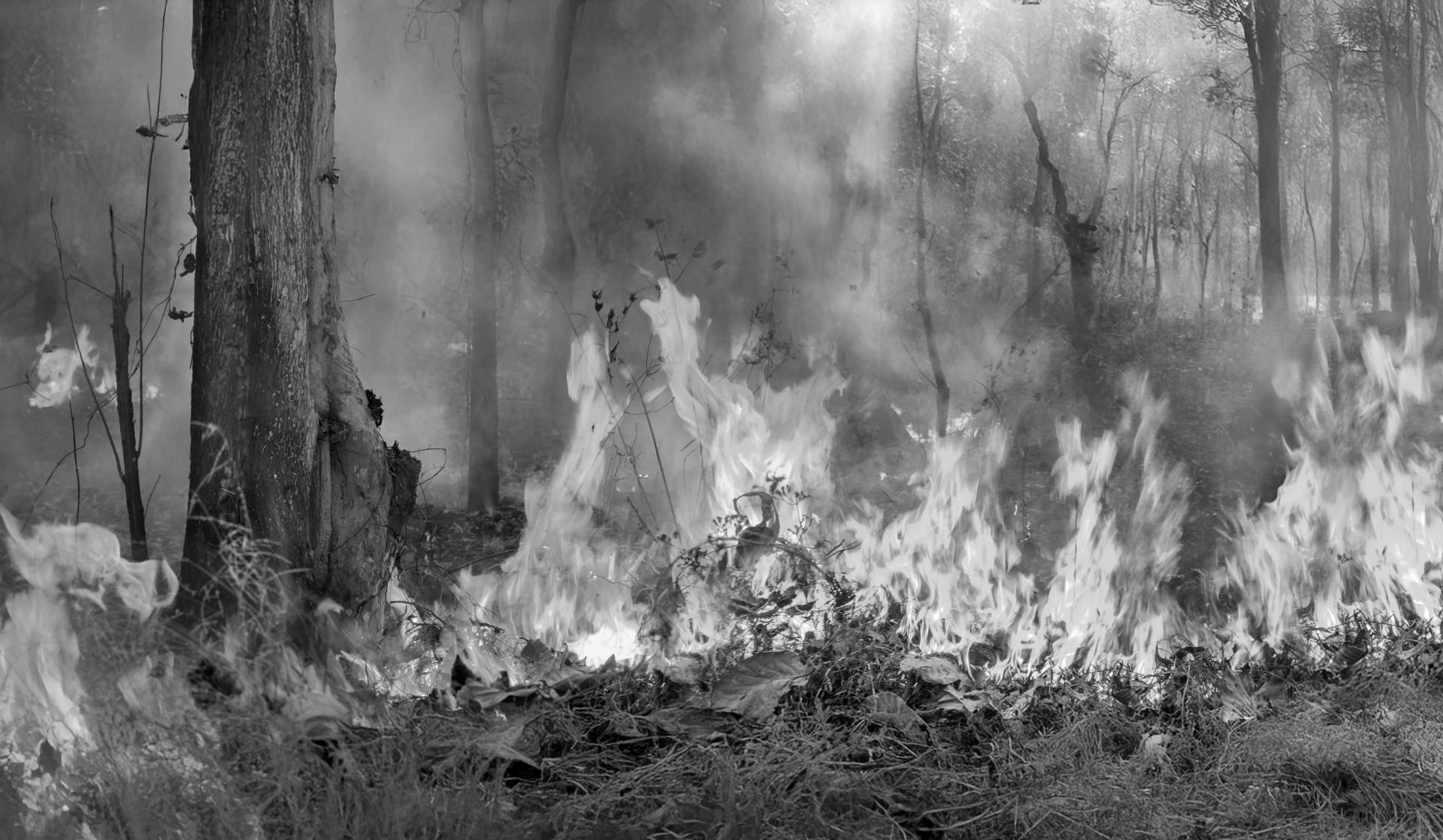
Being inside with the windows closed does not completely protect you from the smoke caused by wildfires, early findings by University of Manchester researchers suggest.
And opening windows during hot weather, they show, almost certainly exacerbates the problem of indoor air pollution caused by the fires.
The University’s Cystic Fibrosis Hub Air Quality Research team analysed real time indoor air-quality records from 23 Greater Manchester homes monitored between 1 and 26 July 2026, during two periods of wildfire activity in the nearby Pennine hills.
Every monitored home in the Cystic Fibrosis Trust funded study exceeded the World Health Organization’s 24-hour guideline for fine particle pollution on 17 July, when outdoor smoke levels peaked.
The preliminary analysis, which has not yet undergone peer review, also showed when households opened widows as temperatures climbed to over 33C , the problem seemed to get worse.
Dr Congbo Song, based at The University of Manchester and the National Centre for Atmospheric Science (NCAS), led the analysis of PM2.5, particles produced by smoke small enough to travel deep into the lungs, where they can harm health.
During the wildfires, overnight bedroom PM2.5 spiked from an average of 2.7 micrograms per cubic metre to 7.8 with windows closed and 11.8 with windows open. Closing windows reduced exposure, but levels remained 2–4 times higher than normal.
In some homes, concentrations in the bedroom overnight rose to well over 100 micrograms per cubic metre, many times higher than the levels normally recorded in those homes.
Levels of indoor-generated pollution, such as volatile organic compounds and carbon dioxide, actually fell during this period as participants opened windows to cool their homes, allowing the outdoor pollution in.
The researchers say that following the UK Health Security Agency’s guidance on wildfire smoke by staying indoors and closing windows should help reduce the pollution.
Levels, they say, did not rise as much in homes where windows appear to have remained closed though this did not prevent all outdoor smoke pollution from getting in.
The researchers are also currently working on a Greater Manchester Local Innovation Partnership funded study, the Retrofit Advanced Materials and Manufacturing Innovation Centre to investigate measures that may help further combat indoor pollution, for example during periods of wildfire, and during intensely hot weather.
That could include the use of air purification and integrated ventilation systems, improved sleeping arrangements and other measures.
One of the researchers from The University of Manchester, Professor Alex Horsley, said: “These findings show the difficult challenges that people face during periods of wildfires and high environmental temperatures.
“Following the simple but often repeated instruction of going indoors and shutting the windows will only give you some protection from wildfire smoke, and keeps heat in the home. Both smoke and heat can make breathing worse for those with chronic lung conditions.
“During July’s fires, in every home we monitored we found the effects of smoke was present indoors at potentially harmful concentrations levels, especially during periods when the heat forced people to open windows.
“We saw this in homes up to 60km away from the wildfires on the moors outside Manchester.”
“The University of Manchester is a public research university in Manchester, England. The main campus is south of Manchester City Centre on Oxford Road.”
Please visit the firm link to site