


Transcript
Harlan Krumholz: Howie, we’re back, baby. Hi, we’re back from hiatus. And to everyone else, welcome to Health & Veritas. I’m Harlan Krumholz.
Howard Forman: And I’m Howie Forman. We’re physicians and professors at Yale University, and we’re trying to get closer to the truth about health and healthcare. First of all, welcome back to everybody. Welcome back to you, Harlan. It’s our sixth season, and we are excited to welcome our listeners back and thrilled to have an outstanding lineup of guests for this coming year. We’re going to do things a little differently this year, and we hope you’ll let us know how you like it.
Harlan Krumholz: Our guest today is Dr. Aakriti Gupta, but first we like to check in on current and hot topics in healthcare, and we’re going to have Howie take this first segment. Howie, what have we got for us? Coming back… September….
Howard Forman: Yeah, look, there is much to talk about, and this episode is dropping on the eve of the 25th anniversary of 9/11. And we mentioned this on a much earlier podcast. This is a date that is ingrained in all of our memories. And you and I, Harlan, spent a good part of the day together in D.C. having, truly randomly, run into each other in the aftermath of the [evacuation] of much of D.C. And that is both a horrible memory on that day, but seeing you on that day, I will never forget. I always felt like it was an apparition when I was walking back with a sort of a stunned—
Harlan Krumholz: Oh, my God, that day was so weird, Howie. I was flying into—
Howard Forman: You were flying into D.C. National, right?
Harlan Krumholz: Reagan. I was flying into Reagan, and they diverted us to Baltimore. And I had a team in D.C. who was at a conference, and I had to make a decision. And I said, “I got to go to my team.” And I got a cab, and a cab’s driving me into D.C. The cars going out of D.C., it was bumper to bumper, not moving. And going into D.C., there was no one. I was one of the only cars on the road. We got our team. I happened to be walking down the street, and I saw you and it was… You were—
Howard Forman: And I had the same feeling, I looked over. I looked over at you—
Harlan Krumholz: You had no idea if there were going to be more attacks in D.C., what was going to happen?
Howard Forman: And I had just gotten back from dropping off one of my fellows in Cleveland Park, where he lived. We’d all evacuated downtown at that point. Couldn’t reach family, couldn’t reach friends at that point. Felt really disturbed at the moment. And I look over there at the Omni Shoreham Hotel, or maybe it was the other one—
Harlan Krumholz: No, no, we were on the street. Remember we went and got lunch together?
Howard Forman: Yeah. Yes. Yeah. You had ordered or were getting ready to order Chinese food and they forced you to buy two meals because they wouldn’t sell you one or something. And I remember we went back to the house that I was subletting and we had lunch together.
Harlan Krumholz: Oh my gosh. Yeah, you were at Strobe Talbott’s house, and we went back.
Howard Forman: Strobe Talbott’s house. That’s right.
Harlan Krumholz: You were doing your internship at—
Howard Forman: Fellowship, yeah.
Harlan Krumholz: Your RWJ Fellowship, Health Policy Fellowship.
Howard Forman: Yeah, it was quite the day, but I do want to just—
Harlan Krumholz: It was so great to see you that day. It was so good to see you.
Howard Forman: I do remember that. It is forever ingrained in my mind. It was a horrible day, but in the same time, it was great to see you, a friend in D.C., and we spent that together.
But today I’m still back talking about measles because it’s not just a major public health and healthcare threat, but it’s also an ongoing political issue. As of Friday before Labor Day, we’re already past 3,100 cases for the year, the highest annual total in more than thirty-five years. And last year, which itself set a modern record with 2,289 cases, is the baseline we’re blowing past. At this pace, we could, and I think we will finish 2026 well over double what was already an extraordinary year.
And here’s what’s strange. You ask people why this is happening, and you’ll get two completely different answers, depending on who you ask. To hear the leading candidate for governor of Florida right now tell it, it’s about immigrants. Most people I know would say it’s a vaccination issue. So today I want to answer two questions. Why do so many people believe the immigration story, and what does the evidence actually show?
Part of the confusion is a single word: imported. Epidemiologists, particularly at the CDC, use that term constantly, and it sounds like it’s describing where a disease comes from geographically, which fair enough invites people to think about borders. But in the CDC surveillance data, imported just means a case is linked to someone with recent international travel. It says nothing about immigration status. A returning missionary, a student-abroad student, a business traveler, a family member visiting friends in Canada and coming back to the United States, all of those count as imported cases.
And the data tell a clear story here. Imported cases have actually been shrinking as a share of the total. Back in the early 2000s, about 40% of the very small number of cases in the United States were imported. Last year it was down to roughly 10%. Meanwhile, 95% of this year’s cases are outbreak-associated, meaning they’re part of local ongoing chains of transmission here at home. Only sixteen of the more than 3,100 cases this year involve international visitors.
Take the largest single outbreak driving these numbers. It started in West Texas in early 2025, and it was traced to a close-knit religious community with low vaccination rates, not to the border. Texas health officials said so explicitly at the time. Fact checkers at PolitiFact and FactCheck.org have gone looking for a documented link between illegal immigration and these outbreaks, and they haven’t found one. What they have found is this: MMR vaccination among kindergartners has dropped from over 95% before the pandemic to about 92%, now below the threshold you need for herd immunity. That’s roughly 280,000 kindergartners entering school this year without protection. We should be keeping our eye on the ball and focusing on why we are so undervaccinated and correcting that if we truly want this outbreak to cease.
Harlan Krumholz: Well, it’s a story that never ends. I wonder if you could just clarify one thing for me that was going on in the news that kind of passed by me about this sort of squabble, and that may not be a fair word, between Josh Shapiro and the CDC about whether those two measles deaths were measles deaths and what CDC is saying. Can you just clarify for folks exactly what’s going on there?
Howard Forman: Yeah. I mean, I think first of all, people should know that most people that die from measles, they don’t die from measles viremia per se. They typically die from a pneumonia that follows the measles. They can get an encephalopathy that follows the measles. There are other diseases that measles creates the conditions for, and that’s what you die from.
And by the way, in Bangladesh right now, over a thousand children have died of measles this year. I mean, that is an extraordinary number. So I don’t want people to think that this doesn’t happen anymore, but the reality is you die of something from the measles, not directly from the measles.
In both of the cases of the children, one was a neonate just born and the other was a two-and-a-half-month-old, I believe. Both of those instances had measles and died. In one of those instances, it’s pretty clear that the measles was the direct and proximate cause of the death in a child that also had a form of microcephaly, but died of the measles. In the other case, the child died of splenic laceration and hemorrhage. Now, you could ask pediatricians how often they see a neonate die of splenic hemorrhage, and I imagine that most pediatricians will tell you they’ve never seen it. It’s rare. We also know that splenic hemorrhage more often occurs in enlarged spleens and enlarged spleens are an unusual but not unmentioned consequence of measles viremia.
In the case, the autopsy of this newborn, there is no indication that the spleen was enlarged, but there’s questions about whether you would even know it in someone of that size. I think there’s some question whether the child died of measles. I think most people would rationally say that if someone died of splenic rupture at that age, that there is a predisposing cause and in a child who had a difficult pregnancy, a mother who was unvaccinated, who had a very serious measles viremia and illness, it likely was related to the measles. But I think people are unwilling to say with a hundred percent certainty it’s due to measles.
Harlan Krumholz: Yeah, I think the part that confused me was people say “true, true and unrelated, this person died with measles instead of from measles,” but so few people have measles, this person had a life-threatening illness and they happen to have measles. It just sort of seemed to me pretty straightforward.
Howard Forman: We have a saying in medicine, you know the saying, “well, when you hear hoofbeats, don’t think about zebras.” It doesn’t mean it couldn’t be a zebra, but it’s much more likely that it’s a horse.
Harlan Krumholz: Yep. Thanks so much, Howie. Okay, let’s get to our guests. I’m real excited about this.
Howard Forman: Yeah, this is going to be great.
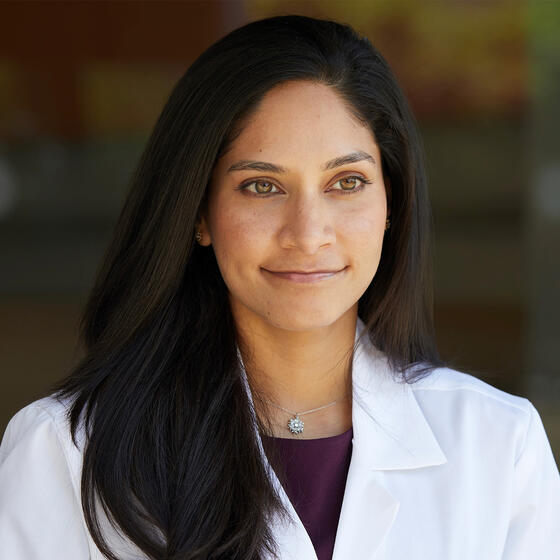
Harlan Krumholz: Howie, today we have such a great special guest. There is no rising star within the cardiology universe that’s greater or better than Aakriti Gupta. And she’s here with us today. Let me tell you a little bit about her. She’s an interventional instructional cardiologist at Cedars-Sinai Schmidt Heart Institute. She’s an assistant professor of cardiology. And I should say upfront that she’s an executive associate editor at JACC. So we work together closely, and we’ve been working together for a long time. And you should know I’m not a neutral party here. I’m president of the fan club because I’ve got so much admiration and affection for this guest. I first met her when she came to Yale as a newly minted medical graduate, having trained in India. And from the time she got here, it was clear that she’s special. Determination, grit, brains, grace, she’s amazing. She had her internal medicine residency with us and then cardiology and interventional cardiology at Columbia, and then advanced structural training at Cedars [Cedars-Sinai Medical Center], where she stayed.
Since then, I don’t know, something like four thousand cardiac procedures, about a thousand of them on heart valves. First author on a Nature Medicine paper early in the pandemic that helped the field understand COVID and has been cited a gazillion times. She’s got work that is at the cutting edge of this field of structural cardiology, where we’re trying to learn how best to help people with valve disease. She’s a co-founder of three companies, and she’s doing all this in a male-dominated corner of an already male-dominated field with poise and a lack of fuss that is just remarkable. She makes people all around her better. She brings out the best in all of us. She inspires us, energizes us. And I don’t know, she’s just getting started. Aakriti, thank you so much for joining us today. Such a pleasure to have you on the program.
Aakriti Gupta: Thank you so much, Dr. Krumholz. Now I feel like I’ll really have to go and do something in my life after that kind of such a generous introduction. Now I’ll actually have to do some big things.
Harlan Krumholz: No, you’re already doing big things. Look, I think it’d be really great for people listening to just get a sense of you and the journey that you’re on because it’s one of those where you showed up and just applied yourself. Tell us a little bit about your journey.
Aakriti Gupta: Absolutely. So I grew up in India. My dad is a physician. In India, you have only two options when you’re growing up. You can either be a doctor or you can be an engineer. Those are the two options. Everybody can relate with that. I always wanted to be a computer engineer. And in the ’90s, when all these dotcom companies were coming around, I remember my dad visited the U.S., brought a computer back home from the U.S., and that was life-changing for me. And I used to take extra computer classes at the end of my school day. I learned programming, and then at that time the programming language was FoxPro and of course HTML, but the C++. So I actually was very much into computer programming, and I used to say “I’m going to be a computer engineer.”
And this was around the time when you had to choose. In India, right after 10th grade, you choose whether you’re going to go into medicine or engineering or the arts. And there were two things, one was the dotcom bubble happened, and we didn’t know where computer engineering will go. As a concerned parent, my dad was like, “What will happen?” But the other was I knew how much joy it would bring my dad if I went into medicine. So I sort of just said, “Okay, I’m going into medicine.” I still remember the smile on his face.
So yeah, that was the beginning of the journey. The motivation has always been to have my dad smile and keep him happy. But I think along the way, I always carried that computer engineering side of me through my journey in the U.S. I’ll say the reason to want to come to the U.S. was always, again, partially inspired by my dad, who showed me how all of the innovation happens here. But I was also, whenever I read any guidelines, read any textbooks, they were all U.S. authors and I was like, “I want to be the person writing these guidelines and writing these textbooks and for that, I will have to go to the U.S.”
And so obviously inspired by my dad, I was able to apply to Yale, come here for electives, and I got to learn about the great work Dr. Krumholz was doing at Yale. So I wrote to him and I didn’t get a response. Then I went back to India, I wrote to him again, didn’t get a response. Then I wrote to him for the third time and somehow I was able to get a response. And I think that was the inflection point for me in my entire journey because that led to then me eventually coming and working with him. I don’t know how that happened. Honestly, if you looked at my CV at the time, I don’t know why he would give me a chance, but somehow the stars aligned and he—
Harlan Krumholz: Somehow he was so lucky to wake up and start going through his emails and realize that you were applying.
Aakriti Gupta: So I’m not sure how that happened, but it did. And I remember coming to Yale working at CORE with Dr. Krumholz and the other people who were there, like Benut Bigdeli is one of the other people who had started right at the time. He has been a close colleague ever since. I remember he would be going on and on about all these randomized controlled trials. He would know the exact hazard ratio and confidence interval. And I’m like, “How did I get here?” I felt like the biggest imposter for the longest time.
But here’s where I’m getting at, I think when I saw up close Dr. Krumholz’s life, he was doing a million things, right? He’s seeing patients, he’s writing papers, he’s writing grants, he’s doing trials, he’s founding companies. He was founding PCORI at the time. There was this Facebook thing he did. There was just a million things he was doing. And I really honestly think that those impressions at the time, because that’s the only way I knew a physician is in the U.S., that was my exposure to what it is to be a successful physician. And I emulated, I think, all of that. I internalized all of that as my aspirations. So I’m not just saying this for the sake of saying it. I often think back, how did I grow all these ambitions to want to do so many things, because that’s not typical. And I always go back to what were my first impressions when I came to the U.S., and those were my first impressions. So I’ve basically been trying to be you, is what I’m trying to say, Dr. Krumholz.
Harlan Krumholz: You’ve already done a better job at that. You’ve done a better job.
Howard Forman: I want to help our listeners understand the field of structural cardiology because I’ve been in medicine for four decades now, and it’s only in the last few years that I came to understand that interventional cardiology had sort of split into two different divisions in addition to electrophysiology. Can you just tell us what it is that the work that you do and why do patients need this type of procedure and this type of specialist?
Aakriti Gupta: Absolutely. I think I feel so fortunate to have matured in this field in the current era when I got to be a part of the journey of, really, a change in paradigm of how care is delivered for valvular heart disease. I think that has been a very big fundamental change in the last couple decades. So I would say if you sought care in the ’90s or even early 2000s for aortic stenosis, which is tightening of the aortic valve or mitral valve leakage or tricuspid valve leakage, all of these valves that can either be super tight or they can leak, the only way to treat them was with open heart surgery. And because open heart surgery is such a big deal, you would wait for patients to be really, really sick before you take them to the OR and put them under the knife.
Now, a whole different world of innovation has occurred and brought therapies to these patients that do not involve open heart surgery. Now we can actually replace all of these valves, the aortic valve, mitral valve, tricuspid valve, we can replace them or even repair them in certain settings just percutaneously without a knife, just going through a tiny puncture in the groin and it’s either through the vein or the artery, but to be able to do that, and in most cases, patients actually go home the next day, they’re walking the same day…. They’re awake and walking and leading their normal lives the same day, and we discharge them the next day. So I think that’s revolutionary because traditional open heart surgery means weeks of recovery in the hospital, much more procedure-related complication and long recovery, now patients go back home the same day. The debate is more on the durability end and we can get into that, but the procedural experience is fundamentally different and amazing.
Howard Forman: Yeah. I wanted to just quickly follow up on the durability issue because I think some people might listen and say, “Why would I ever have open heart surgery now?” And so I just wonder if you could say a couple of words about what are the opportunities in the future, what’s the current state and why might someone not have a percutaneous procedure?
Aakriti Gupta: Yeah, great question. So I think for patients who are so sick that they can’t get surgery, I think that there’s a no-brainer. Now there is access to a therapy that they did not have before, but then there are patients who are eligible to get surgery, who are young, who don’t have comorbidities and for them, it’s a real decision. Should they go under the knife and get open heart surgery or can they go for this very convenient option and go home the next day?
I think I don’t want to overgeneralize this because it will really vary based on which valve disease and what really we are talking about. But broadly speaking, I will say that for aortic stenosis, where we have transcatheter aortic valve replacement, which is the alternative for open heart surgery done percutaneously, that is the field where we have the longest arc of evidence and the most robust evidence. And we can say very confidently for up to seven years, because that’s published in The New England Journal of Medicine, that at least up to seven years, the outcomes are quite comparable for open heart surgery and transcatheter for aortic stenosis. But I think as we publish more evidence moving on, we will be able to really say, I think 5 to 10 years from now, we will really be able to say, “Okay, how long are they comparable and at what point does one get to be better than the other?” And I don’t think we know that right now.
Howard Forman: That’s great.
Harlan Krumholz: One thing that I really admire about you, people know, they’ll say, “I can’t believe he gave this podcast. He just seems like he’s such a fan.” I am, you know I am. One of the things you do really well, and I wonder if you could just talk about a bit, which is you’re very respectful and deferential, but you speak your mind and being able to get that balance where people feel that you can provide a truth how you see it and do that with confidence, but do that in a way that doesn’t elicit a defensive response by others because clearly it’s provided in the context of respect. And in fact, it is a show of respect that you do that. How did you develop that and what advice do you have for those of us who sometimes when we’re speaking truth actually do elicit defensive responses?
Aakriti Gupta: I think that’s a complex question. I’m sure my husband will kind of disagree with your assessment of how I am, but I will say part of this…. So the part of not being intimidated and speaking my mind, I think it really comes again from my bringing up. My parents never raised me as a girl. It was like I didn’t even know what it is to be a girl versus a guy. I didn’t know any of that, even though I grew up in India. I think it’s in the later stages of my life that I appreciated, okay, there are some differences, but my dad taught me to dream with sky being the limit. And I think I had that environment growing up where I could speak my mind and there were no consequences per se for being honest and expressing myself. But I think then there’s another component of, I think women do tend to be nonconfrontational in general. And I think I blend those two things in a way, if I had to put it together.
Harlan Krumholz: Yeah. And I just say, I think people appreciate that about you, that you don’t just go along, you’ll speak your mind, but you also will support your position. So it’s not like that you have strong anchored beliefs that no matter what the evidence is, you’re going to hold to them, but you are willing to do that.
And you just raised another issue, because when we’ve talked, before, about what it’s like to navigate through a very male field, especially structural cardiology, you always reflect back to me that you just never even think about it. Can you just talk a little bit about that? I mean, how has that helped guide you and how are you able to avoid that? Because there is an old boy network. There are features of our profession in cardiology that have made it harder for women to progress.
Aakriti Gupta: Honestly, if I had to think about it is all about perspective. So I come from India, right? So I think my perspective is just so different. And I mean, in India, there is much more expectation of a woman being a certain way and not going into male-dominated fields, etc., than here. So I think I come from that perspective.
And then my journey in the U.S. has really been, again, the classic American dream. I have worked hard, I’ve been given the opportunities, and then they’ve translated into success and I have no reason to complain. So I guess I’ve just never felt that experience of being a woman in this male-dominated field and not getting opportunities. I have only been given the most amazing opportunities. I feel like I’ve earned them. I’ve definitely worked hard and I’ve earned them, but I’ve never felt… Yeah.
Harlan Krumholz: One quick insert, then I’ll go to Howie’s just to say also you now are at an institution, Yale and Columbia aren’t like this, but you’re now at an institution that really has raised a profile of women, Susan Cheng, Christine Albert before that, Joanne Chikwe, head of surgery. I mean, women are in really important leadership positions at Cedar, Noel Bairey, I mean, Mertz, there’s a lot of people there who are amazing, amazing and also happen to be women who are in leadership positions. And final shout out to Raj Makkar, who is a principal mentor of yours and sponsor, who is just the most amazing person and generous. And you’ve reflected this to me. I’ve seen it myself. And again, if you’re around the right people, yeah, your way can be a little easier than it would otherwise.
Howard Forman: On the same vein, slightly different topic though, you may professionally feel like being a woman hasn’t been impactful for you either way, but on patients being a woman matters and race can matter. And a lot of your work is focused on racial and gender differences in healthcare outcomes. Can you speak to what you feel coming both as a clinician, as well as a researcher, what are the things that we could be doing better that are going to allow us to create not just an equal playing field, but better outcomes for a lot of the more minoritized and marginalized populations and women who are not necessarily in the minority, but clearly have poor outcomes in some very significant cardiovascular disease categories?
Aakriti Gupta: I would say, I think, and maybe this is a little bit of a segue, but also very relevant to this question. I think in the last decade we are seeing women take care in their own hands. I’m seeing all these companies that are $2–$3 billion valuations already. There’s Midi Health, there’s Tia Health. These are actual companies that are dedicated just for organizing care of women and making it better and more accessible. There’s Pomelo Care as well. I mean, there’s so many. There’s Materna Health. There’s so many companies that have come up with millions of users and multi-billion dollar valuations and investments and are actually showing better outcomes.
So I think we are finally at a place where there is a collective recognition in our community that women need better care, need better attention, and we have to meet them where they are because I think I can see how women mostly tend to defer their care because they have so much responsibility at home. They have to take care of their kids or other people who need care and they put themselves last. But with technology and AI where it is today, these care systems are meeting them where they are, and they’re actually utilizing them amazingly. So I don’t know if I answered your question, but I kind of wanted to say that I think I’m seeing ways, and this is one of them, to address at least that inequity.
Howard Forman: And you started the conversation, so I’ll pivot to that a little bit. Tell us about where your entrepreneurial efforts are directed right now, because I know Harlan and I have talked about, and you and I talked briefly about the fact that you are, you’re an entrepreneur as well as a clinician, as well as a researcher. Where do you put your energies in the entrepreneurial space?
Aakriti Gupta: I think I see all of this really melt together, because as a clinician, obviously I want to take care of patients. As an outcomes researcher, again, taught by Dr. Krumholz, I want to study the gaps in care and study outcomes. And then the entrepreneurship basically is, at least what I do, is really enabling better access to care and filling the gaps in care and measuring outcomes. So essentially, I remember I was a cardiology fellow at Columbia, and this was a call night. I was sitting with a co-fellow, his name is Jeff Wessler, and we were just generally talking. And one of the things that came up is in our fellows clinic, our patients have to wait three to four months to get an appointment. And Jeff had a very entrepreneurial bent of mind, and he said, “Well, maybe we can solve that problem.”
And at that time, I was not myself thinking about entrepreneurship, but it just started as a call night conversation, and then it evolved into us actually building a company called Heartbeat Health. And we founded this in 2017 when virtual care was not a thing. It became a thing after COVID, but at that time, it was a very revolutionary concept, that you could just do a video visit. And he’s like, “But what about the physical exam?” And I reflected that, think about it, when we see our patients in our clinic, we are going and looking at their echocardiogram. We are not really putting our stethoscope… and if we are, it’s just to show the patient that we put our stethoscope. I don’t know how much… I used to be a great auscultator coming from India. I could detect mitral stenosis on my thing, but now I can’t. I know I’ve lost that.
So the point was, so that became a passion to really democratize access to care. I still remember we wrote this on a page that right now the patient has to come for an appointment. They wait two, three months. Then we order some tests. Then they go and get those tests done in the next week or two. Then they have to come back to discuss the results a few weeks later. So you’ve spent three, four months doing something that could be really compressed if we did this virtually. So now with Heartbeat, for example, you could go and you could be seen within a day and you could get testing in another day or two. And so within a week you got that whole episode of care. So that was that.
I also met two wonderful engineers when I was at Cedars who had a big data set of echocardiograms. And now AI, this is in the world of AI when after the ChatGPT moment, everything is AI now. So they were sitting on this dataset and were building algorithms, but didn’t know what to do with that. And we started this conversation where now I’m a valve disease expert. Now I’m passionate about making access to care for valve disease more accessible. So I was like, echocardiogram is the fundamental diagnostic modality for diagnosing heart disease, and if we could automate that, then we could really scale that where you don’t need cardiologists to be diagnosing things, AI could really automate so much of that. So that inspired that company.
And then AllHeart is my most recent venture, which was actually inspired by the ARPA-H, ADVOCATE, call for grants where the government is saying that we want agentic AI to really fill in the gaps in care for 46% of the rural counties that don’t even have a cardiologist. So we started putting our brains together for that. And now we’ve created a company where it’s like Heartbeat, but even much more AI-enabled and much faster care, much more AI work and much more time for the cardiologist to spend with the patient.
So all in to say that I guess my entrepreneurial efforts have all been very aligned with the overall mission of providing care, providing easier access to care and improving outcomes as we do it.
Harlan Krumholz: There are two things I want to cover before we finish. One is just about the trial you’ve launched. You really are leading a remarkable trial, but just to finish up on the AI and the entrepreneurship, you have an interesting thesis that you expressed to me last week when we were talking. I wonder if you want to just share this about how healthcare is evolving and what your thoughts are about what it’s going to look like as a result.
Aakriti Gupta: Sure. I think about this a lot. I think five years from now or sooner, but I think in the U.S. it’ll take at least five, if not more. I think care is going to become much more decentralized, asynchronous, and continuous. Right now it’s episodic. Right now a patient makes an appointment. They may have high blood pressure every day and sometimes it’s 200, but they’re just sitting on it because they’re waiting for their appointment three weeks from that day when they will see the doctor and in that visit, whatever happens, happens. So it’s episodic, it’s centered around geography of the patient going and seeking care in a certain geographic setting.
But I think where care is headed, a lot of the care will be delivered asynchronously. Expertise care will be asynchronous around a clinical decision and not the scarce resource that you have to wait for. And it will be continuous because of the kind of variables and tools that we interact with in our daily lives, AI agents are going to be able to, and they are currently able to correlate a lot of that and escalate to clinical care when needed. So the patient gets the care when needed. If it’s at 10:00 p.m. or at midnight, that’s when they get care, not three weeks from that time. And this is live in China right now, from what I’m hearing. So I think this kind of care model already exists. It’s going to come to the U.S. soon. And I think we are in the process of making it happen right now. The more I see all these companies come about, I think this is happening.
Harlan Krumholz: Yeah. I think to me, it’s a flip of the balance of power. The power existed within the medical care system. You came, you sat in a waiting room, you couldn’t sit for hours. You’re waiting to see someone, like you said, then you’re told to get a test. You got to go somewhere. You got to come back. Everything is your effort, your time. If you’re an hourly worker, it’s at a great cost. It’s difficult, challenging. And this new wave is going to be very consumer-centric, and people will have choices and options. And you’re right on the forefront of that.
Just as we’re getting to the end, you’re leading a remarkable clinical trial, one of the biggest trials independently done, independent of companies, what we call investigator-initiated. That means that the scientists like you come up with a question and get it funded separate from companies. It’s not being driven by an agenda from the companies, it’s being driven by a clinical question that clinicians have and patients need answers to. Can you just talk just a little bit about what you’re doing and how you’re doing it?
Aakriti Gupta: Absolutely. So we talked about severe aortic stenosis and role of transcatheter aortic valve replacement and how we have so much evidence for that. But in all of those trials, patients who have bicuspid morphology, so normal aortic valves have three leaflets, but there is about 2% of the population that has only two leaflets instead of three. So that particular morphology was excluded from all of the pivotal trials that led to the evidence base that we have today. But despite them being excluded from the—
Harlan Krumholz: Do you want to say… why were they excluded?
Aakriti Gupta: Because it’s a difficult anatomy. These are asymmetric valves with much more asymmetric calcium and the outcomes could be worse with TAVR, which is transcatheter aortic valve replacement, than with open heart surgery. So that is why they were excluded from these trials. But despite being excluded, they have an FDA approval to be performed. So what happens is that in the real world, when patients come with the bicuspid morphology of aortic stenosis, they demand a TAVR. They want transcatheter. Why would they want open heart surgery? It’s clinically indicated. Interventionists love doing it. So the thing is, it’s happening, but it’s not evidence-based and we may be causing harm. We may or may not be causing harm—we just don’t know that.
So Dr. Makkar, who’s like a pioneer of this field and has published extensively on specifically bicuspid morphology, he basically recruited me as a co-investigator and we wrote for this grant, which PCORI, which is an organization that Dr. Krumholz, I know you were a founding governor of, has very graciously supported our efforts and we are now running this trial. And this would answer this question because we could be actually actively incurring harm right now by performing a transcatheter in bicuspid morphology. And industry had no incentive to fund this trial because they’re already selling their products, their valves are being used, so why would they want to show that there could be a possible harm? So this was one of those trials that could only be done, investigator-initiated, and we’re very fortunate to be leading it.
Harlan Krumholz: And how much is the funding and how many sites and how many patients are going to be enrolled?
Aakriti Gupta: So it’s about $27 million in funding in about 60 to 80 sites and 1,200 patients to be enrolled.
Harlan Krumholz: Wow. Wow.
Aakriti Gupta: We’ve started enrolling.
Howard Forman: I think we can learn a lot more from you, and I’m certain that we can at least get the results of this trial when we have you back. So I really appreciate you coming on. This has been fantastic, and you’re a remarkable woman. Harlan’s very right to be so proud.
Harlan Krumholz: It’s an honor to have you on. Howie knows that I was really nervous about this because I wanted to—
Aakriti Gupta: Oh, my God.
Harlan Krumholz: …I want to make you proud of me for the interview.
Howard Forman: Yeah. You were fantastic. Thank you.
Aakriti Gupta: I think I’ve told you this, right? When you asked me seven, eight months ago, I was like, “Oh my God, I’ll have to achieve something by the time I get on this podcast.”
Howard Forman: You’ve done that and more.
Harlan Krumholz: You’ve more than done that. You’ve more than done that. Thank you for joining.
Howard Forman: Thank you.
Aakriti Gupta: Thank you. Thank you for the opportunity.
Howard Forman: Oh, my God, Harlan, you are totally right. What a wonderful guest, and she is so delightful in person.
Harlan Krumholz: Oh, my God. She’s so great, so articulate, so clear. And really she is already a star in cardiology. It’s amazing how much she’s accomplished. And like I said, she’s just getting started.
Howard Forman: I look forward to having her back.
Harlan Krumholz: She’s just getting started.
Howard Forman: Yeah, absolutely. So Harlan, what do you have for us today? This is now my favorite segment of the show.
Harlan Krumholz: Is it? Okay. So I’m glad to give you some updates here. So Howie, while we were away, cardiology took two hard hits, one on inflammation and one on Lp(a), lipoprotein(a). Both were ideas with unusually strong support behind them. If we could put together drugs that would attack inflammation, lower inflammation in the body, if we could put together a drug that would lower this risk factor, LP(a), people would do better, but it didn’t turn out that way.
First, let me talk about the trial that came out a few weeks ago, ZEUS. More than 6,300 people with atherosclerotic disease, chronic kidney disease, and in high-sensitivity CRP, an indicator of inflammation in the body of at least two, they received a drug that is an antibody against a substance in your body called interleukin-6. This is part of your immune system. It helps actually rev up inflammation in your body. And it’s part of a pathway that we have been convinced plays a role in atherosclerosis. There are thousands and thousands of papers that talk about the role of IL-6, and the idea that we have an antibody against it was what seemed like highly likely to be able to provide a benefit.
The drug did what it was designed to do. The free IL-6 fell. The C-reactive protein, which was a reflection inflammation, fell, but cardiovascular events did not. A hazard ratio of 0.99 means essentially the group with placebo got the exact same result as those that got the drug. And importantly, serious infections were more common with people on the drug. And that sort of makes sense because this substance, IL-6, is also very important in helping us fight intruders, help fight disease. So importantly though also, all-cause mortality was no different.
Novo Nordisk, the group that put out semaglutide and has had so much success on obesity, was behind this. And they not only announced this result, but they stopped two other heart failure trials that were using the same drugs on the monitoring committee’s judgment, they were unlikely to succeed. This was a shocker to everybody. We all thought treating inflammation was going to be a big winner. Lots of people have made bets on this. There’s lots of evidence that it should have, and it didn’t. And so we’re recouping from that, but that wasn’t the only one.
There’s an Lp(a) HORIZON study. And let me just tell you what Lp(a) is. It’s an LDL particle. Remember, this is a bad cholesterol, LDL particle, with an extra protein wrapped around it. The extra protein makes a particle stickier in the artery wall, and it also looks enough like the body’s clot dissolving protein to get in the way of clot breakdown. So it does damage in two ways, through the plaques that form, the stiffening of the arteries and through clotting. And the most important part here is to know that it’s inherited. Your level is set almost entirely by your genes. This isn’t a lifestyle thing. It’s essentially fixed from childhood, so much so that we say you don’t have to be measured twice for Lp. You only need one measure to understand where you stand.
And people had done a whole lot of studies showing that this is in the causal pathway for atherosclerosis, it caused hardening of the arteries that caused cardiovascular disease. And so this had 8,300 patients, 8,323 with established cardiovascular disease and an Lp(a) at or above 70. And they randomized to a drug that could lower it or a placebo. And Novartis reported that this drug did what it was expected to do. It lowered Lp(a). We thought this would be great, but all the outcomes apparently showed no benefit. And we haven’t seen the data either on this or ZEUS, it hasn’t been published yet, but both of these failed. And these were supposed to be blockbuster multi-billion-dollar drugs for the company. You and I know of people who have elevated Lp(a), for example, and I’ve been telling people, “Just wait. We think soon we’re going to have something that’s going to be able to address that risk factor.” And now we don’t. And I’ve got lots of thoughts about what went on here, but it was a big disappointment.
Howard Forman: For me at least, there’s a couple of things that are fascinating, as someone who’s more of a layperson, I’m not a cardiologist. One is that we do use these surrogate markers so much and start to believe in them and sometimes they don’t work out. We do need these studies to be done to tell us more about outcomes and so grateful that these get done.
The other thing that’s fascinating as someone who’s been interested in the investment world for much of my career is to recognize that as successful as Novo Nordisk has been, in so many ways, that, and as much as people might look at them and say, “Wow, look how easy it is to make money in the pharmaceutical industry,” this is a company that bet big and for the moment is losing, and they’re not the only one, as you mentioned, but it’s just another example of how hard it is to be successful. When you’re successful, you get big payouts, but it’s not easy to be successful.
Harlan Krumholz: So for me, one of the central things is, especially for the Lp(a) where I think there’s very strong evidence this is causal. And you can be causal, but if you’ve been exposed to a certain level for fifty years and now you change it for two years, maybe it’s a lot to expect—
Howard Forman: It’s not big enough.
Harlan Krumholz: …that it’s going to have the effect, especially in the short run.
Howard Forman: Great point.
Harlan Krumholz: And knowing something’s causal doesn’t necessarily lead you to know that modifying it is going to reduce risk. And the trial’s not asking, “Is this causal?” The trial’s asking, “If I modify it today, what’s going to happen in the next year or two?” And that’s a different question. It doesn’t mean that we weren’t right on the science. Same with inflammation. I think there’s strong enough evidence inflammation plays a really key role in atherosclerosis. The question is, what do you have to target it with and what benefit will accrue, for what period of time, in which patients?
And I’ll just say one thing about the inflammation. We do have a drug, by the way, that reduces inflammation and reduces cardiovascular disease and actually improves our ability to fight infections. And that’s a GLP-1 receptor agonist. They do that in people with obesity, so that’s interesting. But in this case, both trials led to disappointment. I don’t think any of us are going to give up on the idea that we can address Lp(a) or we can address inflammation yet. We need more information. We haven’t even seen the published papers on this yet, but this diminished a lot of enthusiasm we had for thinking in the short run, we were going to have new tools to be able to help patients who are facing these issues.
Howard Forman: Really appreciate you explaining this to us, Harlan. These are tough topics.
Harlan Krumholz: Yep. And pleasure to be back with you, Howie. You’ve been listening to Health & Veritas with Harlan Krumholz and Howie Forman.
Howard Forman: So how did we do? To give us your feedback or to keep the conversation going, email us at health.veritas@yale.edu or follow us on LinkedIn, Threads, Twitter, whatever social media you have.
Harlan Krumholz: And we love your feedback. Any way you can give it to us, email us, put it in anywhere you can, put it on social media. The more attention we get, the better it helps us to engage with our audience.
Howard Forman: Yeah, we’re approaching a quarter million downloads. We’re very excited about that.
Harlan Krumholz: A quarter million downloads, that’s a lot.
Howard Forman: I know. I know. Health & Veritas is produced with the Yale School of Management, the Yale School of Public Health. To learn about Yale SOM’s MBA for Executives program, visit som.yale.edu/emba, and to learn about Yale School of Public Health’s Executive Master of Public Health program, visit sph.yale.edu/emph.
Harlan Krumholz: And a hat tip to our superstar undergrads. Donovan Brown’s with us today, Gloria Baek, our outstanding producer, Miranda Shafer. And yep, in this new season, I get to work with the best in the business, Howie Forman. Thanks, Howie.
Howard Forman: Thanks very much, Harlan. It’s great to be back. Talk to you soon.
Harlan Krumholz: Yeah, see you soon.
“The Yale School of Management is the graduate business school of Yale University, a private research university in New Haven, Connecticut.”
Please visit the firm link to site