

Your research has covered a remarkable range of topics, from housing markets to patterns in volatility to discount rates to the economics of biodiversity loss and climate change. What draws you to these issues?
I do have eclectic research interests. I was drawn to finance because I’ve always loved math, and finance works on challenging problems that are mathematical in nature but involve deep economic questions and serve an important social purpose.
I studied economics in college, then enrolled in a PhD at Harvard thinking at first that I would study macroeconomic theory. When I started working with Professor John Campbell, who is very interested in the intersection of macro and finance, I fell in love with what finance studies: how we share and manage risks in the economy.
Until governments decide to take substantial action and begin to coordinate globally on solutions, financial markets can go at least some of the way toward managing these risks and internalizing these externalities. That’s where climate finance research comes in.
Risk and its management has been the thread connecting all my work. The tools of finance take a systematic approach to questions of fundamental societal importance. Finance involves measuring the risks in the economy and constructing instruments that allow appropriate hedging or sharing of these risks. And of course, people’s preferences about risk, their incentives and actual behavior all play a central role there. Finance links all of these aspects of risk and its effect on people’s lives.
Your current work looks at the twin crises of climate change and biodiversity loss. Are those examples of issues that bring out both the mathematical and the social components?
I’ve felt that very clearly working on climate and biodiversity. These issues are going to be very important to everybody in some way. Climate and biodiversity are both planetary boundaries—crucial limits for the health of the planet and for human flourishing and survival.
We’re going to have potentially significant damages coming from climate change. There are real risks from biodiversity loss, too, though they are less well studied, especially in economics and finance. And we’re just starting to see how these twin crises can amplify each other. Whether it’s buying a house, running a business, or designing policy, to be ready to live and work in the real world today, we need to understand these risks.
You started with the climate work. Would you explain that research?
For much of this research I’ve collaborated with Johannes Stroebel at NYU. One area our research has focused on has been understanding to what extent financial markets recognize climate risk. If they’re not even aware of this risk, then the risk cannot be properly managed and shared. But our work on real estate and on stocks provided evidence that these risks are indeed recognized by market participants and the risks are affecting prices. Other researchers have shown that markets are recognizing climate risks in a range of asset classes.
I’ve also worked on how financial instruments can be useful for sharing climate risks among investors, and for protecting investors’ portfolios from these risks. In an ideal world, we would be able to hedge climate-related risks with something like long-term insurance contracts. If I worry about my house in New Haven being exposed to severe hurricanes or sea-level rise, I could buy a hundred-year contract that is going to protect me if these risks materialize.
But that type of insurance doesn’t exist. You can buy property insurance, but it’s renegotiated every year. The moment the risk becomes significant, the insurer will either reprice or exit the market.
To find an alternative way to mitigate the financial risk, we developed a long-short portfolio construction strategy that would ensure that the portfolio would appreciate in value if climate shocks occur. We showed that shorting stocks that are more exposed to climate risk and going long on stocks that are less exposed would deliver a hedging portfolio, and we develop an implementable procedure to build this hedging portfolio.
Is climate change something that financial markets can address?
That’s an important question, and it actually relates to both climate and biodiversity. When someone pollutes the environment, emits CO2, or destroys biodiversity, they often don’t bear the consequences of those actions themselves—they impose the costs broadly on society. For example, if I emit a ton of CO2, it doesn’t remain in the air immediately around me, only heating up my atmosphere. That ton of CO2 contributes to an increase in temperature all around the world. I therefore don’t internalize that impact. In other words, these are examples of negative externalities.
It’s well known that governments can be very effective at addressing externalities, with a variety of tools. They are much better positioned for doing that than financial markets. Markets don’t have a good way to force those creating externalities to bear the cost. That’s where policy or regulation would typically come in. But until governments decide to take substantial action and begin to coordinate globally on solutions, financial markets can go at least some of the way toward managing these risks and internalizing these externalities. That’s where climate finance research comes in.
You started working in climate finance early. It has since become a big field.
I was drawn to research, to the enterprise of knowledge creation, as a way to work on big questions. There’s an exploratory element to it that’s really exciting. You don’t have a set path; you can just explore any direction. All of us doing this work hope to discover something entirely new—something we didn’t know that we didn’t know.
For much of the history of economics, there was no research on climate and economics—that is, the study of climate change as an economic problem. William Nordhaus here at Yale did work going back to the 1970s that pioneered that approach.
It’s worth noting that Nordhaus’ groundbreaking work originally really included no role for finance. That’s because the most natural way to address the climate problem is for benevolent planners to establish regulations and taxes that make carbon emitters internalize the costs they impose on society, not to rely on financial markets to do that.
Martin Weitzman, who started his career here at Yale, was among the first to study how risk and uncertainty interact with the way we should think about and manage climate change. He was one of the founders of the field of climate finance. He too argued for a carbon tax while articulating the idea that climate change represents a massive risk-management problem.
But for a long time, climate finance was a very small field. Only in the last decade has it really blossomed. It has been wonderful to feel the field moving. I worked as an editor for a finance journal and saw submissions go from occasional climate finance papers to a first wave that took on the low-hanging fruit to a second wave that was much more nuanced.
There is momentum from the collective effort of knowledge creation. It’s motivating. All the more for being focused on such an important topic that impacts every one of us.
You have also studied biodiversity loss.
Like climate change, biodiversity loss is a planetary boundary where human activity has had very detrimental effects. It has been much less studied, but it’s another area where finance has a role to play.
There are many definitions of biodiversity, but broadly we’re thinking about the variety of species and ecosystems that contribute to life on earth. There are ethical arguments about why we should care about biodiversity—who are we to go around destroying other species? But I approach this research from an economic perspective—if biodiversity loss is material to the economic system, it has a value to society that complements its ethical value, and that we as economists can quantify. That means that my work approaches the problem from an anthropocentric view of trying to understand the importance of biodiversity to humans.
Why is biodiversity important to humans?
We get indispensable services—for example, water filtration, clean air, carbon sequestration, and pest regulation—when natural systems are allowed to function undisturbed. We couldn’t grow food without the natural systems that make soil fertile and allow for pollination. Biodiversity plays an important role in the provision of those ecosystem services.
If human activity puts pressure or causes imbalances to these systems, some of these functions may stop being provided. Things we depend on will no longer be available for human production or consumption. They will no longer be free. And we are going to pay the price.
At times, losing just one species can have very significant economic implications. For example, in India, diclofenac, a nonsteroidal anti-inflammatory drug (NSAID), was given to cows in the ’90s. It was safe for the cows and for people. But when vultures ate the carcasses of animals that had been given the drug, they died in large numbers. The vulture population dropped to almost zero in entire regions of India.
The birds had been providing important sanitation services. There wasn’t a replacement species that provided a similar function. Having people physically providing the sanitation was very costly and, in a developing country, it didn’t happen, which led to an increase in human mortality because of the spread of disease—an estimated half a million human deaths between 2000 and 2005.
It took years for researchers to connect all those dots, but it demonstrated that there are instances when one species is providing a function that may not be noticed or appreciated, but once it is lost, it provokes large negative consequences to human society.
Another example of the importance of biodiversity for human welfare would be the pharmaceutical industry. They get many inputs from botanical, microbial, fungal, and animal-derived sources; perhaps more important, they get inspiration and blueprints for new drugs. Researchers developed many drugs by imitating compounds and processes that nature developed first. Without that library of information, our development of drugs would be dramatically slowed.
How do you look at biodiversity loss from a finance perspective?
It’s hard. With climate change, it’s very clear what we need to measure. If we know the level of carbon emissions and the temperature of the planet, we know where we stand. We also know, when building financial products that provide insurance against climate change, precisely what those products should target—for example, a certain increase in temperature.
There’s no comparable way to measure and quantify global biodiversity loss. To get at the big picture of how biodiversity losses percolate through the provision of ecosystem services into economic activity, we had to build a model from the bottom up.
We read lots of ecology papers to see which species and ecosystems are involved in each of the services nature delivers. Then we looked at each service the way economists do. How do the participants producing this service relate? Are they complementary to each other? Are they substitutes? What are the patterns in the way biodiversity loss affects general output production?
That let us construct a model that can tell us precisely what features of biodiversity we need to study to understand how it affects the economic system. This model can then guide us on the right features of biodiversity and ecosystem health that we should try to measure, and that can ultimately be used by the financial system.
There are feedback effects where climate change and biodiversity loss each make the other worse. But it’s worth noting that a vicious cycle can be transformed into a virtuous cycle with appropriate conservation interventions: protecting and restoring the Amazon could restore its capacity to store carbon and support biodiversity, inverting the feedback effect.
One of the key patterns we wanted our model to explain is the following. With vultures in India, there was a significant impact from one species being harmed. But at the same time, we’ve been losing species at 10 times the historical rate for decades, yet we don’t see mass devastation in our economic output. How come sometimes you see large economic damages from a single species loss while other times you see little damage despite large loss in biodiversity?
As a result of that work, we developed a theoretical framework to understand the risks associated with biodiversity loss that captures both of those phenomena.
Would you give an example?
For each of the services we get from nature, there will typically be many species involved in its production. Pollination, for example, can be done by bees, butterflies, some birds, even some bats. We developed a stylized representation of pollination services and every other ecosystem function, a framework that shows the different species involved and how they interact. To produce a certain function, like pollination, species often can substitute one for another. As we’ve lost pollinator species, other species substituted, meaning we haven’t seen an immediate large impact on pollination activity.
That might make us think the losses aren’t significant or that biodiversity loss isn’t such a problem. But as we deplete the reservoir of biodiversity that delivers pollination, we’re much more exposed to future losses. Once we get to the end of the reservoir, we might experience devastating damages as pollination services disappear, with massive economic implications.
Where does that work stand?
We are still working on how to calibrate this macro model. Ideally, we’d have data on millions of different species. We’d understand the interactions among the species and all the processes of the natural systems that eventually deliver the ecosystem services we depend on.
A lot of that science is still being done, but to work with the best and most up-to-date data source, we’re trying to integrate our model with large datasets of species like the Map of Life. This extraordinary research effort led by the Yale Center for Biodiversity and Global Change aggregates datasets from around the world to track hundreds of thousands of species and the status of their habitats.
In addition to the macro model looking at broad economic impacts of biodiversity loss, you’ve done more targeted projects. Would you describe that work?
We’ve been doing work to understand how firms and industries are affected by biodiversity loss. To do that, we looked at firms’ 10K disclosures to understand when they report biodiversity risks as material. It’s not surprising that most companies don’t mention biodiversity risk, but a notable fraction of firms do.
Some pharma companies, for example, explicitly recognize that biodiversity loss will directly harm their R&D processes. Agriculture also depends on biodiversity for pollination or other services. For other industries, the risk is from regulatory activity that limits firms’ operations to preserve biodiversity. For the real estate or mining industries, for example, projects can be limited by the Endangered Species Act.
What can you do with the data from the 10K filings?
We used it to see whether financial markets actually perceive biodiversity risks and price them in. We built a measure of negative biodiversity news from newspapers, and tracked whether the prices of companies that are more exposed to biodiversity risk dropped when bad news came out. And we do see prices of exposed companies dropping. That tells us financial market participants are paying attention. As to whether markets are pricing biodiversity risk correctly, that’s a much harder question.
What have you found in your work looking at the intersection of climate change and biodiversity loss?
The key idea is that there are feedback effects where climate change and biodiversity loss each make the other worse—it’s a twin-crisis multiplier.
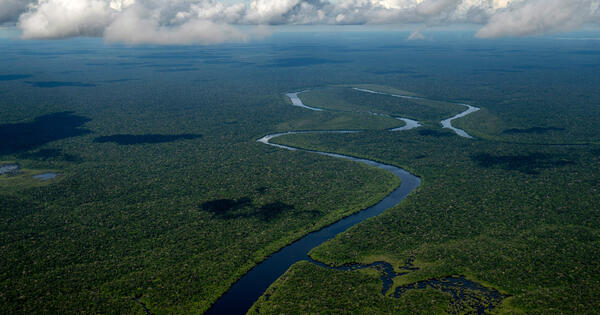
For example, the Amazon rainforest is a vast carbon sink. Trees capture carbon dioxide and use the carbon to create new wood, bark, and roots. But climate change is making the region hotter and drier, bringing more severe droughts that kill trees and leave the forest more vulnerable to fire, which in turn destroys its biodiversity. That loss—compounded by human deforestation—feeds back into the climate. Declines in large fruit-eating animals, for example, can disrupt the dispersal of large-seeded tree species that tend to store relatively large amounts of carbon, gradually shifting forest composition toward species with lower carbon-storage capacity. The result is a positive feedback in which forest degradation reduces carbon uptake and storage, contributing to further warming.
As a second example, as oceans acidify and water temperatures rise with climate change, coral reefs die, with a loss in biodiversity. In turn, the physical barriers that reefs provide against storms leave coastal areas more exposed to climate impacts.
It’s worth noting that a vicious cycle can be transformed into a virtuous cycle with appropriate conservation interventions: protecting and restoring the Amazon could restore its capacity to store carbon and support biodiversity, inverting the feedback effect. Protecting and restoring coral reefs to the point where the ecosystems are self-sustaining rebuilds physical shoreline protection from climate change.
What are the next steps with this work?
These interactions appear to be important in a systemic way, but we need to do additional work to quantify how strong they are.
Your research on climate and biodiversity might be placed under the umbrella of ESG. We’re in an era where the term is politically fraught. What’s your take on that?
There’s no question it’s important to pay attention to how companies handle environmental, social, and governance issues. But lumping together three separate issues that have very little to do with each other has always meant ESG was a little bit of a weird animal. In my view, the term itself was always destined to die.
While political forces have pushed strongly against addressing climate change, we’re at a point where a lot of people in the real world understand the risks, and you don’t need to have a particular political perspective to take some precautions. The insurance industry certainly cares about the risks. They are adjusting—and not for political reasons. As insurers raise rates or refuse to offer policies in overly risky markets, more people are getting the message that the risk climate change poses is real.
I believe that we should be acting decisively. I hope that changing political cycles will push us toward taking climate change more seriously. At the same time, I also believe some of the pushback against ESG has been well-meaning, and recognizing and working with critical points of view is valuable. It’s also important to recognize that the reason governments are not doing enough about climate change is because there’s not sufficient political will to act. Maybe the right approach is not to try to push for action that the population doesn’t want, as some in the ESG movement have argued, but to educate the population about the risks it faces and use this to build support for effective solutions.
And maybe, if the progress we’ve seen with renewable energy—whose costs have dropped dramatically—continues, pure economics will bring us to a climate transition notwithstanding the passivity of governments. Or at least it may bring us to a point where taxing carbon emissions would be more politically palatable because it wouldn’t be too onerous or distortionary, given the ability to cheaply switch production of energy to renewables.
“The Yale School of Management is the graduate business school of Yale University, a private research university in New Haven, Connecticut.”
Please visit the firm link to site