

Participants consistently reported that the programme’s personalised, holistic approach, and elite sport environment, helped them regain confidence, restore function and rebuild their lives.
Patients described how the programme shifted their focus from simply coping with injury to actively “training like an athlete”, pursuing future goals and aspirations.
The study identified several important lessons for the future of trauma rehabilitation:
- Recovery after major trauma must address psychological and social wellbeing, not just physical injuries.
- Personalised goal-setting and progress tracking help maintain motivation and confidence throughout recovery.
- Multidisciplinary rehabilitation allows patients with complex injuries to receive coordinated support tailored to their individual needs.
- Despite the overwhelmingly positive experiences reported by participants, the study also highlighted concerns about what happens when specialist rehabilitation ends.
- Both patients and clinicians expressed anxieties about maintaining progress and accessing ongoing support through existing NHS services, with some describing a feeling of stepping off a rehabilitation “cliff edge” once the programme concluded.
Professor Jason Wong, Professor of Reconstructive Plastic Surgery and Regenerative Medicine at The University of Manchester and Consultant Trauma Surgeon at MFT, said: “This study is ultimately a story about resilience. The survivors we worked with faced life-changing injuries and experiences, yet many went on to achieve things they never thought would be possible. We saw people regain independence, rebuild confidence, return to work, improve their fitness and ultimately adopt a new healthier mindset.
“What was clear from both patients and clinicians is that recovery after major trauma involves much more than healing physical wounds. Psychological wellbeing, confidence, identity and social participation are all fundamental parts of rebuilding lives after injury.”
Professor Wong, who is also a Dermatology Theme researcher at the National Institute for Health and Care Research (NIHR) Biomedical Research Centre (BRC): Manchester which supported the study, added: “Our findings show that structured, multidisciplinary rehabilitation can make a real difference, but they also highlight an important challenge. Recovery doesn’t end when someone leaves hospital, and access to rehabilitation does not always provide the specialist input required.
“This is an opportunity to celebrate the extraordinary courage and determination of survivors of trauma, while recognising that many continue to need support long after their immediate injuries have healed. If we want to improve long-term outcomes, we must ensure that trauma survivors have access to sustainable rehabilitation pathways that support them throughout their recovery journey.”
Paul Price, a Manchester Arena attack survivor who took part in the Enhanced Rehabilitation Programme at the Manchester Institute of Health and Performance (MIHIP) over two years, said: “The NHS saved my life and put me back together, but it was the support and specialist care I received at MIHIP that gave me the means to carry on living.
“The programme helped me rebuild not just physically, but mentally and emotionally, and showed me that recovery could mean more than simply coping — it could mean finding a way forward.”
- The programme was funded through the We Love Manchester Emergency Fund and Greater Manchester Clinical Commissioning Groups, with support from the NIHR Biomedical Research Centre (BRC): Manchester.
- The paper The enhanced rehabilitation programme for significant musculoskeletal injuries from the Manchester arena bombing – A process evaluation study investigating patients’ and physiotherapists’ experiences is published in Physiotherapy DOI https://doi.org/10.1016/j.physio.2026.102371
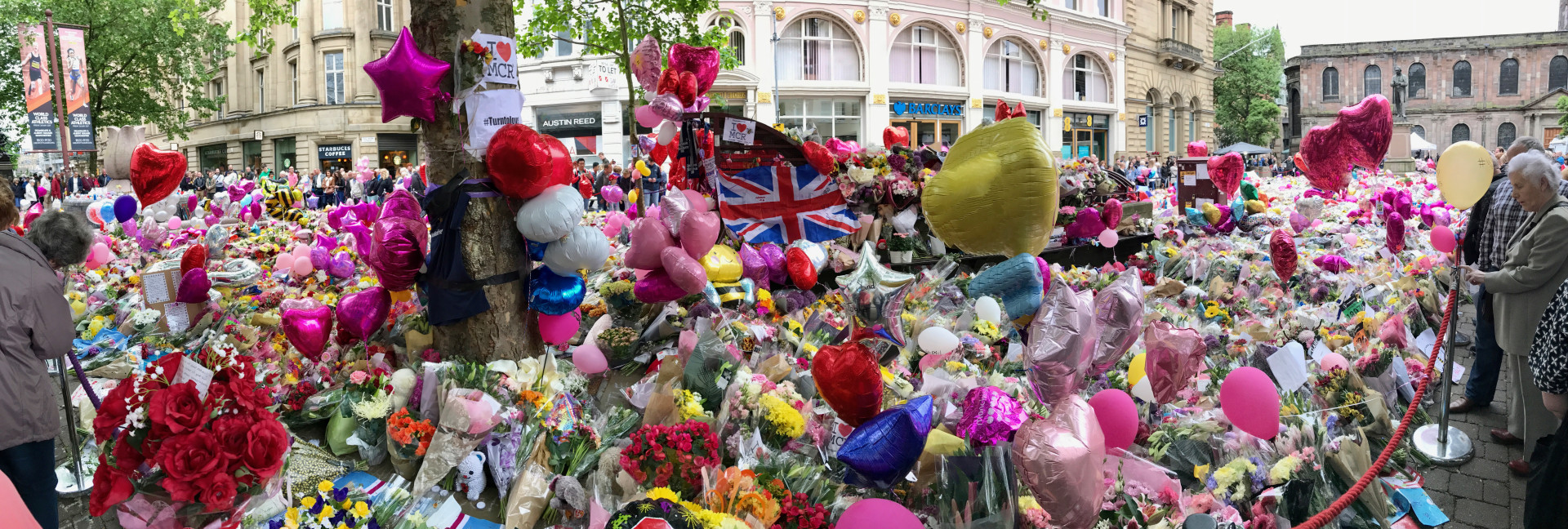
- Image: view of the floral tribute in Manchester. Credit: Tomasz “odder” Kozlowski
“The University of Manchester is a public research university in Manchester, England. The main campus is south of Manchester City Centre on Oxford Road.”
Please visit the firm link to site