


Transcript
Harlan Krumholz: Welcome to Health & Veritas. I’m Harlan Krumholz.
Howard Forman: And I’m Howie Forman. We’re physicians and professors at Yale University, and we’re trying to get closer to the truth about health and healthcare.
Harlan Krumholz: Howie, we got a treat today. Christine Won is with us.
Howard Forman: Oh, my God. Yep.
Harlan Krumholz: She leads our sleep center and she’s going to answer all of your questions about sleep. All of your questions about sleep.
Howard Forman: Love it. Love it.
Harlan Krumholz: But let’s start off with this segment, which is your segment. What’s on your mind this week?
Howard Forman: So you challenged me to come up with some ideas for healthcare reform, and we are taping this the week before an important election, the midterms of 2026. One of the common themes has been healthcare costs, and one of the most talked about strategies is to introduce Medicare for All.
Before we get there, I want to speak to how well Medicare works for the people already in it and offer some real proposals for how to fix it. Here’s what traditional, and I’m going to use the word “traditional” interchangeably with fee-for-service Medicare. Here’s what traditional Medicare asks of a beneficiary in 2026: get admitted to the hospital, and you owe $1,736 deductible. That’s per benefit period, not per year. So a second admission a few months later can trigger it again. See a doctor, a $283 deductible, then 20% of every bill, no ceiling. Fill a prescription, a deductible of up to $615.
That’s $2,634 in deductibles alone. Add a year of Part B premiums, which is about $2,435, and you’re past $5,000 before a single co-insurance bill. Half of beneficiaries live on less than $43,200 per person. That’s closing in on 12% of their income. And it’s the floor. It’s not the ceiling. For someone who gets hospitalized in a given year, it can be much, much more. The Medicare prescription drug benefit, which passed in 2003, caps out-of-pocket costs at $2,100 a year. Hospital and physician care, the pieces that date back to 1965, still have no cap at all. Almost nobody uses traditional Medicare as it was designed.
Among people in fee-for-service Medicare, 87% also carry Medigap, retiree health coverage, or Medicaid. The simple government option is really three or four separate products, and Medigap is a trap. In most states, insurers must take you, regardless of your health, only in your first year. Wait, and you may be locked out. More than half of beneficiaries are now in Medicare Advantage. And again, that’s Medicare delivered by private insurance plans. And that is very distinct from fee-for-service Medicare.
Here’s the irony. MedPAC, the Medicare Payment Advisory Commission, estimates the program pays about 14% more for those enrollees than it would for traditional Medicare, roughly $76 billion a year. The industry disputes that, but some of that money funds the very perks that make Medicare Advantage look cheaper. Meanwhile, the Part A trust fund—that’s what pays for hospital care—is projected to run short in 2033. The fixes to these structural and funding problems aren’t mysterious. Let’s get one deductible instead of three, let’s have uniform co-insurance, and let’s have a real out-of-pocket cap. Researchers at Brown estimate a $5,000 cap would cost about $16 billion a year. To pay for it, bring Medicare Advantage payments in line with traditional Medicare and also send the 3.8% tax on investment income to the trust fund. Most people assume it already goes there. That moves money rather than actually collecting more of it.
So raise the payroll tax about a quarter point each for workers and employers. That’s $28 more per $10,000 in wages. Some people would lose things they value, especially Medicare Advantage enrollees who like their extras. That’s a downside to doing something like this. And maybe, just maybe, let’s cover some critical needs for the elderly and disabled like dental care, hearing aids, and eyeglasses. This first step will still not address the catastrophic costs of long-term care, but we can leave that to another day.
Bottom line, if Medicare is going to be the model for everyone, it has to work first for the people already in it. It just is not working the way most younger people imagine it right now. Fix it first and then let’s talk about using it as a model for expansion.
Fail to fix it, and you’re compounding problems on problems.
Harlan Krumholz: Thanks, Howie. I did challenge you to come up with answers, and it’s great to hear your views on this. And I think many people would be surprised. They talk about Medicare for All, they just assume, okay, we’re going to spread universal coverage to everyone. They don’t realize that actually we don’t have universal coverage for Medicare beneficiaries. And there’s a lot of important gaps in what’s covered.
I think we’re reaching a tipping point where we just need to say, as a nation, do we really want to create all these different tiers where there are people who just have no access to breakthroughs? They have no access to the highest-quality care. They just cannot take advantage of it. And when you’ve got, and we’ve said this before, when you’ve got half the population without $500 for a rainy day, they don’t have several months to bridge them if they can’t work, then they have no ability to incur the kind of debt that they will if they access medical care services right now in this country. And I think we should all be ashamed of that situation, and we need to think hard about how we’re going to build a system that we can be proud of. I don’t know anyone in this country who can truly feel proud of our current system.
Howard Forman: I think there are people that probably can hide their heads in the sand and they’re generally upper-income individuals, and they take advantage of a very wonderful system if you’re wealthy. But as I tell people in my class when they ask how horrible is the U.S. healthcare system, I remind them that the U.S. healthcare system’s probably the best in the world if you’re wealthy, but it is not the best in the world for the entire population and it does fail too many. And I just would love to have, as you said, and I have continued to say, we need to have an honest conversation about this and not just sloganeer and promote things for political purposes. We got to talk about reality.
Harlan Krumholz: Yeah. And I think about John Rawls and the Theory of Justice and to say people should imagine is… don’t imagine you are who you are if you are someone with resources. Imagine you could be anyone in the country, including the people who have no resources. What would you want this system to be if you didn’t know who you were in society?
Howard Forman: No, that’s the veil of ignorance. Rawls’s veil of ignorance.
Harlan Krumholz: The veil of ignorance. Exactly. And I don’t know, and I can’t imagine that anyone would be satisfied with our current system. They’d be terrified—
Howard Forman: I agree.
Harlan Krumholz: … that they would be in a position where they really couldn’t take advantage of what we can offer. And I think it’s time for us to think hard about this. And I think we have a collective responsibility as a profession. I’m writing an editor’s page about this. I’m going to deliver that editor’s page to you when it publishes. I’m eager to talk more about it.
Howard Forman: Got it. That would be great.
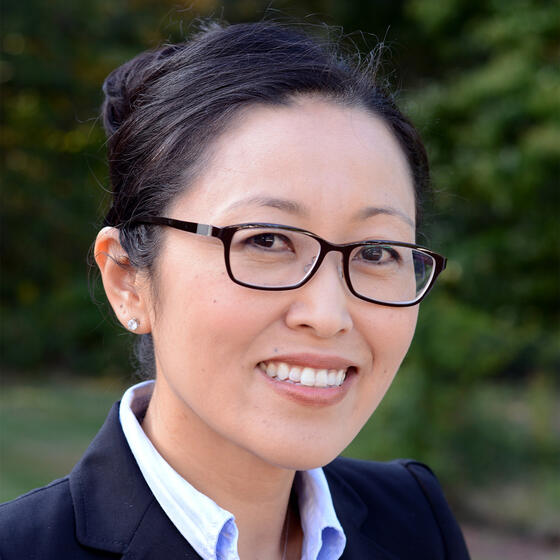
Harlan Krumholz: But let’s get to our guests. It’s going to be a great discussion. Sleep is something we all need, but getting a good night’s rest can feel surprisingly complicated. There are routines to follow, at least these days, devices to consult, scores waiting for us in the morning. How much this helps and where does worrying about sleep become part of the problem? That’s the question we hope to get to today. Our guest today is Dr. Christina Won, professor of medicine in pulmonary critical care and sleep medicine at the Yale School of Medicine. She’s medical director of the Yale Centers for Sleep Medicine and directs Yale’s Women’s Sleep Health Program. Her clinical and research work includes complex sleep-related breathing disorders and differences in how sleeping disorders affect women, including during pregnancy and menopause. She’s also the past president of the Society of Anesthesia and Sleep Medicine.
And believe it or not, she also has a course for Yale Undergraduate—just like you, Howie—except hers is called Mystery of Sleep. I think yours is Mystery of Healthcare, but hers is Mystery of Sleep. And so let’s just jump in. Christina, welcome to Health & Veritas. I’ve been reading some of your work. We saw you listed in Yale News release and we said, “My God, we got to get her on the podcast.” So before we jump into the issues of sleep, I wonder if you could just give us a sense of your story. Where’d you grow up? How’d you get into medicine? What was it that drew you into this field of sleep medicine?
Christine Won: Yeah, it’s a very interesting story, actually. It comes full circle for me. So I went to an undergraduate school at Stanford University, and Stanford at that time was sort of the pinnacle of sleep research. Dr. William Dement, who’s known as “the grandfather of sleep medicine,” was a professor there, and he ran an undergraduate course called Sleep and Dreams. And I did take that course, I believe it was my sophomore year, and it was a very popular course. Actually, it was one of the most popular courses at Stanford for the undergraduates. And at that time, sleep medicine was this new field. But after taking that course, I learned the importance of sleep and how it’s relevant to just every aspect of our health possible in every venue. So that got me really stirred up about sleep medicine.
And then I volunteered for a research position with Dr. Emmanuel Mignot, who at that time I didn’t realize how famous he would become, but he was just such an engaging researcher and lecturer. He studied narcolepsy, and he actually discovered the orexin deficiency as the pathophysiology of narcolepsy. So I did some research for him, and it just snowballed. And then my interest just grew and grew about sleep medicine specifically.
When I did go to med school and I did my rotations, I actually ended up falling in love with the MICU and pulmonary medicine, which actually was a happy coincidence that that was one of the main pipelines to get into sleep medicine. So I felt like it was kind of meant to be for me to engage in that area. And so that’s what I did. And here I am today directing my own undergraduate course, Mystery of Sleep, with Dr. Meir Kryger, another very prominent person in the history of sleep medicine. And hopefully coming full circle, like I said, as I was engaged as an undergraduate into sleep medicine, I hope to spark some interest in…
Harlan Krumholz: Well, you must, because sleep’s so hot now. I’ve got so many questions. I unfortunately have to share this with Howie or else I would dominate this with questions. I will say for context, even when I was in medical school a million years ago, Allan Hobson was giving us lectures as medical students and talking about substance P and talking about sleep. As students, we were interested in this, but like you said, it was still just beginning to form and gosh, it’s amazing that it took so long for sleep medicine to emerge.
But I keep reading about this thing where hundreds of years ago, people had two phases of sleep. You know all about this, and people write about it, where they went to sleep and then they woke up for a couple hours and read and did different things. Of course, they went to sleep earlier because there was no electric lights and people went to bed. So it was very different than the way we organize our sleep now. But what I’m finding with devices is, if you have an interlude of being up at night, they consider that disrupted sleep and say that you’ve had poor sleep. How do you reconcile the way that people used to sleep and the way that we sleep today? And is there an optimal way to sleep? I mean, is it that we do really need consecutive hours in order to get the full benefit of sleep?
Christine Won: Yeah, that’s a great question. And I think there’s actual debate about that, like you mentioned that I think evolutionarily there’s a hypothesis that yeah, sleep wasn’t always an eight-hour block at night, that sort of came with maybe electricity and the civilization adapting to that kind of lifestyle, if you will. But there is evidence that in the past and maybe physiologically, we’re supposed to sleep maybe in more than just one chunk or one block. And maybe for example, those cultures that have siestas, for example, are more physiologic than what maybe in the American culture is, which is to sleep eight hours at night.
Biologically, we do have that circadian dip in the afternoon, so that’s sort of evidence to suggest that maybe physiologically we’re meant to take that restorative sleep in the mid-afternoon as well. But I think to your point, there’s still a lot to learn about sleep medicine and healthy sleep habits. But I think the way we practice now is really what works best for you? What makes you as an individual feel like you are rested and productive during the day? I tell my patients all the time because with trackers and all that, people are really obsessed about how many times they wake up and whatnot. I say we all wake up a few times in the middle of the night. That’s deemed normal. It’s your ability to fall back asleep relatively quickly and feel rested in the morning. That’s really our gauge for healthy sleep.
Howard Forman: So speaking of that and speaking of trying to get healthy sleep, I feel like at different stages in my life I’ve had probably every type of disordered sleep possible. And for me at least, sticking to very specific behaviors has been incredibly helpful for me. Can you give our listeners and not just general listeners, but we have a large audience that are graduates or current students of Yale, younger people who might have a harder time sticking to certain behaviors, what are the biggest recommendations you can make about getting a healthy night of sleep?
Christine Won: Yeah, that’s a big question, a common question actually. Just to reference what you said, our sleep does change, and “healthy sleep habits” may change over the course of our life, so how a child sleeps versus a young adult, middle-aged adult, and then the elderly population. I think we see different trends in sleep and what’s considered healthy or normative sleep.
But again, to your point, what is the best way to get healthy sleep? I think in general, it is in addition to having a pretty good routine, as in a daytime routine, is really to control your light and dark exposure. So optimizing bright lights during your wakefulness periods, and then try to exist as much as possible without light when you’re trying to sleep.
Howard Forman: Yeah. And just to be specific about what you mean with that is if you look at the Apple sleep app, it heavily emphasizes this idea of going to bed at a specific time every day. Is there a preference for a specific time to go to sleep or is it just important to be consistent?
Christine Won: It’s mostly important to be consistent. We all vary in our circadian biology, so we have people who tend to be delayed or the night owls and people who tend to be morning larks who tend to… their circadian cycles tend to be a little bit shorter, preferentially wanting to sleep earlier in the night. I think it’s important to align your behaviors with your circadian biology and just be consistent.
Harlan Krumholz: What do you think about this research that is suggesting that how dark the room is when you’re sleeping can affect your cardiometabolic health, for example—it can affect many things about your health? I was surprised about this because your eyes are closed. Does it matter if there’s a little bit of light in the room or does it matter if it actually is a light room? Does it matter if it’s a dark room? I’ve seen some recent research that suggests that having the room be absolutely dark is better for you than if there’s some light in the room. Have you seen that research, and what do you think of it?
Christine Won: I haven’t seen that specific research, and that is very interesting, but there is definitely… I think there’s the variations in your threshold for light tolerance and your sleep. But in general, I think the darker, the less light exposure you have, as well as the cooler temperature in the room you have, the more you’re likely to allow melatonin to function, and then that better aligns your circadian biology. And then I can imagine if you have disrupted circadian biology because maybe a little bit of light suppresses your melatonin at night, then that could lead to a downfall for cardiometabolic health.
Howard Forman: Just to follow up on the melatonin question really quickly because people, you’re talking—
Harlan Krumholz: I knew you were going to ask about that, Howie. I don’t know why, I just knew you were going to jump in.
Howard Forman: Well, I am. I’m fascinated because you’re talking about endogenous melatonin, but half the world it seems is taking exogenous melatonin. And from what I understand, they’re taking large doses or too-large doses. What is your or the field’s current thinking on melatonin exogenous doses that you take?
Christine Won: Yeah, so a lot of people, you’re right, take melatonin to help them fall asleep and stay asleep, but that’s really not the main purpose of melatonin in our body, endogenous melatonin. It’s really to regulate your circadian biology, your circadian cycle. And the physiologic dose is really very small compared to what’s being sold out there. So it’s like less than one milligram, but here we have it being sold, I think the smallest you could probably find is three milligrams. Most people are taking 5, 10, even 20, and they’re trying to benefit from some of the hypnotic effect that melatonin could have at these large doses, but really, it’s a weak hypnotic. It’s mainly to regulate your circadian cycle.
So the way people taking it now for sleep is actually, in most cases, I find is not helpful. If anything, it could be harmful because if you’re not taking it in conjunction with your own physiology, when your own body wants to sort of peak at its melatonin, then you’re actually phase-shifting your own cycle, and that could actually be counterproductive to your sleep. So it could be harmful.
Harlan Krumholz: What about during traversing time zones when you’re trying to stave off jet lag? What are your points of view about that?
Christine Won: Oh yeah, that could be helpful. Melatonin use for staving off jet lag is helpful, but you have to do it correctly. That’s the point. You have to time it to your endogenous melatonin peak in order to either phase advance or phase delay yourself to get aligned with the new environment you’re in. But that’s a little complicated. Clinically, we can’t even measure your melatonin peak right now because there’s just no kit to do that. You can do it with research, measuring saliva melatonins, but you have to do that every hour and then chart it and see when it peaks and when it wanes and then time your exogenous melatonin according to that, and that’s just not practical.
So you kind of can guess, you can play a little guessing game about when you tend to be sleepy and guess that that’s kind of around your melatonin onset. And then if you’re trying to phase advance yourself, then take it maybe two or three hours before that. If you’re trying to phase delay yourself, maybe taking it several hours before that. So it’s a little bit of a tricky game. And so you… yeah.
Harlan Krumholz: Yeah. It does sound tricky.
Christine Won: But it works if you can do it correctly.
Harlan Krumholz: Another thing I wanted to ask you about, God, you said eight hours of sleep. I’m trying to remember, I think I was in high school the last time I got eight hours of sleep. How much do you think…. There is immense variation in how much people need to sleep? I remember Barry Zaret was the chief of cardiology when I came here, famously would talk about only needing three hours of sleep. What’s your belief about that? I mean, are we fooling ourselves when we think that we can actually get away with that? Or are there some people whose physiology we don’t quite still understand who seemingly are highly functional on very little sleep?
Christine Won: There actually is a subset of population where they’re called short sleepers and they are biologically wired to only sleep and function on less than the normative amount of sleep, which in an adult is seven to nine hours. And so there have been some observation data looking at how many hours people sleep and mortality, and they’ve found that people who sleep, who are long sleeper, excessive sleepers, fall out of that normative data, have higher mortality. Similarly, those who are short sleepers also have higher mortality, but these are people presumably not meeting their sleep needs or sleeping too long because they have other disorders going on.
But there is a subset of the population who are healthy short sleepers, and they are productive and restored with only maybe five hours of sleep, six hours of sleep. And actually, there is a scientist who’s studying, I forget who… His brother is actually a psychiatrist, head of psychiatry here at Yale [John Krystal], but he’s out at, the scientist who’s studying, this is at UCSF. The name is escaping me, but he [Andrew Krystal] is looking at this… He’s looking at a subset of healthy short sleepers and trying to find a genetic correlation. He actually is doing these genetic manipulations on mice and finding that he can genetically mutate these mice to be short sleepers, but healthy. So they don’t have greater mortality, they don’t have shorter lifespans, and they’re just as productive as the regular sleepers.
Harlan Krumholz: He’s got productive mice.
Christine Won: He does. And actually, and I remember going to his talk, and he was describing this group of people who are healthy short sleepers, and he was saying that, in fact, these healthy short sleepers were scoring much higher on mood scales and mental health scales, happiness scales. And so he’s finding that this is very important science and he wants to understand what this is. In addition—
Harlan Krumholz: By the way, Barry Zaret was quite happy. He was quite a happy guy, so that’s interesting. I find it because again, we try to push everyone toward the averages, but take, for example, these wearables, they’ll come up and say you’ve got tremendous sleep debt if you’re getting less than the seven to nine hours and it just seems to me like we should be able to understand what each person needs.
And I’ve always felt like, by the way, I have the Oura, the Whoop, the Apple Watch. I’m constantly comparing them, trying to understand what they’re leveraging off of. They don’t often agree, and I felt like the best way to tell whether someone’s had a good night’s sleep, if you’re talking about patients, is just ask them how you feel. If they feel rested, don’t have daytime sleepiness, then I almost don’t care what score any wearable gave them. That seems like that’s a good assessment. What do you think about that?
Christine Won: That’s exactly what I tell my patients.
Howard Forman: I want to make sure we cover this. You’re the head of the Yale Women’s Sleep Health Program. I think I got that right. We got to get you a more catchy acronym or something, but I do find it fascinating because I do think that there are gender- and sex-based differences in a lot of things, and I’m very curious when it comes to sleep—
Harlan Krumholz: And at different times of life, at different—
Howard Forman: Right, right, for both men and women. So I’m very curious, you talked a little about the fact that I think your center addresses issues around menopause and around pregnancy. Can you speak specifically to what are the key gender- and sex-based differences?
Christine Won: Sure. Oh, absolutely. I don’t even know where to start. There’s so many. I think this kind of echoes what happened in cardiovascular medicine as well as research has found that women may present, for example, differently than men with ischemic heart disease and have different outcomes. So similarly in sleep medicine, for example, sleep apnea, it’s a well-described disease, but it’s historically always, for the vast majority, been described in a diseased male population. So we actually have a paucity of data about what sleep apnea does in women and what the health trajectory is.
We do see that women present differently than men with sleep apnea, for example. So the classic soaring, gasping, witness apneas, daytime sleepiness, these are very well described in men with sleep apnea, but in women, we can often see things like depressed mood, insomnia, fatigue rather than sleepiness per se. And oftentimes these get misdiagnosed or the diagnosis gets delayed for women because they’re, “Let’s check your thyroid, let’s make sure you’re not anemic, maybe you’re depressed,” kind of things. So they don’t come to see us until probably later in their disease course.
There are other sleep disorders as well that are female-predominant. For example, insomnia tends to be twice as prevalent in women than in men. The hypersomnia disorders, such as narcolepsy and idiopathic hypersomnia, also more common in women than men. I don’t think we have a good understanding for this, but those are notable differences.
Harlan Krumholz: Just while you’re on that topic, do you want to just talk about menopause and how that affects sleep in women because that seems to be an important topic as well?
Christine Won: Oh yeah, absolutely. You’re right. I mean, I think the uniqueness of sleep disorders in women is because women go through various major hormonal changes during their lifespan, so from menarche to pregnancy and to menopause. And we know that sex hormones affect sleep very much. So throughout these different landmarks in a woman’s life, sleep is going to change, propensities for different sleep disorders are going to change, sleep habits are going to change, sleep diseases changes. So during menopause specifically, what we see is this real increase in the prevalence of sleep apnea and also insomnia. So those are two common disorders that actually women tend to develop in the perimenopausal period.
Howard Forman: To me personally, I’m confronted with ads upon ads upon ads for various types of devices that will help with sleep apnea or sleep—both. Some of them are very, I think, unconventional remedies, and some of them are conventional. The one that I’m seeing a lot now, and it’s sort of funny for me because I don’t have to say this for the podcast, but I’ve never tried THC in any form, but is—
Harlan Krumholz: Oh, yeah. Oh, yeah.
Howard Forman: …how much cannabis is being promoted as a sleep remedy. And from what I can tell, and I think maybe it was done when I was researching for this podcast, your work, but it seems like cannabis is actually probably counterproductive for sleep in many ways. Can you speak to what is the current science on cannabis and sleep and what people should be cautious about?
Christine Won: So I did do a populational data on cannabis and sleep, but I’m not an expert in this area, so I’m not going to say too much except that yes, it can disrupt sleep. It doesn’t give you the same quality of sleep, let’s say. But having said that, I would say that anecdotally, I do not sway away from it if my patients are benefiting from it. The plan is to give them confidence in their sleep and give them a routine and then let them develop this regular, sufficient sleep hours over a long period of time, and then we might discuss walking back whatever they’re using, whether it be cannabis or any other sleep medications, and seeing if we can get to the least effective dose for them to maintain their sleep.
Howard Forman: That’s helpful. Thank you.
Harlan Krumholz: Yeah, I wanted to jump in just to ask you about the recent breakthroughs and what you have been most excited about. I’ll just say for me, the idea that tirzepatide, one of these GLP-1 receptor agonists treatment for obesity and many other things, has been so effective in obstructive sleep apnea. I mean, that’s been, I think, like a breakthrough. The hypoglossal nerve stimulator that, by the way, is on lots of commercials on TV seems like it’s also a breakthrough. What are the things that are exciting you most? And not just in sleep apnea but just our understanding of sleep or the treatment of patients. What are the things in the last year or so that you think has been like, “Wow, that’s really amazing”?
Christine Won: So one thing that’s exciting is, and we actually had the speaker come to Yale last month, I think. His study was published in Nature in July 2025, I believe, where he elucidated the electron leak hypothesis for sleep. And so he found a mechanism by which sleep pressure develops. And the synopsis of that is that in the mitochondrial, as you’re functioning during the day awake, your cells are undergoing cellular metabolism, it’s causing electrons buildup in the mitochondria, and it reaches the tipping point where the mitochondrial becomes electrified to a point where it develops reactive oxygen species and then it damages the lipid membrane, and then all of a sudden it sets up a switch, turn on the sleep neurons, and then that pushes our body into sleep.
So I thought that was fascinating and I’m just excited about it, not because it has any clinical application right now, but at least, I’m really always excited to understand more about sleep. I think we’re still, even though sleep medicine back from when I gained interest from it till now has clearly developed a lot, I feel like there’s still a positive in our knowledge about what is the function of sleep, why do we need sleep, what’s optimal sleep? So that was exciting for me.
Howard Forman: Last question from me. I’m not like Harlan, I don’t use a WHOOP or an Oura Ring or anything else, but I do have an Apple Watch for now two years and I pay a lot of attention to the Sleep app because it does confirm my priors about what my sleep looks like each night, and it’s good to just see what is doing that. Do you keep track of your sleep, that way or any way? Do you measure it? Do you care about the measurement or are you just happy that you had a good night’s sleep?
Christine Won: I do not measure my sleep regularly. I always gauge my sleep on the way I feel when I wake up, and that’s what I tell my patients to do as well.
Howard Forman: Sounds like very good advice.
Harlan Krumholz: Here’s my ending question. It seems to me like given the number of people who struggle with sleep problems and also the current anxiety about sleep, so people just want to talk about sleep and their health and the really relatively small number of sleep medicine specialists in the world compared to that need, how long does it take to get an appointment with you at Yale? And what are we doing to make sure that people who have sleep issues are able to have access to specialists like you?
Christine Won: Oh, no. Okay. I hesitate to answer that, but it’s a great question. Yes, there’s a dire need for sleep specialists just because it is such a prevalent disease. And you’re right, it’s just getting more popularity in terms of people wanting to optimize their sleep health.
I think there’s this new trend of longevity health and things we can do to live longer, live healthier and I think there’s always this… I think especially it seems people are a little bit focused on dementia risks and cognitive health and sleep being part of that equation. So sleep medicine is definitely something that’s becoming more in need for various reasons, including what I mentioned. So I’m not dodging your question, I will get to it.
But here at Yale, we have probably a good four- to six-month wait to see our provider, and it’s not okay. We should definitely be able to train more sleep physicians, get more sleep physicians in the pipeline. And I think the main academy that governs the sleep clinical practice, the American Academy of Sleep Medicine, is really trying hard to encourage that pipeline of sleep practitioners.
I will say that I think the sleep field is actually ripe for AI integration. And so I think we may potentially see improvements with access maybe related to integration with AI, but it’s so early to say, but I see it happening.
Howard Forman: We are very fortunate to have you, and we didn’t even get to talk about your course at Yale. Maybe just a quick plug to talk about—
Harlan Krumholz: How many people do you have in your class?
Christine Won: So we had a hundred students last year, three hundred applied for the class, and then we made them write little paragraphs of why they want to take this class, and then we kind of selected out of that. We’re keeping it down to that size just because we feel like that’s optimal for us, but it is a popular class.
Harlan Krumholz: Oh, that’s great. Congratulations.
Christine Won: Yeah, thank you.
Howard Forman: Well, we’re so lucky to have you for this time and hopefully—
Harlan Krumholz: What a pleasure to meet you. What a pleasure to have you on.
Christine Won: Yeah, it was great. Thank you so much for having me.
Harlan Krumholz: Well, she’s a superstar. That’s amazing.
Howard Forman: She’s great.
Harlan Krumholz: Wow.
Howard Forman: She was really good, and it’s amazing how we haven’t talked about this with an expert like her before, but we’re so lucky to have her here. So Harlan, tell me what you have on your mind. We haven’t talked about this in advance. I’d love to hear what’s on your mind today.
Harlan Krumholz: So Howie, Melinda Wenner Moyer recently wrote a New York Times article about “6 Things Longevity Experts Wish People Would Stop Saying.” And with so much being sold in the name of living longer, I thought it might be worth just spending a little bit of time at the end of the podcast today to talk about some of these things and see what you think about them—
Howard Forman: I’d love it.
Harlan Krumholz: …and whether you agree or disagree with them. And also, I can just mention a little bit about some of the research behind it. So number one was longer life versus healthier life. And her first point is that longevity research is really about extending healthy life. And the question is, is there really any evidence that people can live beyond what our current lifespan is? And that there’s been very little evidence that we can actually help more people live to 120, for example, but that maybe it’s all about healthier life. So when you think about longevity, are you thinking about living longer or better or what are you thinking?
Howard Forman: I mean, for me, I think purely about living better. I’ve always felt like there’s no life if you’re not experiencing health during that life.
Harlan Krumholz: Yeah. So one of our other things was actually asking whether we’re making progress or not. I’ve been on the show a lot and talk about how life expectancy in the U.S. has fairly well stagnated and of course got worse during the pandemic. Maybe it’s bounced a little bit better after the pandemic, but that might be a pandemic effect because of pull forward, people who died during the pandemic. But she’s raising this question about whether or not there is any evidence with all the stuff that’s going on that actually we’re making any progress. Some articles have suggested it, others haven’t. I don’t know, what’s your view on it?
Howard Forman: I mean, look, I think the miraculous, practically miraculous drop in opioid deaths over the last several years is a true cause for celebration. And certainly those people not dying is a step towards a healthier life, but that’s a subpopulation. That’s not everybody. Look, I’m fortunate to have a mother and father who are almost 91 and almost 94. That to me, if you would’ve asked me that when I was a child, I would have said that would be impossible to imagine. So I do think we’re getting longer and healthier lives, but I also know an awful lot of people that I see in that emergency room who are crippled by the time they’re in their 50s or 60s, so it’s not spread evenly.
Harlan Krumholz: Well, that’s another thing she brings up, which is can you really earn your way to a hundred? And how much of this is really just about your genetics? By the way, you’re in a great position given where your parents are, even with the kind of health challenges that you’ve encountered in your life, but that’s pretty remarkable. And the question really is, what percent of our longevity is accounted for by what genes we’re born with versus what happens to us over the course of our lifetime? I don’t know, what’s your thought about that?
Howard Forman: I think it’s most. I mean, I happen to think most of it is predetermined around a lot of things, and it impacts how we become addicted and how we imbibe and take in nutrition. I think all those things are somewhat baked into our genome.
Harlan Krumholz: Yeah. There was a science paper that estimated that approximately 50% heritability of our intrinsic lifespan, and they were trying to take advantage of data from twins and sibling data and looking at variation among populations. It was actually a pretty small group of people that they were studying, ultimately, when they were looking at population-based studies. And then some of them are representative stuff. I think the answer is, we really don’t know exactly. We certainly know that there are things that are bad for us. I mean, if you smoke, you’re putting yourself at risk regardless of what your genes are, but then we also know people who smoke their whole life and live quite a long life. So these will…. Go ahead.
Howard Forman: But a question for you, the genes are one thing, but what you’re born into is a different thing. The genes—
Harlan Krumholz: That’s true.
Howard Forman: Right? So I’m born into a family with parents who were married throughout my life with enough of a safety net below me at all times, both from the government as well as my family. Those things that were born into must have an enormous impact in predicting what your lifespan is going to be.
Harlan Krumholz: And that’s why it’s so difficult to disentangle all of this stuff. I think these twin studies are interesting where they’re split at birth and living in very different environments and you can try to see what happens to the subsequent, so that—
Howard Forman: Genes…. Yeah, nature and nurture.
Harlan Krumholz: Those can be helpful. So here, I’ll just pull out one other final one here that she was just asking whether or not for people who have what might be considered to be excess weight, whether weight loss is always a good thing and whether that always adds to longevity. And she’s pointing to a women’s health initiative analysis of over 50,000 women age 61 to 81, and that losing 5% of weight over three years was associated with the lower odds of reaching age 90.
Howard Forman: Wow.
Harlan Krumholz: But again, disentangling what was the cause of the weight loss? Was it healthier? These are before the GLP-1 receptor agonists. And I can imagine that people who’ve lost weight have less reserve, so if they have a major illness, it’s sort of hard to bounce back. I can also imagine that in those studies, it’s all about, well, why does someone who’s age 61 to 81 start losing weight? And so that might be a prognostic factor, even though it’s not known to be associated at that moment about health. My own feeling is that these new drugs, we know that they can improve cardiovascular outcomes. They in some cases have shown to be improving all-cause mortality. I got to believe that they’re going to improve longevity for people who might have experienced premature death, but we’ll have to see.
Howard Forman: Yeah, that’s fascinating.
Harlan Krumholz: Anyway, it was kind of a fun article because it just sort of pushed into some of these areas.
Howard Forman: I love that topic.
Harlan Krumholz: I thought you might enjoy that. So you’ve been listening to Health & Veritas with Harlan Krumholz and Howie Forman.
Howard Forman: So how did we do? To give us your feedback or to keep the conversation going, email us at health.veritas@yale.edu or follow us on any of social media.
Harlan Krumholz: And we’re always eager to hear your feedback, help us get better, or just hear from folks.
Howard Forman: Yep. And Health & Veritas is produced with the Yale School of Management and the Yale School of Public Health. To learn about Yale SOM’s MBA for Executives program, visit som.yale.edu/emba. To learn about the Yale School of Public Health’s Executive Master of Public Health program, visit sph.yale.edu/emph.
Harlan Krumholz: And it’s always a pleasure to express some gratitude to our superstar undergraduates. Today, we’re here with the multi-talented Gloria Baek. Also, we get to work with the multi-talented Donovan Brown. We get to work with the amazing producer, Miranda Shafer, and I get to work with the best in the business, Howie Forman.
Howard Forman: I got to say, my parents love hearing you say that, so I appreciate you saying that every week, but it’s right back at you as well.
Harlan Krumholz: It’s true, it’s true. What a great thing, to be Howie’s parents. You must be so proud. All right. Talk to you soon, Howie.
Howard Forman: Thanks, Harlan. Talk to you soon.
“The Yale School of Management is the graduate business school of Yale University, a private research university in New Haven, Connecticut.”
Please visit the firm link to site