


How consumer brands can evolve their organisation without losing what made them successful
As Australian consumer brands grow, the complexity of scaling can threaten the agility, creativity and culture that made them successful. We explore five ways brands can evolve their organisations, manage growing pains and build the capabilities needed to sustain growth, without losing the qualities that set them apart.
Reading time: 6 minutes
Breakthrough growth can quickly test the organisation behind the brand
Australia has a remarkable ability to turn product, experience, design, craftsmanship and creativity into brands people genuinely care about.
Across food, fashion, beauty, home and lifestyle, distinctive Australian brands continue to break through, building loyal communities, expanding their offer and finding new avenues for growth.
But, growing pains appear when the pace and complexity of growth start to outstrip the organisation that was originally built to support it. Before you know it, what once made you fast and successful can begin to hold you back.
Australia’s top 100 brands grew 7% in value in 2026, reaching A$207bn – showing the value do those who get it right (Brand Finance, 2026).
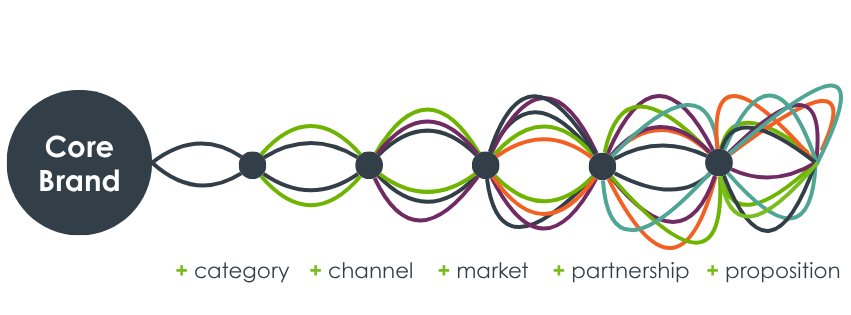
Growing pains begin when complexity starts to scale faster than the organisation supporting it.
Growth adds revenue. Complexity adds work.
What can seem like great opportunities at the time, can add complexity and cost, while…
...diluting the core brand
…slowing responsiveness
…spreading resources too thin
…creating burnout in your teams
…eroding margin
All symptoms of growing pains
How you adapt determines whether you outgrow these pains
Our view: Protect the core, add what matters, remove the complexity that does not
- Know what growth is costing you – Understand the real cost of every opportunity
- Leverage agility as an advantage – Protect your speed, flexibility and closeness
- Create careers outside of management – Think outside of the box on progression and talent
- Build the engine behind the brand – Invest behind the scenes to go faster
- Design roles that connect – Ensure there is collaboration in everyday work
1. Know what growth is costing you
Growth rarely comes for free. A new category, market, channel or partnership can look attractive in the business case, while creating disproportionate work across product, marketing, supply chain, systems and leadership.
As businesses grow, some of the choices that helped build the brand can also stop making sense. A long-standing wholesale relationship or bespoke way of working may remain valuable, but no longer justify the organisational effort it requires.
Make the hidden cost of complexity visible. Understand where time is really spent, challenge what is no longer earning its place and focus scarce capacity on the growth that matters most.
Ask yourself:
- Where are your teams’ time, cost and effort really being absorbed?
- Which opportunities create value once complexity is accounted for?
- What should you stop, simplify or standardise to free capacity?
2. Leverage agility as an advantage
Multinationals need structures that manage scale and complexity. Growing brands have a different advantage: they can move quickly, flex resources and respond to opportunities without navigating layers of structure and process.
As you grow, protect that agility by design. Build multi-skilled roles with enough breadth to flex as priorities change, keep teams connected across categories and functions, and avoid unnecessary hand-offs. As AI accelerates everyday work and removes more routine activity, you can keep teams leaner, move faster, and design work more flexibly.
Add structure and specialisation where scale or expertise genuinely demands it. Everywhere else, design for flexibility: broader accountabilities, fewer boundaries and teams that can adapt as the business evolves.
Ask yourself:
- Where does structure and specialisation genuinely create value?
- Where could broader roles improve outcomes and reduce hand-offs?
- Where are role types creating complexity?
3. Create careers outside of management
Growing brands have a real opportunity to give great people careers that grow with the business. Progression doesn’t have to mean a manager title, a bigger team and another layer in the organisation.
Careers can grow through bigger problems, broader accountability, greater autonomy and deeper expertise giving talented people meaningful progression while keeping them close to where they add the most value. As AI changes the shape of work, careers are likely to become less defined by team size and more by the scope, skills and impact an individual can bring.
Done well, greater scope, mobility and influence become part of the employee proposition. Growing brands can offer talented people variety, visibility and impact across the business that much larger corporates often cannot.
Ask yourself:
- Where can people progress without adding layers?
- Who are the people you most need to retain, stretch and develop?
- How will progression be recognised and rewarded beyond a manager title?
4. Build the engine behind the brand
When investment is scarce, the visible capabilities can win: another designer, marketer, salesperson or product specialist. But it is easy to forget to invest in the engine behind the brand. The engine is the foundation for future growth.
Strong product operations hires can free designers and product teams from coordination. Retail operations can turn multiple business asks into one clear voice for stores. People, Supply Chain or Finance expertise can build the infrastructure required for the next phase of growth.
The same applies to systems, data and core support functions. The backbone doesn’t need to be groundbreaking – it needs to work, freeing scarce talent to spend more time on what makes the brand distinctive.
Ask yourself:
- Where is missing capability beginning to constrain your growth?
- Is the constraint really a role, process, system or data problem?
- Which investments will create the greatest leverage across the business?
5. Design roles that connect
As brands grow, capability spreads across more teams and functions. Product, customer, commercial and operations become increasingly interdependent, making strong cross-functional collaboration more important than ever.
The answer isn’t to involve everyone in everything. Design collaboration deliberately: give people clear ownership of everyday decisions, then identify the moments where bringing different perspectives together genuinely improves the outcome.
When this works, you keep the connectivity and shared judgement of a smaller business while adding the capabilities needed to scale, collaborating deeply where it matters, without slowing the organisation everywhere else.
Ask yourself:
- Where does cross-functional collaboration improve the outcome?
- Which moments need people to come together?
- How should teams connect and make decisions as the business scales?
Is your organisation ready for growth?
If you’re navigating the challenges of scaling your brand, we’d love to explore how we can help you build an organisation that’s ready for what’s next.

Jack Wray
Principal Consultant
The post Growing Pains: When Great Brands Scale appeared first on Q5.
We are all about organisational health, which separates good organisations from the great. Whether our clients are at the top of their game (and want to remain there) or are in ‘turnaround’ mode, we all need to work on our organisational health.
Whatever the situation, be it a strategic conundrum, a market opportunity, or an operational gripe, we combine the art and science of organisational health to help our clients improve and excel.
Please visit the firm link to site