


Transcript
Harlan Krumholz: Welcome to Health & Veritas. I’m Harlan Krumholz.
Howard Forman: And I’m Howie Forman. We’re physicians and professors at Yale University. We’re trying to get close to the truth about health and healthcare. And today’s the day after Election Day.
Harlan Krumholz: We’re recording this the day after Election Day. We’re going to drop this tomorrow. Who knows what’ll happen in the meantime, Howie? Who knows what’ll happen?
Howard Forman: I have a lot of good predictions, but…
Harlan Krumholz: But I’m eager to hear what you have to say. I just also want to let people know that we have Anthony Philippakis here today. This is going to be a great guest.
Howard Forman: That is more exciting. Yep.
Harlan Krumholz: Yeah. Somebody who’s been an entrepreneur, a geneticist, a leading scientist, a cardiologist. A cardiologist. Howie, imagine that, we’re having another cardiologist on. All right. So look, just to get started today, I think we’re all still buzzing about the election from yesterday, and we’re not going to make this partisan, but I just want to understand from your perspective, what do you think’s changed now that we see this, for many people, a little surprising election?
Howard Forman: Yeah. So number one, I think that we’ll hopefully get to do another segment on this next week because I think we’ll even have more information. But I just want to summarize some of the big take-home messages, what we learned last night. Democrats resoundingly won the House and the Senate. The Senate is yet to be called as we’re taping this around midday on Wednesday. I expect Democrats will have 55, maybe even 56 seats, probably 55. And the House realistically is going to have around 250 seats, maybe more. Just to put that in perspective, that gets very close to the majority that Obama had in 2008, which was considered a massive majority at that time. And most people thought because of the division in the country that we would never get back to either Democrats or Republicans having such a large majority. This could be a 70-vote majority in the House.
And one message that this tells me is we are not nearly as divided as we think we are. And I think that’s a really good message for everybody. It means that Kansans and Iowans and Alaskans and even Mississippians and a lot of states like South Carolina that you would never have imagined voting for Democrats in big numbers are willing to vote for Democrats if they get people giving them the hope of affordability, of a better economic future, of healthcare, of safety. And I think all those things come through. So I think the first big message from this is that we are not as divided as we were in the past. Before I get back to what this means for the next—
Harlan Krumholz: Can I just push you on that just a little bit?
Howard Forman: Yeah, absolutely.
Harlan Krumholz: One thing that really interested me, Howie, was that yes, indeed there was a bluenami yesterday. And so there’s going to be an influx of a lot of Democrats. By the way, what I say about this is, it wasn’t a victory. I think it’s an opportunity. It’s an opportunity for them now to show why those votes mattered. And especially in states that have not elected Democrats in such a long period of time, it’s an opportunity. But I did notice that a lot of these House elections and some of the Senate elections were decided by a razor-thin margin. I mean, you had Texas and other states where there was a dominant endorsement of the candidate, almost two to one. But gosh, there were so many House seats, I don’t know if you noticed this, that were just hundreds of votes apart or just very, very tight.
Howard Forman: So those haven’t even been called yet. So just to be clear, the ones that have been called as of no—again, we’re taping this—Alaska won’t even be finished counting until next week. California, same thing. So a lot of these razor-thin margins will not be razor-thin margins in the future.
Harlan Krumholz: Maybe, maybe. But one of the interesting things too was, and I hope you’re going to get to this next, is that healthcare was on the ballot in a lot of places.
Howard Forman: Yes. So I want to touch on that. I think first of all, good news for those of us that believe in reproductive health and the fact that people should have access. Abortion fared very, very well on the ballot this time. There were four places where—
Harlan Krumholz: I like to call that “choice.” I like to call that “choice” as opposed to “abortion” having fared well.
Howard Forman: Well, but the ability to have abortion is what was on the ballot, unfortunately.
Harlan Krumholz: Well, but I’m just saying it’s not… no one—
Howard Forman: No, no. No, you’re saying—
Harlan Krumholz: I just think sometimes this is put into a thing like people are in favor of abortion. I don’t think people are in favor… a lot of people aren’t in favor of abortion. They’re favor people having a choice in their lives, I think.
Howard Forman: But Missouri put on the ballot to remove abortion rights, and that failed. So Missouri, twice now, has failed to repeal abortion rights. Missouri is not thought of as a purple state. In… the state of Idaho is one of those areas where there is a total ban. So abortion did not improve in Idaho, but it was not taken away. There already was an abortion ban. Nevada required a second vote in order to codify and put in the Constitution a right to abortion. Nevada now has a right to abortion codified in the Constitution, and Virginia only needed to do it once, and that also passed Virginia now as a constitutional right to abortion. And you’re right, even things like transgender rights was on the ballot. A lot of this had much more to do with sports, and for the most part, transgender measures led to more restrictions on people that identify as transgender. So depending on how you see that issue, that was another side of the coin. This was uniformly—
Harlan Krumholz: The transgender thing was interesting to me because of course that was a cudgel that people were using to try to get people to vote the other way, and that seemed not to have influenced a lot of people.
Howard Forman: No. And look, it is a tiny part of the population that… or maybe not tiny, but a small part of the population that this affects a lot, and most of them are not trying to compete in sports. This is what the issue is mostly about. I think, at least for the most part, that issue will fade from the election booths over the next couple of cycles. So I think that’s actually a win for people. And one other thing, and you could tell me what else you think were healthcare-related, but the California billionaire tax, that tax was intended to create a fund that at least partially was going to be used to offset Medicaid cuts. That is not going to pass, the billionaire tax, and none of the versions of the billionaire tax.
Harlan Krumholz: How close was that? I didn’t notice that.
Howard Forman: Not close at all.
Harlan Krumholz: Really interesting. People are afraid of losing jobs and having these people flee the state, I think.
Howard Forman: I think so. And I do think… look, I’ll tell you my personal opinion on taxation is we need to tax the wealthy and upper-income people much, much more, but it really needs to happen more at the federal level because you can’t get into a race where people are running from California to Florida. And then if Florida passes something, people move to Tennessee. It’s not a useful way for society to operate. It’s much better if we figure out taxation at a greater level at the federal level.
Harlan Krumholz: Yeah. I think it’s another story. I know we need to get moving here, but there was a lot of money invested in this election, and a lot of that money came from Elon Musk in Texas. Almost, what did they say? A quarter of a billion dollars spent, in support of Paxton especially. And just interesting to see. We often wring our hands around this issue about money, but money doesn’t always buy votes.
Howard Forman: No. And look, there are going to be, I believe, more than two dozen physicians in Congress. There are going to be other scientists, nurses.
Harlan Krumholz: You see microbiologists.
Howard Forman: Right, exactly. There’s going to be two governors that are physicians now, including Amy Acton in Ohio and—
Harlan Krumholz: Andrews in South Carolina, that she’s—
Howard Forman: That’s the senator. That the senator, right? And I think there’s a governor in Hawaii. There’s a bunch of physicians—
Harlan Krumholz: El-Sayed went to medical school, graduated from medical school?
Howard Forman: Absolutely. So there’s going to be over two dozen in the House and Senate that are physicians or doctors. And then there’s still, I think, going to be three governors, ultimately. So healthcare—
Harlan Krumholz: Does that make you feel better or worse?
Howard Forman: It makes me feel better. I really do believe that we can—
Harlan Krumholz: I said that tongue-in-cheek. I said that tongue-in-cheek.
Howard Forman: I know, but it makes me feel like people are willing to activate over issues that are important to them.
Harlan Krumholz: Look, I love that people who have sat across the bed from a patient. And the thing about doctors is that in clinical medicine, you’re in constant contact with the entire spectrum of society. With the entire spectrum of society. And so often in other jobs or in other situations socially, people aren’t interacting across the spectrum of society. And I will just say that doctors have that worldview because necessarily, we take care of everyone.
Howard Forman: And look, when we come back and do your segment later, this is highly relevant. Who do you want having oversight of the executive branch? I want people that are well versed in science and math and healthcare and medicine. That’s what I want. And so we’ll talk more. I know you’ve given me a preview of what you might talk about later, but to me, this gives me much more hope, because if you don’t have bright people sitting there, then you sit there covering your head like, “Oh my God, you have so many better questions to ask. Why did you ask that one?”
Harlan Krumholz: Yeah. There are bright people on all sides of the spectrum here, but we have been in a period where we have drifted from the strongest science, I think. And that hasn’t been, I think, to our benefit. We’ll talk about that later. Hey, let’s get to our interview with Anthony Philippakis. He’s going to be amazing. And I’m so glad he’s joining us today.
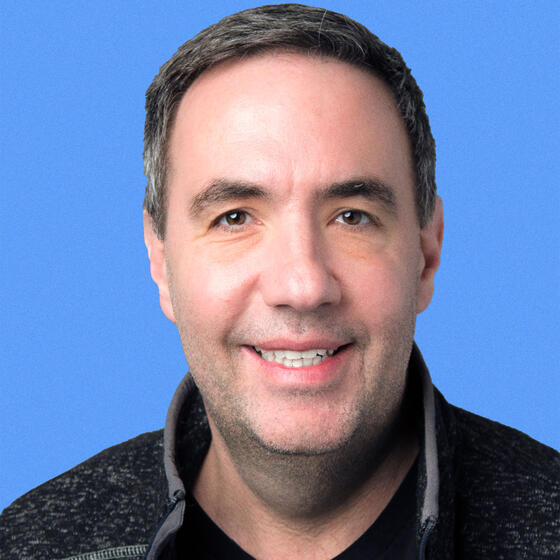
Today, we’re delighted to welcome Dr. Anthony Philippakis, someone who’s built an extraordinary career at the intersection of medicine, genomics, artificial intelligence, and entrepreneurship. Anthony was trained as a cardiologist at the Brigham Women’s Hospital, but his career has taken him well beyond clinical medicine. He was the chief data officer at the Broad Institute of MIT and Harvard, where he founded Data Sciences Platform, bringing together more than 200 software engineers and computation biologists to develop the tools that are transforming biological research. He was also the co-director of Broad’s Eric and Wendy Schmidt Center. And in addition to that, he was one of the earliest, earliest, earliest people at Google Ventures, which became GV, and is now a general partner at GV where he’s helping to build and support innovative companies, which have included things like Verve Therapeutics. And in addition, he’s pursuing his own enterprise now, which he can tell us more about.
Anthony was in the Class of 1998 at Yale, he was a major in mathematics. But I want to tell you something just a little bit from a personal perspective. Anthony and I have been friends for a long time, and I’ve admired not only what he’s accomplished—and he’s accomplished a lot—but how he’s accomplished it. He’s one of the kindest people I know; he’s a natural collaborator, someone who brings people together, shares credit generously, and is genuinely invested in the success of others. When I saw how he navigated with that large team that he had at Broad, it was extraordinary, and it was never about credit for him, always about elevating those around him. And despite everything he’s accomplished professionally, he remains deeply attentive to family and friends. He’s a remarkable scientist, innovator, and human being, and it’s a real pleasure to welcome him to Health & Veritas. Anthony, welcome to the show.
Anthony Philippakis: Oh, Harlan, I am so honored. I mean, I’m honored to be here, and that was a very, very kind introduction. For the listeners of the show, Harlan is one of my heroes in life.
Harlan Krumholz: Oh, my God. Okay, we’re moving on.
Anthony Philippakis: So very, very kind. Anyways, I’m honored to be here with you and Howie. Great to see you guys today.
Harlan Krumholz: Thank you. And I appreciate you, and thanks for that. So I wanted people just to get to know you a little bit, and I just thought maybe in the beginning it’s just a little bit about your journey and what drives you, because you were at Yale, you went from mathematics to medicine to cardiology, genomics, data science, venture capital. I mean, you’ve been involved in so many different things. Can maybe just even start with where’d you grow up and how did all this unfold?
Anthony Philippakis: I grew up in originally in Arizona. My dad was a Greek immigrant and professor at Arizona State. And it’s interesting, growing up, I was actually not so into math and science. I was much more of a kind of classics and philosophy person, went to Yale with the intention of being a classics major. And actually, one of the things that was kind of a real blessing in my life was there’s a professor, Roger Howe, who’s now emeritus in the math department, who I took, you know, early calculus class from. And for reasons that I will never understand and can never repay, he started paying attention to me, invited me to office hours, gave me math books, problems to work on, and I got totally hooked and just fell in love with math.
When I was graduating from Yale, Yale had a scholarship to go to Cambridge for two years. So I went to Cambridge for two years and did a master’s in pure math there. I loved it. I had a wonderful experience. A couple things happened when I was there. My mom passed away in a car accident, so it was a time where I was thinking a lot about what did I want my future to be. You know, honestly realized that I was not going to win a Fields Medal. I was with a lot of really brilliant mathematicians at Cambridge from all around the world. But on a positive note, this was right when the Human Genome Project was ramping up, and I had always thought about going to med school, had a grandfather that was a doctor that I looked up to and made the life decision that I bet there’s going to be interesting things for a math nerd in medicine in my lifetime.
And so as you mentioned, did my MD-PhD at Harvard, residency and fellowship in cardiology at the Brigham. And what I would say, ever since I was kind of, let’s call it 24-, 25-year-old, the dominant theme of my life has been following the genome wherever it leads. I started med school the year the first draft of the genome was released. I got to see the rise of many vertebrate genomes, human genetics, GWASes, and then now even the rise of the applications in actual medicine, patient care. And for some of the trainees who are out there, I think one of the things that’s really important as you go through life, we’ll talk about my journey to GV and entrepreneurship, but maybe I’ll say a little bit about how I entered. When I started my residency and fellowship, I really thought I would be an academic like my dad. I’d always imagined having a lab, grad students, things like that.
A good friend of mine and boss now, Krishna Yeshwant, was one of the founders of GV. It was about a year old. He was looking at a bunch of genomics investments, so I started consulting. And then when I was a first-year cardiology fellow, I had a chance to become what’s called a venture partner at GV, which means you’re an investor, but you’re doing it part-time, and it really changed my life, in two ways. One was, just caught off-guard by how interesting business is. That was just something I didn’t expect to like as much as I did, and I’m sure we’ll talk about that a little bit here.
The other thing was I was inside of Google, and I saw how software was made in a grownup world, and at that stage of my career, realized that although I was good at writing papers, if you drop me in a place like Google or Microsoft and said you explicitly went to med school with the stated goal of being the first generation of doc[s] to bring genomics and data science into medicine, at that stage of my career, I would’ve floundered if you had said, “Here are all the engineering resources you could ever dream of, go change medicine.” And so really set myself on a path of being someone that was a doc but that also understood how to marshal the resources of modern technology and try to bring that to bear on the most important problems in medicine. Anyway. So it’s a little bit of a high overview. Maybe we’ll dive into some topics as we go here.
Howard Forman: I’m curious, just listening to you tell me the part about your Greek father who’s an academic, what did he think as you started to veer away from this obviously very reliable academic cardiology scientist career toward the unknown?
Anthony Philippakis: Yeah, actually, so I’m really close to my dad, and he’s one of the people I admire the most in the world, and one of the things that I admire about him is his open-mindedness and his… growing up, he never put pressure on me to… I mean, he was a computer science professor. He never put pressure on me to go into math or science, didn’t mind that I was more of a classics person. And even as I was going down this road, he thought it was cool that I was doing something different. And in some sense, in his life, he was born in Greece, he came to the U.S. at 18 years old. He took a lot of risks himself with his career, and so I think was always very open-minded to possibilities and doing things a different way.
Harlan Krumholz: I think you’re underplaying your contributions on the academic side a little bit because you played such a formative role at the Broad… For people who are listening, the Broad Institute was created in Boston. It was such a visionary idea to be able to actually be the intersection between the large universities, academic institutions, and be able to be a force multiplier for science, and really had a big footprint in Kenmore Square in Cambridge. And what you were able to do was to build, I think, arguably the strongest group of talented individuals focusing on how to apply computations to genomics in ways that I had never seen before. And you were borrowing a lot of the techniques that were being used on the business side.
You were bringing best practices that academics weren’t always applying, and as I was saying in the introduction, you were doing it in a way… so many people are figuring out, “How can I put my name on papers? How can I promote myself?” You were creating a team that was integral to almost every advance that was being made at the Broad Institute because you guys were the ones behind the scenes who were helping to put these other scientists who had great ideas in position to be able to do the work. How did that happen? So you come, you get your MD-PhD, you go through cardiology fellowship. Can you just talk about that transition to how you found yourself in that position, how you thought about it?
Anthony Philippakis: A really important mentor of mine is David Altshuler, who was one of the founders of the Broad Institute and still someone I’m very close to and really look up to. So I had worked in his lab for part of my PhD, and then when I was a resident and fellow and starting to work at GV, he was also thinking a lot about the future of the Broad and the role of data and computation, kind of the ethos that for the first two decades of genomics, what was hard was generating it, but increasingly genomics was getting to a place where what was challenging was not to generate data, but to store, share, and analyze it at scale.
And so there was a period… and this was right when I was at GV, he was thinking about it, and there was a period of about two years where about once a month I would go over to his house on a weekend and we would talk about the vision for data strategy at the Broad and what the next layer of the journey should be. And we kind of came up with the idea that what Broad really needed was something that looked like a commercial technology organization but with a nonprofit mission. And so in order to make that happen, one of the things we had to solve for was raising funding. We did get a lot of big grants from the NIH that helped a lot. So for example, we were the group that stored the data for all of us, which you might be familiar with, large effort to sequence a million Americans.
But over half the funding we had came from tech companies—Microsoft, Verily, Intel, IBM—and being able to come up with win-wins that were good for their business model but then also allowed us to do the science and build the software that we wanted to do. Let me give a concrete example where my life at GV very much informed how I thought about my job at the Broad. Going back about 15 years ago, my group used to make one of the main pieces of software for analyzing Illumina sequencing data. It was a software package called the GATK. And at some point we had a proof of concept that a lot of the workflows could be accelerated with a special type of chip called FPGAs, which were basically reprogrammable chips. And Intel had just bought the main maker of FPGA is a company called Altera.
And so we went to them and said, “Look, this is a big moment. Genomics is a huge market, growing really quickly. We have evidence that the chip maker you just bought is kind of the equivalent to genomics that a GPU is to AI. Let’s do a partnership where you fund developers at our group, and we’ll make sure that it runs great on Intel chips.” And the software was open-source, good for public benefit, and Intel ended up investing $25 million, $5 million a year for five years, which is hard to come by in an academic setting like that. Moreover, they put a lot of engineers dedicated to working with us that had really deep expertise in hardware accelerations.
I have to be a little bit discreet about this, but they would keep track of the metrics of their return on investment, and it was very clear that this was a good investment on their part, that we made a real market for FPGAs and genomics that wasn’t there before that benefited them, and it was kind of a win-win where suddenly my group had some of the best engineers in the world in this field of reprogrammable FPGAs. We’re making nonprofit software that was open-source, good for the community, good for the genomics, and it was also great for Intel’s business. So in building the organization, I really did try to make it look and feel like a commercial technology group, but with a nonprofit mission. I used to say to my team, “We should consider ourselves in a very lucky and luxurious position that we get to wake up every day and make decisions not based on returning money to investors but based on what’s best for science and medicine and never forget how valuable that is and how fortunate we are.”
Howard Forman: I want to anchor to that a little bit, because I do think the venture world can be brutal, brutal, brutal because you’re promising people 5- or 10-year cycles that you’re going to be returning money to them and you better have an exit strategy, either an IPO or a sale or liquidation or whatever, but you’re making promises. In your situation and in a select other groups, you have a much longer-term horizon because you have basically sponsors, investors that have a long horizon like Google does and some of your other investors. But it’s still a very tough business, isn’t it? Can you give a little bit of a sense of what it’s like to be taking on high-risk projects that don’t always succeed? I think the outside world sees survivor bias. They see only the successes. They don’t see how hard it is. First of all, can you mention a few of your big successes at Google Ventures just so they know that, but then talk about the challenge?
Anthony Philippakis: Sure. Some of the companies that I’ve been involved with that were successes are very proud of. Early on, I was one of the main people in Foundation Medicine, which was a kind of company for cancer diagnostics that got bought by Roche. Flatiron Health was another one, also bought by Roche. Harlan mentioned Verve Therapeutics, which I was a founder of and the earliest investor in, started it with a cardiologist that was a friend and mentor, Sekar Kathiresan. And just to say a little bit about how GV is structured, so most venture groups have what’s called LPs, limited partners, and those are the groups that give them money, and then the venture capital group takes that money and invests it in startups. We’re in a very, very lucky position that we only have one LP, and that LP is a company, it’s Google.
And moreover… and again, we don’t take it lightly how lucky we are, a lot of times… I mean, many companies have corporate venture groups, but usually those groups are supposed to be what’s called strategic, meaning that the number one priority is to align with the strategy of the mother ship, the number two priority is to get a return, but sometimes they can be conflicted because what’s good for the mother ship isn’t always what’s best for the startup. And realizing that moral hazard, when we were set up, I give the founders of GV a lot of credit, they said, “We’re not going to be strategic. Our job is just to make good investments that return, and so we’re not really under pressure to align with Google’s parent strategy.” So it’s kind of a little bit best of both worlds that we have much less of our time managing relationships with LPs and raising money than the average group, but we also have freedom to just honestly make the best investments we can, unencumbered.
And so going back to the venture world, it’s interesting, my wife is a public market investor at Fidelity, and then I have some friends who are private equity folks, and these are three really different worlds. What my wife does is ruthlessly transactional. The PE folks are somewhere in between what I do and what my wife does, and when they make an investment, they want to make sure that they don’t lose money. But if they get a 2x, that’s great. 3x is a total home run. It’s almost never higher than that. For us, the reality is that probably 70 or 80% of the investments you make don’t work out, but the kind of 10 or 20% that do have to be home runs. It’s both fun and dispiriting because it’s hard to be wrong 70–80% of the time, but it does mean that you get to be a little bit more of a dreamer and go after the things that you think are truly world-changing.
So going back to the example of Verve, time will tell, it was bought by Lilly. It’s not yet FDA-approved. We’ll see what ends up happening. But the idea there was gene editing to prevent coronary disease, which is a bold idea by any metric, and the belief that a lot of the problem of why we haven’t eradicated coronary artery disease yet is because of compliance, because people don’t take their meds, and that a one-and-done therapy could be truly transformative on that front. That’s an example of something I feel really proud to have been part of creating that company because it’s definitely a swing for the fences, and if it works, it’ll change the world, but it might not work. And that’s what a lot of the job is.
I will tell you what I love most about the job is when you come across an entrepreneur that you really believe in, and saying to that person, “I really believe in what you do, and I want to go down this journey with you.” I love early-stage companies. I love it, especially when I can be involved and really be a thought partner to the CEO, feel like I’m adding more than capital. Conversely, the hardest part of the job is when you have to say no to an entrepreneur and say, “I’m sorry, we’ve played this through, and I can’t put more money in. I just don’t feel that I’m being a good steward of capital if I do that.” I hate doing that. That’s the hardest part of the job, and it tears me up whenever I have to do it.
Howard Forman: I just want to complete that, because what you said I think is where I thought you were going to go with it is turning people down to begin with is probably not that hard. Turning people down that you’ve already invested with and then you say “enough is enough,” that’s got to be heartbreaking, no pun intended.
Anthony Philippakis: Totally. Absolutely.
Harlan Krumholz: They use this word “conviction,” whether they continue to have “conviction,” and I find that a very powerful word in the VC industry, whether… people lose conviction, it’s hard because the entrepreneurs are financially and emotionally invested. I mean, the VCs may be somewhat emotionally, but not like the entrepreneurs, and it’s hard. That must be so hard. Let me just pivot a little bit to your new enterprise, your new venture, because you’ve decided to go off on your own, I want to make a disclosure that I’ve been privileged to be an advisor, and so this is something that I’ve had the chance to see and that you’ve been kind enough to invite me to advise on. But I wonder if you’ll just tell folks listening a little bit about what you’ve moved on to do now.
Anthony Philippakis: Sure. So I’m still at GV, but there’s a company that I started with a lot of my colleagues from the Broad Institute that is my baby and that I’m the CEO of, called Arboretum. And I do think it was very influenced by two of the companies I mentioned before, Verve Therapeutics and then also Foundation Medicine in a different way. So going back to something I said earlier on the podcast of, I love that I started med school the year the genome was sequenced and getting to see this intellectual arc of human genetics and genomics, I’ll tell my grandkids about that. And one of the things that was wonderful to behold was the rise of precision oncology, where we got very good at identifying genetically defined subsets of patients that would have outsized therapeutic benefit. And that really has led to great advances in patient care. I mean, you look at recent data from a company like Rev Med, which is in the GV portfolio for pancreatic cancer, that’s the part of that story.
When you think about common chronic diseases like coronary disease, diabetes, neurodegeneration, the same is not true. We give therapies that are given to large numbers of people, and for a lot of those people, it doesn’t actually benefit them. Sometimes it even harms them. If you look at… let’s say a common measure of the effectiveness of a drug is the number needed to treat. How many patients do you have to give a drug in order to help someone? For statins, it’s, depending on the cohort, in the 60s. You have to give about 60 people a statin in order to prevent one heart attack or death or stroke. As a cardiologist, I find that pretty disappointing. Six years ago, there were some reanalyses of cardiovascular outcomes trials, and they showed that if you conditioned on genetics, and I’ll explain what I mean by that in a second, that you could identify patients that were twice as likely to have a heart attack, but that were three times more likely to benefit from a drug.
Okay, so let me just unpack some of these ideas. When you’re developing a drug for coronary disease, you usually have to do what’s called an outcomes trial, which means that you run a trial where the endpoint of your trial is death, MI, or stroke. So it’s not, “did I lower LDL?” It’s “did I actually prevent bad things from happening?” In a typical cardiology outcomes trial, about 12% of the patients in the placebo arm will have one of those three events. So just think about that for a second. That means 88% of your trial is wasted. You just didn’t know which 88% at the start. And then typically, the relative risk reduction, how much do you reduce the risk of having an event on a drug, is often about 15%.
And so you have a relatively low number of people have events in the trial, and then they’re only helped a little bit. You often have to run a trial with 20,000 people, spend a billion and a half dollars, and then of course, sometimes it fails. And this Friday we’re going to hear about two very important failures, one for a target called Lp(a) and one for a target called IL-6. Those were both enormous trials that failed, one by Novo, one by Novartis.
So what was observed when people went back to some of the big cardiovascular outcome trials that had been run is that if you take something called a polygenic risk score, where this is, add up every variant in your genome and use that to predict who will have coronary artery disease, that you both doubled the event rate of the trial, so you could take it from 12% to 24%, but then that relative risk reduction went from 15% to 45%. The number needed to treat that you had to give the drug to changed from 67 to 11, which is a very different value propositions to patients, to providers, to payers.
So there’s kind of two sides to the Arboretum business. So one is finding targets and diseases where we believe that molecular information can be used to identify subsets of patients that are both at increased risk of disease and more likely to benefit from the therapy. And then building out large cohorts of patients that have been genotyped and consented for recontact in order to run the trials and eventually commercialize the drugs. So as I said, it’s a little bit of Foundation Medicine, what they did of building a cancer diagnostics company, but then it’s also a little bit of Verve because as you generate the data, your real goal is using it to develop new therapies. So that’s a little bit about what Arboretum’s about, precision medicine for common diseases.
Howard Forman: One of the fascinating things about what you’re talking about now is that these can be enormously impactful, but also expensive, at least at the time they get introduced to the public. And so a few weeks ago we saw a report out of, I think the ICER group or wherever it was that basically said the median price of a new drug introduced into the United States was $250,000. And Harlan and I have at times talked about what is and what is not affordable. You’re talking about much more impactful drugs, but they will be more expensive, at least in the short run. Does it worry you about how far innovation can go before the public says, “We can’t afford this”? Or what do we do to convince the public about to continue to make those investments, but at the same time figure out how to make it affordable for everybody?
Anthony Philippakis: Yeah, great question. And this is one of the most important topics of our time is just the rising costs of healthcare across the board. And I think it’s interesting, this is going to sound cliché, but I actually believe there’s some truth to this. I think that the best hope we have is at the moment through data technologies and data science and AI. And it comes in two forms, and one is on the care delivery side and one is on the drug development side. I’m kind of realizing that there are two opportunities with AI. One is automation, and one is intelligence. And what I mean by this is let’s take, for example, running a call center and automating it. We don’t need better models to do that. The models are already at a level of performance where they can do things like answer questions on a telephone. So that opportunity is automation.
And when you look at healthcare, unfortunately, so much of what healthcare professionals do is very boring, very painful work that could be automated to the benefit of everybody, and in some ways I think the group of people that in some ways is least threatened by AI is physicians because they’re so overwhelmed with all the things that they have to do every day that something showing up and saying, “I can take this off your plate,” that is manna from heaven. And the last thing they’re worried about is losing their jobs. Let me talk about the intelligence side. I didn’t understand this until this summer. And a lot of the kind of stuff that’s happened with frontier math. You know, as someone who trained in math and I still vibe math, I have a problem that I work on back from my Cambridge days, I was caught off guard because you really are seeing super intelligence for the first time and it’s in pure math. Coding is there as well.
I think it’s going to extend into a lot of other fields where there’s only a small number of jobs where we wish we had smarter humans, but frontier math and programming are definitely two of them, but so is drug development, so is law, so is medicine. And the way I think this book gets written is that because of better datasets and because of AI, we’ll improve the probability of success so that it’s not the case that 90% of the trials we run fail. And if you can actually achieve a higher success rate, then I think you can actually be in a world where you start lowering the cost of the drug because you don’t have to incorporate into the pricing the 90% of the drugs that failed in order to find the 10% that do. And so I think that’s my best hope for how we get to the right answer for everybody.
Harlan Krumholz: Thank you so much, Anthony. I think we’re coming to a close. This has been just a tremendous, tremendous visit with you. I think, Howie, to your point too, what Anthony’s doing with Arboretum also is reducing the cost of being able to produce the evidence that will ultimately lead to the product, and the hope I think is that that will also translate into better access because when people have spent billions of dollars running these trials and they’re forced to be in a position where they need to get these kind of returns in order to justify the investments. And Anthony, as you’ve explained it to me, this is also one of the things that you’re trying to accomplish is increase the efficiency of science. But anyway, what I just want to say, fascinating, you’re such a good communicator. I don’t think I appreciated that.
Howard Forman: Yeah, you’re fantastic.
Harlan Krumholz: These are complex topics, and you’ve made them very accessible to our listeners, and I just want to tell you how much I appreciate you and thank you for taking the time to join us.
Anthony Philippakis: Oh, it’s such an honor, guys. Thank you so much for having me.
Howard Forman: Thanks very much.
Wow, that was awesome. You were absolutely right. He is great.
Harlan Krumholz: He’s terrific. I knew that you would like him.
Howard Forman: Absolutely.
Harlan Krumholz: You know, Yale grad… has just done good.
Howard Forman: That’s right.
Harlan Krumholz: Yeah, it’s nice to see.
Howard Forman: So I gave a little bit of a hint as to what you were going to talk about in the outro. Tell us more, because you and I talked really briefly about this. Tell me what’s on your mind.
Harlan Krumholz: Yeah. Great, Howie. So here’s a question. Let me start. What if America is squandering one of the greatest opportunities in history to improve human health? And I ask that because I read a remarkable New York Times article this last weekend and it was focusing on what’s happening to American science. And as someone who spent a career in medicine and research, I’m deeply concerned. So consider what the Times found. The National Institute of Health has delayed or canceled more than 2,000 research grants. The National Science Foundation has withheld more than a billion dollars in funding, and the NIH has lost roughly a fifth of its workforce. Think about what that means. These aren’t just numbers on a government spreadsheet. These are discoveries that may never happen, treatments that may be delayed, actually administrative grants that are slowed, young scientists whose career may never get started.
And first of all, let me be clear, it’s not that our scientific system was ever perfect. We needed reform. We needed to reduce bureaucracy, improve efficiency, and make sure our investments actually improve people’s lives. And political priorities influencing science, well, this isn’t new. It’s always been like that. But we’re at a moment in history where the tools, the opportunities, what we can do to advance science for the care of individuals is unmatched. And here’s my concern. What is our strategy? What’s our vision for American science 10 years from now? How are we going to get there? And how do we give talented people the confidence to devote their lives to that mission? Because right now you’re seeing something profoundly troubling. Scientists are leaving, other countries are recruiting them, young people are questioning whether a career in science is worth pursuing, whether their future depends less on their talent and hard work than on political decisions completely outside their control. And this is happening as exactly the wrong moment.
These tools, including artificial intelligence, but also other advances in biology, computing, data science, opportunities to discover treatments, prevent disease, reduce suffering are on a scale we’ve never imagined, but technology alone won’t deliver this future. We need people, institutions, trust, sustained investment in safeguards to make sure these powerful tools benefit humanity. This isn’t about attacking individuals or even specific policies. I’m interested in what we need to do as a nation, what I see as being absent. We need clear, transparent, fair, and an ambitious 10-year strategy for American science, one that rewards excellence, encourages creativity, protects scientific independence, and inspires the next generation. The question isn’t whether we’re building the scientific future our children deserve. The question is, are we making it harder to achieve it? And unless we make some changes now, unless we think about what is that moon shot for 10 years from now, we’re just not going to get there. And I worry that we’re undermining the greatest scientific nation in the history of the world, and we’re putting ourselves in a position where we will not succeed, and we will leave these potential discoveries untapped.
Howard Forman: So we’re going to have a new Congress seated in a matter of eight weeks, and we’re going to be beginning a presidential election cycle immediately. What advice would you give? What would you do differently in order to have a better future here?
Harlan Krumholz: Well, I just think my closing message is we need to invest in people, build great teams, make tools and data widely available, accelerate the cycle of development, reward rigorous learning and collaboration, experiment how we organize this, and be accountable to the public for what we do.
Howard Forman: Right. Well, that was great, Harlan. I really appreciate that.
Harlan Krumholz: Thanks, Howie. Hey, so you’ve been listening to Health & Veritas with Harlan Krumholz and Howie Forman.
Howard Forman: So how do we do? To give us your feedback or to keep the conversation going, email us at health.veritas@yale.edu or follow us on any of our social media.
Harlan Krumholz: And give us feedback. We’re trying hard. We want to hear from you. Let us know what we can do better.
Howard Forman: And by the way, I should say to you, Harlan, we’ve gotten a lot of reviews on Apple Podcasts. Always looking for more on there, always looking for feedback through our email address. Health & Veritas is produced with the Yale School of Management and Yale School of Public Health. To learn about Yale SOM’s MBA for Executives program, visit som.yale.edu/emba. To learn about the Yale School of Public Health’s Executive Master of Public Health program, visit sph.yale.edu/emph.
Harlan Krumholz: In a moment of gratitude, thanks to our superstar Yale undergraduates, Donovan Brown, Gloria Baek. They’re simply amazing. Our wonderful producer [Miranda Shafer] who just makes amazing contributions every week, and thank you. I get to work with the best in the business, Howie Forman, who’s just tremendous.
Howard Forman: I appreciate you, Harlan. This is a great episode. I really appreciate it.
Harlan Krumholz: Yeah, it’s great. Great. Talk to you soon, Howie.
Howard Forman: Thanks, Harlan. Talk to you soon.
“The Yale School of Management is the graduate business school of Yale University, a private research university in New Haven, Connecticut.”
Please visit the firm link to site