


Transcript
Harlan Krumholz: Welcome to Health & Veritas. I’m Harlan Krumholz.
Howard Forman: And I’m Howie Foreman. We’re physicians and professors at Yale University, and we’re trying to get closer to the truth about health and healthcare.
Harlan Krumholz: Howie, it’s great to see you. We’re recording this a little bit in advance because I’m going to China next week. So who knows what’ll happen in the interim because the world’s changing so fast. There’s so many exciting things going on. So many interesting memes out there on what’s going on at Nvidia. I sent you a couple today.
Howard Forman: Yes.
Harlan Krumholz: Crazy.
Howard Forman: For our listeners, though, I also will remind people today is Felix Unger Day. It’s the day that Felix Unger was asked to leave his apartment by his wife. If we can listen—
Harlan Krumholz: Is he one of your heroes, Felix Unger?
Howard Forman: Don’t you love The Odd Couple? I mean—
Harlan Krumholz: Odd Couple’s good.
Howard Forman: Aren’t we The Odd Couple a little bit?
Harlan Krumholz: We are a little bit The Odd Couple. I actually, I think, yeah, I’ll be Oscar Madison. That’s fine.
Howard Forman: So anyway, exactly. So it’s a happy Felix Unger Day to you.
Harlan Krumholz: Neil Simon play, for those younger listeners who don’t really know what The Odd Couple is, but you can look up the reference. You can look up the reference. So today we’ve got a really great guest, a little more junior person than we’ve had, but we sometimes have had these junior people on that I know who are just doing extraordinary things.
Howard Forman: Yeah, I’m looking forward to it.
Harlan Krumholz: And this is Philip Croon, who is really an expert in data science, work with Rohan Khera. Rohan’s provided outstanding mentorship. He worked with CarDS Lab, and I know he’ll have a lot to say. But as we start the podcast this week, what’s on your mind?
Howard Forman: Yeah, so this is a quick one, but I think really important for people to hear. Six point eight percent, that’s the number that I want every parent to hear. That’s the share of American newborns who went without a vitamin K shot in the hospital last year. And that’s more than double the level of 3.1% of 2017. It comes from a study published earlier this month in JAMA, the Journal of the American Medical Association, covering 5.2 million births from 2017 to 2025. Babies who skipped the shot had about a 50% more bleeding rate in their first six months, 288 versus 186 per 10,000. Bleeding in the brain was about 2.5 times as common and deaths in the birth hospitalization group with a bleeding diagnosis about 2.7 times as likely. A Swedish study of two million births found nearly identical relative risks.
Earlier this month, also ProPublica put a face on it. Gwen Biesenbach, 11 days old in Texas. Her parents chose oral drops instead of the shot. She bled for hours in a freestanding emergency room that didn’t stock vitamin K. She died. Parents’ concerns aren’t crazy. Nobody wants a needle in the first hour of life. Some products contain preservatives. A 1990s leukemia scare was studied and never replicated. And drops do offer some protection, just less. So how do we fix this? Have the conversation in the third trimester, not in the delivery room. Keep vitamin K out of the vaccine fight. It isn’t a vaccine. Offer to wait until after the first feed and use a preservative-free product when asked. Make every emergency room stock it and give it the moment bleeding is suspected. And our federal health leaders should say plainly what the evidence says: “Give that shot.”
Harlan Krumholz: I mean, of course you want to get permission from the parents, but I mean it’s almost like, is it an opt-out situation? How is it approached?
Howard Forman: You and I have talked about this.
Harlan Krumholz: My daughter just delivered a baby, and actually I should ask her about what did she even know about this or how was it approached? I’m not sure.
Howard Forman: I think our process of informed consent is the right one for just about everything, but I think we need to be able to explain to people, “Not a vaccine, here’s some data.” I just think we need to do a better job with this. And I think in the urgency of the moment, when a mother or a father says, “Not my child,” we just sort of back away right now. Maybe we shouldn’t be backing away. But we also talked about the backup plan. Make sure emergency rooms have vitamin K in stock. And these freestanding emergency rooms in Texas were part of the problem.
Harlan Krumholz: What a shame that you have to say something like, “Not a vaccine.”
Howard Forman: I know. I know.
Harlan Krumholz: As if it’s so just stigmatized that we’re thinking about—
Howard Forman: This is where we’re at. That’s right.
Harlan Krumholz: It is where we’re at. Just remind me again, the side effects?
Howard Forman: The side effects are minimal. They’re the typical injection—
Harlan Krumholz: There’s, like, nothing, right?
Howard Forman: Exactly. It’s the injection-associated effects. It’s irritating because it’s a needle. It’s horrible to watch your child get injected with a needle, but there’s really no—
Harlan Krumholz: I mean, it’s not a circumcision. It’s just a—
Howard Forman: No, no, it’s not.
Harlan Krumholz: Great. Thank you for sharing that. Let’s get onto our interview with Philip.
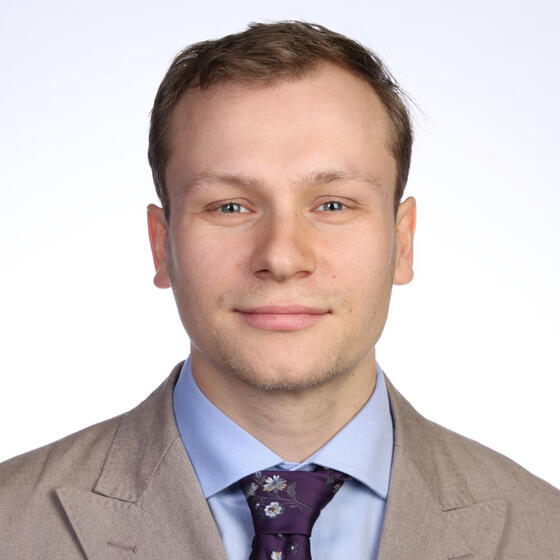
Howie, today it’s my great pleasure to introduce Philip Croon, who’s our guest. And I don’t know if you’ve noticed, but actually if you want to get an expert in medicine and AI, medicine and data science, medicine and what’s going to happen next. In the old days, like 5 or 10 years ago, you would get someone who’s been a senior faculty member, someone who’s a professor, someone who’s got a few gray hairs and has been around the block. And these are the people who you thought had the most vision about what was going to happen and where we’ve been and where we’re going.
Today, if you really want to do that, you’ve got to actually tack in a different direction. You’ve got to look to people who are much earlier in their careers. And what you’ll find is people who are much earlier in their careers are often extraordinarily accomplished in the areas of AI, data science, and where we’re going. And they much more have their fingers on the pulse of what’s actually happening. And people who have been around the block, like you and I, sometimes have certain cognitive biases about what’s possible and where things are going and what can be done. And so today we’ve got Philip, who is someone who has recently been at Yale as a postdoc and now is back in Amsterdam. So let me kind of formally introduce him. He was born and raised in Amsterdam. He studied medicine and graduated cum laude in 2021. And he’s now, after spending time at Yale in Rohan Khera’s CarDS Lab, doing some really outstanding work on AI and data science, he’s now studying cardiology at Amsterdam UMC. But he remains an adjunct researcher at Yale, and he continues to be a close colleague.
He’s someone I admire. He started companies. He successfully exited from companies. He’s one of these individuals who’s generative, full of ideas and full of integrity and with a real commitment to improving society, helping patients and finding ways for all these new tools and technologies we have to make a difference. So with that, I just want to welcome you, Philip. You’re actually right now in Basel at a digital health conference, ESC Digital Health Conference. So it was nice of you to take a break from the meeting and to join us. And just before we start off, I just want to say welcome.
Philip Croon: Well, thank you so much, Harlan and Howie, for having me and for giving me the opportunity to talk here. And it’s been so great, Harlan, to know you and to learn from all the energy you bring and everything you do. So that’s the first thing that I really wanted to say. And I just finished the ESC Digital Health Summit, which is a very nice conference because it’s only about a thousand people here in Europe and there’s a few folks from the U.S. as well. And it’s the opposite from the big conferences, because there it is always very hard to actually catch the people that are in the field and that are really trying to push this forward, and here everybody that’s around you is trying to achieve the same thing. So it’s been a great meeting and well, maybe I can bring some of that innovative spirit also to this podcast.
Harlan Krumholz: One thing I just wanted to ask you as we get started is, we always like to have guests give a chance to tell their story. It’s like, how’d you get interested in this? What was it like growing up? What attracted you to medicine and brought you to where you are today? Can you just give people a little sense of who you are and what your path has been?
Philip Croon: Yeah, sure. So I grew up in Amsterdam, and my dad was actually a television presenter for classical music and my mom was a midwife. So I think healthcare was always there, but I wanted to become a classical clarinet player. And the Dutch education system is slightly different because you have different tiers and you have to get to the highest tier to actually be able to go to university and to study medicine. But I started lower because I wanted to do clarinet and then slowly work my way up. So some things came a bit later for me, but then once I joined medicine, I was so fascinated by everything that was happening there and especially—
Harlan Krumholz: Just so I know, I mean, that’s a fascinating aspect of your history. I didn’t realize that. So what caused you to pivot from the arts and music to decide to do medicine?
Philip Croon: Well, I think I was playing in all these orchestras, and I was relatively young compared to other people around me and they were incredibly talented and still they were all working in bars. And I thought to myself, sometimes you shouldn’t give up your hobby to make it your profession. Sometimes you should just keep doing your hobby and make your profession something else. And I can really say that I’m lucky that I think a lot of the things I do in work now are, also feel like a hobby, but classical music or music is still a very big part of my life.
Howard Forman: About the clarinet, though, how much are you actually still playing now? Do you play in any groups or?
Philip Croon: So it’s actually a funny story because I played a lot until COVID, and I was in all these orchestras, and I went to all tours in Georgia—and then I mean the Georgia here in Eurasia. But then COVID hit, and I didn’t really enjoy it as much anymore. So I switched to jazz and to guitar. And New Haven is actually a great place for it, because there’s a very weird cafe called Cafe Nine, and they have a jazz jam twice a week. So I’ve been playing there. So Yale was not only good for my academic career but also for my musical career.
Harlan Krumholz: Oh, that’s amazing. So then, keep going. So then you decided to pivot to medicine, and then what was that like for you?
Philip Croon: I mean, it was great. I had so much fun, especially when I started seeing patients. And I think one of the pivotal moments for me was when I was in the end of my bachelor’s, so university or medicine in Netherlands is three years bachelor, three years master’s, which is in clinic. And I worked in the clinic, where I was helping with the implementation of Epic. So I was sitting next to a specialist. I had a training in how to use Epic. They were just transferring from the old patient files, and I was basically there to help them, guide them and scribe for them. And then I thought, “I think this is very valuable.” If we want to bring technology to clinicians, we need young people that are much more advanced with using these tools.
So I started a company called MediMaat, and we had teams of students who would be trained in all these new technologies and going to clinics to do floor support and really help bring those early tools to the clinics. And that was a great experience. I did so many implementation projects in EHR but also in remote monitoring and devices and then literally everything.
Howard Forman: Just curious how you transitioned then from that to eventually coming to Yale. Did you train in internal medicine first in the Netherlands?
Philip Croon: So I took one year between my master’s and my bachelor where I was only doing MediMaat. And I think one of the things that I realized early is that if you want to be an academic and entrepreneur, you really have to only do the things that you’re good at and hire professionals to do all the legwork. So I did that early. So I went back to med school, I finished my training and my MD, and then I started a PhD, which it’s also a different system. In the Netherlands you generally do six year med school and then four or five years of PhD.
And during my PhD, I met Rohan, Rohan Khera, and he was a great mentor. And I first asked him, “Can I come for two months?” Because I was kind of scared to leave my little bubble that’s Amsterdam. And he said, “Well, you’re more than welcome to come, but you should at least come for six months.” And I ended up staying two years.
Howard Forman: Wow.
Harlan Krumholz: But one thing that interests me is that you didn’t have a math background, you weren’t sort of starting on this path of data science, you kind of just picked it up. I suppose I consider you really gifted in this area. You’ve done so many things and you are a connector. You see a problem, you solve a problem, you know how to use the tools to do that. When did you realize that this was going to be something that you were going to do and that you had the ability to acquire those skills that were necessary?
Philip Croon: So before going to med school, I wasn’t sure if I wanted to go to med school because I also really liked math and physics. And the Netherlands has a very famous tech school. It’s called Delft. But my mom said, “If you’re going to become a doctor, you can still become a researcher in technology. Well, if you’re going to go into tech now, you can never transition back.” So that was one of the reasons that I went to med school with that vision. And something weird happened during my PhD because I was supposed to be partnered with a postdoc that was an engineer, but he left after two years. So it was never my intention to actually become a programmer. And this was before ChatGPT or any of the other tools. So I was like, “Well, if he leaves, I will have to finish this PhD at some point.” So I just started doing Stack Overflow and trainings in Python and really do my own work.
And I think it helped me a lot because AI tools are amazing if you know what’s happening, but I do think that the grind that I put in scrolling through Stack Overflow to fix errors in the early days really improves also my ability to understand systems now. So I think that has actually been very helpful.
Howard Forman: Can you say a little bit, I mean, you’ve been involved in several companies, and as Harlan said, you’ve even been involved in exits. One of the companies you’re working on is with Harlan, but also Rohan Khera, and to me, that’s been exciting. We haven’t talked about it on the show for a few years now actually. I’m curious to hear what it’s like to be part of something when you’re trying to commercialize something that you know works, but you’re trying to figure out how do you deliver it to patients. Can you speak a little bit? I think that’s Ensight-AI. Am I right with that?
Philip Croon: Yes. So in Ensight-AI, we are commercializing a model to take cardiac amyloidosis from the 12-lead ECG. And we recently published the results of a multinational study in JAMA. And it’s been an amazing opportunity also because in the Netherlands, it’s not that common to do entrepreneurship. It’s always something that really frustrates me because I feel like if we are developing technologies in research, we have to also go through the commercial path because otherwise why are we doing it? And then you get here and there’s all these people like Harlan and Rohan and everybody that I met through Yale Ventures that are all really trying to achieve that. And instead of the Netherlands where, it’s changing now, but it’s almost a bit looked down upon to try to make money. Here you have all these people that really have the same goal and just try to make this a success.
So that has been incredible. I must say that going through FDA is very… well, it’s a learning experience, so to say, but it’s also really difficult. And I think in our case, the world changed a lot in the last couple of years. I made a joke yesterday during my presentation where I was like, “If we look at the HORIZON trial, which has nothing to do with my presentation, but the first patient was 2019 when it was included and now the study concludes. And in the meantime we had COVID, ChatGPT coming to the public. We have GLP-1a and more recently the CEO of Nvidia that crashed the market.” But so much has changed, and I think this has actually been helpful in Ensight. So we learned so much from other companies that have similar technology and went through the FDA that we can build upon now. And I think we’re really in a good flow now with the FDA and with some partners to really try to get this to market fast.
Howard Forman: And just a follow-up, real quick. Sorry, Harlan. I want you to explain to our listeners though, because it’s not about making money, right? It’s really about, you know something works, but without the commercialization, you’re not reaching the patients. And that is like there are structural problems to getting there. There’s reimbursement, there’s regulatory approval, there’s getting professional acceptance. Can you just speak to a little bit more about what the elements are of the company that are working on that at this time?
Philip Croon: Yeah, sure. And I agree that it’s not about money, but I do believe that if there’s no monetary incentive at all, then you won’t get investors, and we just need them to get this to clinic because who’s going to pay for the trials to prove that this actually improves outcomes? I think it will be very tough to get an ROI on that, but industry is interested in it. But there’s all these different factors that you have to take in. And I think what I always say is the model is actually a very small part of your success because many of these models work very well these days. It’s more about what is the population that you can develop this in? Does the pretest probability actually align with the model sensitivity and specificity or are you only going to do false positives? Who are the stakeholders who might benefit from this?
And also, who are the physicians who are going to see those flags and actually try to get the drugs to these patients because like amyloid, there is good drugs for them, but they’re not affordable for everyone. And especially in Europe, it’s actually much more difficult. So I really like to see it as a whole system where this model is almost the least interesting part, but you do need that and you need to have the whole system around it to make sure that it’s actually going to improve patients.
Harlan Krumholz: So I think just let’s expand a little bit on this. So you’ve said that the algorithm is rarely the bottleneck and that most of them, these models fail at the point of care and that implementation deserves attention, but it’s becoming in a way harder and harder because people are nervous about these algorithms. They want to get a ton of oversight on them. They’re skittish about their implementation and then they feel, appropriately, a need to continue to monitor them to see whether or not whatever performance there is persists or that if they are implementing it at their site, that it’s getting the same sorts of performance that was seen in other sites where it was developed.
How are you thinking about us facilitating, speeding this, accelerating the testing and evaluation and the continued monitoring of these algorithms as they come out? Because for example, Ensight-AI aside, Rohan and you and others, working together as a team, have developed approaches that can identify people with actionable information within our medical records, that today there are people who have existing data within the, for example, the New Haven Health System who have a diagnosis for which there is definitive treatments and that would help them avert downstream adverse consequences.
But we’re having trouble… I mean, you’re having to do a trial. We’re doing lots of different things. It’s taking us a fair amount of time when you could say you’ve done a lot and all you’re doing is identifying people who really need an ultrasound for confirmation for some of these diagnoses. And yet it’s slow going. What are we going to do to both continue to be responsible? And the reason it’s slow going is everyone wants to be hyper responsible and vigilant, but how can we balance that responsibility and vigilance with… it becomes, I say it’s almost a moral imperative that we find ways to use these algorithms because there are people who are going to have adverse consequences, could have been averted if we had been able to implement this faster.
Philip Croon: So I fully agree, but I think we’ve shown so extensively that in retrospective studies, including in different cohorts with different demographics, these models work. But then now we start to see trials, and we can really use those trials to identify if these models fail, where do they fail? And a good example is the TRICORDER trial, which used the stethoscope that makes an ECG and tries to predict structural heart disease. And 50% of the physicians in the intervention arm stopped using it after two months. So the trial was no. The model worked because if you would only look at the individuals that actually used the device, you find more structural heart disease. Another one was the ATTRACTnet, I think was called. This is for amyloids where they tried to deploy a system-wide amyloid model and everybody that flags positive, their physician got an alert.
Harlan Krumholz: And just to be clear, for people listening, what you’re saying when you say deploy a system-wide amyloid model, what they’re doing is taking existing electrocardiograms and then they’re applying an AI algorithm to those electrocardiograms and they’re identifying people who might be either with this disease or at very high risk for developing the disease. So I’m just making sure people understand what it is that… You had ECG two years ago. It’s in the medical record. They’re using existing data to say, “Wow, there was something here that nobody could see before,” because cardiologists, what the AI is picking up on is not something that even the most expert cardiologists can see and discern. So it’s actually showing us something that our human brains can’t process. It’s not like we “missed” it. It’s not like we have criteria to find it and we overlooked it. It’s that this is extracting signals that we can’t perceive because the way it’s looking at all the information electrocardiogram.
And so that’s what, when you’re saying “applying the model,” we’re applying this AI program to the existing electrocardiograms, and we’re identifying people who either have or may be at high risk for the disease. I’m sorry, keep going. I just want to make sure people understood.
Philip Croon: Yeah, no, exactly. I think also this trial shows very well because the model worked well, but there were 1,500 individuals who were flagged as potentially having amyloids, and all their physicians got a note. But then if you look through the flow diagram, only 50 got tested in the end, and 25 had amyloid. So on one hand you can say, “Oh, 25, you still find 25 people that you otherwise wouldn’t have.” But it’s a lot of tests to run for a very small group. And where people would fall out is because they had cancer and if you have a very short lifespan, you’re not going to treat them for amyloid either way. They already knew they had amyloids. They were tested recently. And in our retrospective studies, these real-world bottlenecks are rarely tested. So what I just want to say is that now we’re actually starting to deploy these models in the EHR and in real trials.
We’re identifying these issues. And to give a positive example, we did a study with the Apple Watch. It was published in JACC—uh, Harlan?—and the Equal trial, and it used an Apple Watch together with an AI model to detect atrial fibrillation. And it was a positive study because after six months in the intervention arm, we had 10% of AFib and only 2.3% I think in the other arm. But this was embedded in a system. So if an ECG was a sinus rhythm according to the model, nothing happens. But if there was atrial fibrillation, there was a dedicated team of nurses who would review the strips, see if it was correct, and then plan a clinic visit for them with the doctor. So I think just giving people an Apple Watch is not going to work, but embedding it in the system with accountability for doctors and a clear path for follow-up actually worked.
And maybe as a last point, I hope that we will see more of these trials, and I hope that journals and grants will go much more towards this implementation.
Harlan Krumholz: I think the question for me is how do we rapid-cycle this? I think this is recognized in people like Lee Schwamm here and Erica Spatz are working with our AI and decision support and remote monitoring programs. I mean, they’ve said this many times and I’ve heard it, and I know it to be true, it’s all about the workflow. How does this fit? It could be a new workflow. It doesn’t have to be how does it fit into the existing workflow, but have we ensured that this isn’t just the transmission of information, but it’s actually connected to taking care of patients and that people actually get the care?
But my concern is you’ve got something great. I mean, this is just not… You put in a grant application, takes you another 6, 8, 18 months maybe even to get funded. Then by the time you get up and doing it it’s like the world is changing. We need new ways of thinking about how rapid-cycle testing, evaluation, iteration tells us what the answer is. Because I just think if you treat it like a drug, hey, we started in 2019, and 2026 we get the answer. Of course, there was a five-year follow-up in that trial. So I mean, some of that was going to be long because of that, but it’s still… we need to be able to do this faster, I think.
Philip Croon: I agree. And Rohan and I went through the implementation of the model in the Yale New Haven Health last year, and I’m actually very grateful for Yale and for Lee Schwamm particularly because they actually freed up institutional money to do this. So you don’t have to go through all the hurdles of grants. And in Amsterdam, there’s institutional money for the same thing as well. So I think institutions really realize how important this is. And we went through a very diligent process of procurement to get our models into the system, which was partly to get our model in the system but also to learn for future deployments, how to do it, how to do it technically, where to deploy it, etc.
So I think in that year, we laid…a lot of the [ground]work for future projects. And as a result of that, we’re doing a trial now. So I do think that once we’ve gone through implementation once, it becomes much easier. All the infrastructure’s already set up to go through other ones, and then you can really start doing the rapid site co-implementations that you’re talking about, Harlan.
Howard Forman: You’re back now doing clinical cardiology, as I understand it. Our listeners are hearing you, and you sound so eloquent, but they don’t realize how young you still are. So you’ve got a long career ahead of you. What would you like to be doing in 10 or 15 years? What’s the goal for you?
Philip Croon: I hope that I’ll still be a cardiologist, but that we’ll just be sitting in our clinics kind of waiting for something to happen because I really see a future where the patient is referred for chest pain and a bot calls them. Abridge already has this. It’s all technology that’s out there. There’s nothing futuristic here, and it does the whole patient history and all the medication, and based on that, it will order the CT. I think in the next five years, and I think the biggest bottleneck there is Epic and the current systems, and we really see so much transition as having patients being treated at home and not having to go to the clinic for things. So I still hope all my ideas are always from cardiology, so I’m really grateful for my patients and for all my mentors that I’m still allowed to show up in a hospital there.
But I really hope that this will change, because I do feel like at some point we’re going to hit a wall. But on the other end, there’s so many smart people that are very dedicated in improving this. So I hope I’ll still be doing clinic, but it will look very differently.
Harlan Krumholz: Howie, he may be young and he may be still now training in cardiology, but he’s still an entrepreneur and he’s just launched another company. So he’s got two successful companies that he’s exited. He’s working with me and Rohan on Ensight-AI, but he also now launched another company. So Philip, I want you to just give people a little bit of a pitch about what you’re doing and why, and why you decided to make the time now when you’re still so busy in the training program.
Philip Croon: Yeah. So first: why. There’s two reasons. I sold Digital Health, which was an AI holder company two years ago, and we all stayed on for a while, but the whole team that I started that with recently left. So there’s this great team of people that I really appreciate and want to work with that are trying to do something new. I think the team in any company is the only thing that actually matters. I’m always the person with the frustrations that I turn into ideas, and I think one of the big frustrations is how the publishing system is set up. I did a Reddit thread where I asked researchers about what do you think of these publishers and it exploded. People were so critical also coming with solutions. Reddit is actually a great tool to gather information.
So we built a completely new editorial management system that’s all about automation. So it’s much easier to send your paper to get…. And the whole idea is that we can have a stand-in for, for example, editorial manager that works much better, but that also is much easier to integrate with AI review systems that we are developing. I believe that if we want to burden reviewers as much as we do still, that they should be paid. And there have been a few studies that show that you have great results. So we have a payment system that allows that. And so there’s a whole suite of novel tools that we think will really improve the review system. And the first three journals actually started this week, paying reviewers and through our system. So it’s very exciting. And maybe to add one note to it, do I have the golden egg for academic publishing? I’m not sure, but I hope that me and 29 other people will have a similar idea and one of them will really change the system for the better.
Harlan Krumholz: And how much are you paying for a review?
Philip Croon: For now, for this journal, it’s 200 euros. So it’s just over $200. And you get—
Harlan Krumholz: Wow. And what’s the business model for this?
Philip Croon: So what we want to do is actually make the editorial system relatively cheap. So also open-access journals and everything really have a very cheap alternative to make the whole process much better. But then if they start using these additional services, for example, we built a tool, we call it Fisher, that pulls your analytics, your code from GitHub, if you of course provide that and your paper, and it does a full methods check and checks if all the numbers are correct and runs statistics to see if it is actually possible that you have these results. And so you can send that either back to the editor or to a reviewer. So these tools, we really think that once we have the system in place, that these are things that we can charge for. I don’t want to become the new RELX and just, in my opinion, be very greedy, but I also think that also in research, you have to have some kind of business model to make things successful because you don’t survive.
Harlan Krumholz: How is the parent company for Elsevier? So when he says “RELX,” he means the parent company for the biggest publisher. Let me just ask you one other quick question on top of this. First of all, I really commend you for doing this. I told you this when I saw you at the American Heart Association. I mean, we need disruption in the publishing industry, and we also need to get this off the backs of authors who have to pay large fees and the enormous profits that are being made by these companies, in a way siphoning resources from academia. And I’ll just say that, that’s what’s happening. But why not just go fully to AI reviewers? I mean, you’re so tech-forward. Why do you need to pay regular reviewers? Why not just build a big AI system out?
Philip Croon: So we did build the AI system, which is Fisher, but I want to be able to offer both. And how I see this is, Uber wants to have fully autonomous cars, but until market regulation, etc., is there, they still need drivers. And if you, Harlan, for your journal are like, “Hey, I feel confident by doing just an editor with this methodological assessment with AI and this is enough,” then that’s a choice that you can make. But I think there is a lot of journals that might say, “I want one reviewer who is an expert in the field plus an AI.” So in that sense, we can allow journals to also adapt a bit and not just tell them that reviewers are not interesting anymore.
In terms of how we grade research, I think if I publish something in JACC, then it’s not a great paper because it’s in JACC, it’s a great paper because you, Harlan, as the leading expert in the field, looked at it, gave me feedback, improved the paper. And maybe a reviewer gave feedback and improved the paper. And now we’re throwing all this information away. Once we publish the paper, that information is gone. And I think that’s really a pity. I think it’s an attest to do the research that you went through this process and that these amazing people that I’ve met through you and JACC are giving their feedback and approving of your research.
Harlan Krumholz: And I’m just, open invitation. I think it’s great you have your own journals and you have that direction, but maybe JACC can be a laboratory too for you to develop some of these services that you can ultimately also offer to other journals. So we should work together on this.
Philip Croon: I would be extremely excited about that.
Howard Forman: Thanks so much for joining us here. You have a lot in your future, and we look forward to following you and seeing how you help transform American and global medicine.
Harlan Krumholz: I would say this, he’s a real superstar. And the thing is, he really combines a tremendous business acumen with a commitment to science and a real mission-driven approach to patients. And it’s really wonderful when you meet someone who’s got such integrity, is a really a nice person and just gets stuff done. So it’s been a real pleasure for me to get to know Philip, and that’s why I was so happy to have him on the podcast.
Philip Croon: Well, it’s been an extreme pleasure. I see all the amazing researchers that are on the podcast, and I’m just very humbled that I’m allowed to be here and share some of my story.
Harlan Krumholz: Thank you.
Howard Forman: Great. Thank you.
Wow. He is exactly how you sold him. He’s wonderful, and he’s poised, and he’s so smart.
Harlan Krumholz: I’m just telling you, there are these amazing people. And by the way, we talk about the visa issues and how hard it… I mean, here’s this extraordinarily talented individual who wants to come to Yale and wants to come to the United States to spend some time. He was able to pull it off, but increasingly it’s challenging for people from different countries to do that. I just feel there needs to be this really deep understanding in our government about the value of being able to welcome people from different countries to spend time with us. Many do end up staying, and you know what? They add substantially to our lives here and those who go back leave with a good feeling about the U.S. and also have taught us something about where they’re from.
Howard Forman: We’ve covered that topic a few times and unfortunately we’re going to have to keep covering it because we are in an unusual spot right now, but let’s hope that moving forward things will improve.
Harlan Krumholz: Yeah, that’s just like a self-inflicted harm when we don’t do that. Anyway, so look, I wanted to talk this week just a little bit about this study that came out in The New England Journal of Medicine from the American College of Rheumatology, believe it or not, that again is back to one of my favorite topics, which is these obesity drugs. Again, I talked last week about a highly disappointing trial, which I had mentioned even on a previous podcast because it’s such a big story, such highly anticipated drugs about Lp(a) and about IL-6, about tamping down the inflammation in the body with the IL-6 drug and treating a substance, a carrier protein for a cholesterol that we know to be highly associated with cardiovascular disease and feeling very confident that they would be effective, and they weren’t. It’s always a good news thing to turn to drugs and turn to something that actually is different.
So let me just tee this up for you. When we talk about the obesity drugs, Howie, we tend to focus on the scale. What I mean by that is getting on there and your weight. But interestingly, if your knees hurt, the question you care about may be, “Will I be able to walk more comfortably? What can help me?” And for these individuals, they may be getting a wide variety of treatments that may irritate their stomach. They get these anti-inflammatory drugs, non-steroidal like Motrin or Naprosyn or more that have a wide range of side effects and whose efficacy has always been somewhat of a question, how much benefit do they really provide? This study took one of the newer obesity drugs, retatrutide, and you should know that, by the way, this is still an investigational weekly injection. It’s not yet FDA-approved. It activates receptors for three hormones, GLP-1, GIP, and glucagon.
Now, just to put this into context, semaglutide targets the first one, which is GLP-1 receptor agonist. People hear a lot about GLP-1s. Tirzepatide takes two. They take GLP-1 receptor agonist and GIP. Retatrutide now targets all three. These hormones help regulate appetite, blood sugar, and how the body uses energy. And probably they act in ways that we’re still yet defining, but this is important. Retatrutide’s so interesting. Our colleague, our Yale colleague, Ania Jastreboff, has led the pivotal obesity trials of retatrutide, and her name is right there in the front on trials that have been in The New England Journal of Medicine, including the various…early study and the larger Phase 3 study that was recently done. In that larger study, people receiving the highest dose of retatrutide lost about a quarter of their body weight, and that was over about 80 weeks, just about almost a little over a year and a half.
The arthritis findings that I’m talking about today deserve their own attention. So osteoarthritis is a disease of the whole joint. As you know, it can make… everyone knows this. It can make walking stairs and even sleeping painful. I mean, people just have this pain that won’t go away. Two randomized trials studied just over a thousand people who had painful knee osteoarthritis and were overweight or had obesity. They didn’t have diabetes. In one trial, average pain started around 6 on a 0-to-10 scale. And with the higher doses of retatrutide, it fell to about 2.
You can think about that for yourself. If you have pain, I ask you on a 0-to-10 scale, how do you feel? You think it’s a 6? It goes all the way down to a 2. Now, interestingly, the placebo group also went down. They went from 6 to 4. So this is why we have to do trials with control groups, because once you put people under observation, you capture them at a certain moment of time, they can get a little better. So it was really this difference between 4 and 2, but still that was significant in the study. And for many people, that’s still a pretty big deal.
I think another way to understand it is in the pooled main analysis, roughly two thirds of people with retatrutide had the pain cut in at least half, and that was compared to about 40% in those receiving placebo. So remember, 40% with placebo still had pain cut in half, but two thirds, two thirds in the treatment group. And that’s about one additional person reaching the milestone for every three or four treated. Physical function improved too, and all this builds on earlier evidence. In the STEP 9 trial, semaglutide improved knee pain and physical function in people with obesity and osteoarthritis. So we’ve known before that this is… and the question really, is this just about weight, less load-bearing? Is this because these have anti-inflammatory effects? Which we do know that it does change inflammatory markers. What is it that’s going on here? We have to get to know it, but it’s getting to the point where you’re coming in with osteoarthritis and you have obesity or overweight.
We’re actually not directly saying, “Well, we want to treat your obesity.” We’re saying, “If we want to make you feel better from the pain you’re having, maybe the most effective thing we can do is to use these meds, and by the way, you’re going to lose weight. By the way, you’re likely to get a marked improvement in the pain.” And so this is what we’re seeing. Again, not yet FDA-approved. We don’t know whether these treatments prevent knee replacement or changes in joint structure because how long they were studying it. But I think you could have an expectation that they might, because if people have a lot less pain, they’re not going to be eager to get their knee replaced as a result. So this may ultimately tip the balance in terms of costs and benefits. I just thought this was another really great feel-good story after I, last week, had reported on two trials that were highly disappointing. These are the drugs that keep on giving, and their greatest hits aren’t over yet. It’s tremendous. It’s quite interesting.
Howard Forman: It is. It’s an amazing time to be alive and to just watch this. I wonder how thin people with osteoarthritis will feel about this, but it’s—
Harlan Krumholz: Well, it’s a question to me whether smaller doses of these drugs will end up being effective. If they’re working through mechanisms, not solely through reducing the load on the joint.
Howard Forman: Sounds like it’s—
Harlan Krumholz: And I’d love to see a trial of people who are thinner.
Howard Forman: Right.
Harlan Krumholz: The other thing I’ve always brought up to you about these drugs are so interesting to me is we don’t have to worry about titrating them. If you start taking the meds, people don’t become emaciated. That’s very interesting because they lose weight, but then they plateau off at a certain weight and they may be a lot thinner than they were before, but they don’t become emaciated. And I think it’s time for us to start doing some trials in people who don’t have overweight and obesity and try to understand what the effects are in those groups. I think that’d be quite helpful.
Howard Forman: Very helpful.
Harlan Krumholz: Well, you’ve been listening to Health & Veritas with Harlan Krumholz and Howie Forman.
Howard Forman: So how do we do? To give us your feedback or to keep the conversation going, email us at health.veritas@yale.edu or follow us on any of social media.
Harlan Krumholz: And we’d love your feedback. Let us know what you think of the episodes. Tell us what we can do better. If we’re doing well, we don’t mind those comments either.
Howard Forman: Absolutely. We want feedback.
Harlan Krumholz: But we always love hearing from our listeners and we always…. Let me just say we appreciate you.
Howard Forman: Yep. Health & Veritas is produced with the Yale School of Management and the Yale School of Public Health. To learn about Yale SOM’s MBA for Executives program, visit som.yale.edu/emba. And to learn about Yale School of Public Health’s Executive Master of Public Health program, visit sph.yale.edu/emph.
Harlan Krumholz: And a big thanks to our superstar undergraduates, Gloria Baek, Donovan Brown, to our wonderful and extremely talented producer, Miranda Shafer. And you always know this, listeners. I get to work with the best in the business. Howie Forman. Thank you, Howie.
Howard Forman: Thanks very much, Harlan. Happy Felix Unger Day to all of you.
Harlan Krumholz: Yeah, thanks. Talk to you soon.
Howard Forman: Talk to you soon.
“The Yale School of Management is the graduate business school of Yale University, a private research university in New Haven, Connecticut.”
Please visit the firm link to site