
Researchers in Carnegie Mellon University’s Ray and Stephanie Lane Computational Biology Department(opens in new window) are working to better understand the role that the “on” and “off” switches of genes play in activating symptoms of bipolar disorder.

By figuring out the underlying mechanisms driving its development, Associate Professor Andreas Pfenning(opens in new window) and the researchers in his Neurogenomics Lab(opens in new window) hope to uncover potential therapies or treatments that are more effective or less prone to side effects, revolutionizing how bipolar disorder is addressed.
The work is rooted in the study of epigenetics, or how environmental factors influence the expression of genes. As landmark discoveries are made, the research is supported by decades of student ingenuity through CMU’s Summer Undergraduate Research Fellowship(opens in new window) (SURF) program.
Breaking new ground with genetic data
Pfenning said that the work on this specific condition is part of a larger initiative funded by the National Institutes of Health, known as the BRAIN Armamentarium(opens in new window).
“We’re not doing this research in isolation,” he said. “There’s an entire network of collaborative researchers across the country, working together to develop technologies and then to use those technologies to develop tools that target specific subtypes of neurons.”
In this case, the researchers are focused on the expression, or genetically informed activity, of these cells.
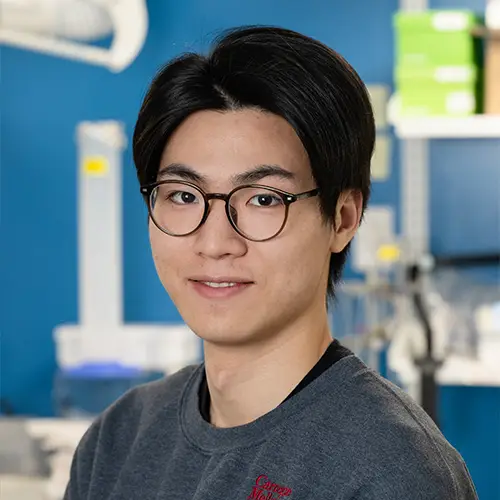
“Different cells have different gene expression levels,” said Stephen Wu, a graduating senior who was assigned to the project. “Even in the same tissue, cells could have different levels of genes that lead to diseases like Alzheimer’s disease and bipolar disorder.”
Wu’s project on bipolar disorder (supported by donors Mary and Bruce Summers) was done in collaboration with Sarah Ross(opens in new window) of the University of Pittsburgh’s Department of Neurobiology(opens in new window). They worked with two sets of data: RNA sequencing data from single cells, and a sequencing dataset used to measure structures inside of cells known as chromatin.
The researchers can then look at areas of enhanced activity within the brain tissue samples to see where the difference in chromatin openness lies. “If we see a difference, that could be the potential candidate leading to bipolar disorder.”
The ultimate goal of these computational analyses is to find out what specific cell type or cell group is responsible for triggering bipolar disorder. The researchers have already identified one gene type that may be behind the condition.
“In the hypothalamus, we found a specific cell population that is highly associated with bipolar disorder and is enriched in sets of genes that regulate calcium” Wu said.
Calcium within neurons can trigger neural activity, which may influence bipolar disorder. Wu’s research will help determine the degree to which calcium levels in neurons specifically drive bipolar disorder development.
“If we can figure out these underlying mechanisms, we can design new gene therapies that target these genetic pathways, that will be really effective and have less side effects.
Undergraduate innovation at the forefront
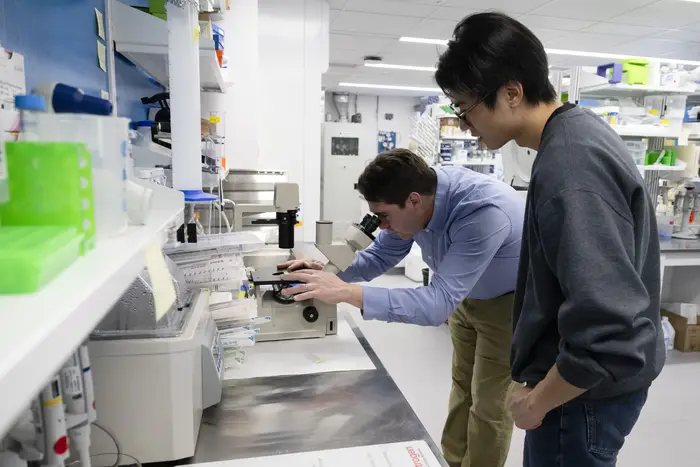
Offered through the Office of Undergraduate Research and Scholar Development(opens in new window), SURF provides students a stipend to conduct eight-to-ten weeks of full-time study on campus. For his work on high-impact research that may lead directly to new treatments or therapies for bipolar disorder, Stephen was awarded the Allen Newell Award for Excellence in Undergraduate Research(opens in new window) from the School of Computer Science.
Wu joined the Neurogenomics Lab during the fall semester of his junior year. “It took a little bit of time for me, but eventually I took my coursework as theoretical foundations of science and computational technology, and I see if I can apply that in my research. Sometimes, for me, it’s like taking a break from studying for the exams and all that.”
The new research project allowed him to expand on his studies as a computational biology major.
“I was impressed by Stephen’s attitude, to shift the direction of the project and try to come up with other ways to identify which types of cells are really underlying the predisposition and symptoms of bipolar disorder,” Pfenning said. “I was also encouraged by his results so far where different pieces of evidence, both at the genetic level and the molecular level, are honing in on one cell population that seems to be heavily related.”
An ongoing legacy of SURF success
Wu follows a long tradition of undergraduate research at Carnegie Mellon, including the work of Pfenning himself.
Under the mentorship of faculty members Maxwell H. and Gloria C. Connan Professor Allison Barth(opens in new window), and Russell Schwartz(opens in new window), current head of the Computational Biology Department, the associate professor participated in the Small Undergraduate Research Grant(opens in new window) (SURG) and SURF programs from 2002 to 2006.
“That really provided me with the motivation to have a career as a professor and in research, in particular at the intersection of computational biology and neurobiology,” Pfenning said.
Today, he hopes to encourage students to embrace research in a similar way, not only as a potential career in and of itself, but as a way to explore their skills and interests.
“Just like the mentors that I had when I was an undergrad motivated me for a career in research, I wanted to have the same impact on undergrads like Stephen and myself by mentoring them in research.”
Of the 2026 Pittsburgh undergraduates receiving their degree on Sunday, 60% participated in research. Engaging in this kind of work, Pfenning said, can lead students down a variety of career and academic paths, and he encourages those interested to pursue it to see where it may take them.
“There are a lot of different ways that people with a degree in computational biology can end up contributing to society,” Pfenning said. “Research does a good job to prepare you for those different directions. Even if it’s not ultimately what you end up deciding to do, there are different ways to take that degree and training and have an impact.”
“Carnegie Mellon University is a private research university in Pittsburgh, Pennsylvania. The institution was originally established in 1900 by Andrew Carnegie as the Carnegie Technical School. In 1912, it became the Carnegie Institute of Technology and began granting four-year degrees.”
Please visit the firm link to site