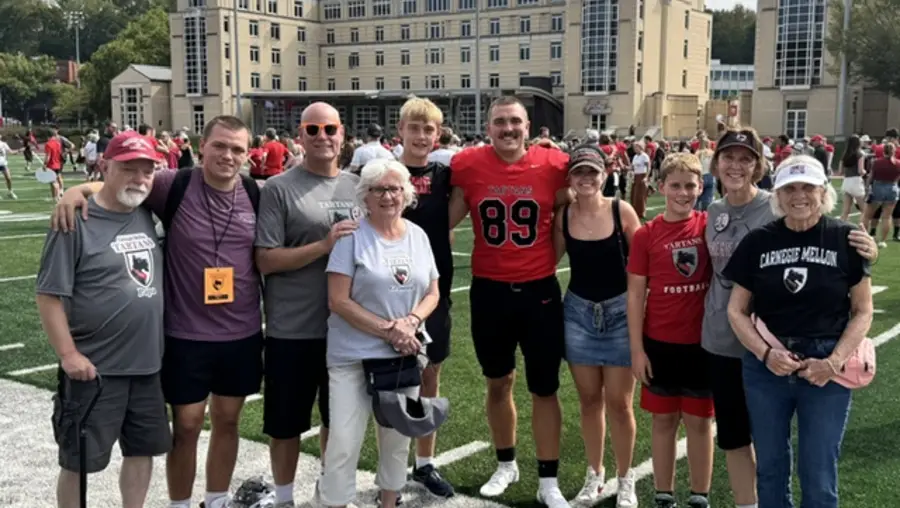
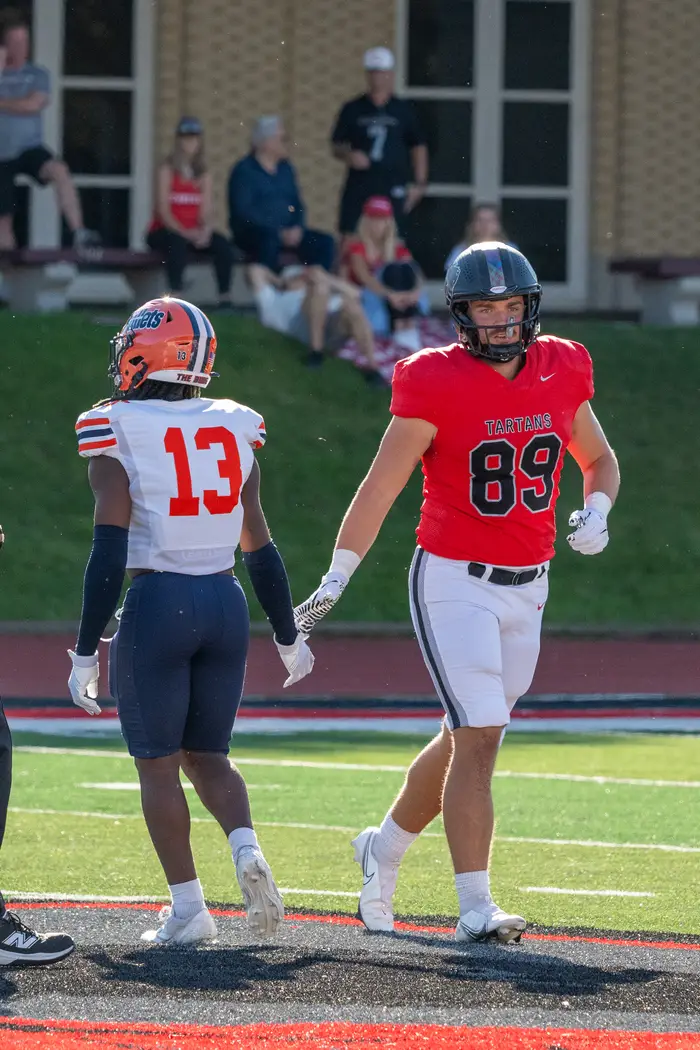
On any given weekday, Dylan Provencher is up and running at Carnegie Mellon University long before most students hit snooze. By 5:30 a.m., the junior mechanical engineering major is already at physical training with the Naval Reserve Officers Training Corps (NROTC). Later in the morning or afternoon, he’s lifting weights or practicing with the Tartans football team. In between, he’s immersed in demanding engineering coursework — while also leading a significant portion of CMU’s NROTC unit.
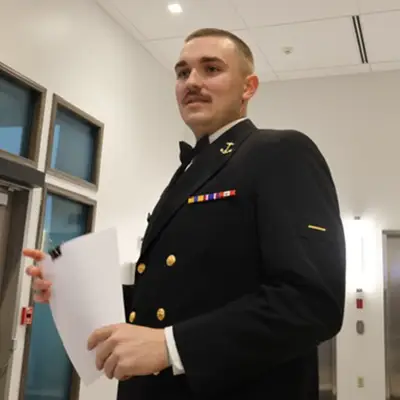
It’s a schedule that might seem impossible from the outside. Yet Provencher is quick to push back against the idea that pursuing multiple paths at CMU means constant exhaustion or sacrifice.
“People probably assume I don’t get any sleep,” he said. “But I actually try to prioritize sleep. I don’t do very well when I haven’t had enough of it.”
For Provencher, the ability to thrive across disciplines comes down to intention, structure and a campus culture that treats students as whole people rather than single-track achievers. That culture, he said, is something he encountered immediately upon arriving at CMU.
“I came into college thinking, ‘This might be too much,’” he said. “But I’ve found that I do have time to do other things, and I’m not necessarily pigeonholed into just one identity.”
Engineering as a way of thinking
Provencher chose mechanical engineering not simply for its technical rigor, but for its breadth. Drawn to understanding how things work — and how engineering solutions can help people — he saw the major as a way to keep his future flexible while building a strong problem-solving foundation.
That mindset aligns closely with his post-graduation plans. After CMU, Provencher hopes to commission as a Navy officer and serve as a nuclear propulsion engineer aboard submarines. While the role won’t involve traditional design work, he said the habits formed in CMU’s engineering classrooms are directly applicable.
“Studying engineering is really about learning a way to think,” he said. “You don’t show up to your first job knowing everything; you know how to work through problems and figure things out.”
Those skills extend beyond technical systems. As an NROTC leader, Provencher is already responsible for mentoring and guiding younger midshipmen, balancing delegation with accountability and learning how to lead people effectively — a process shaped as much by group work and labs as by drills and meetings.
An instant community on the field
While engineering and NROTC provide intellectual and leadership challenges, football offered Provencher something different but equally important to him: immediate belonging.
“The biggest thing football gave me was an instant community,” he said. “I got here a few weeks early my freshman year, and I was already part of something much bigger than myself.”
That sense of community helped ground him during his transition to college life and continues to shape his experience today. Football provides daily structure, accountability and a group of peers who look out for one another, he said, whether that means training together, sharing academic advice or exploring Pittsburgh as a team.
Just as importantly, Provencher said, being part of multiple communities has widened his perspective.
“Each of those three paths has strengthened and informed the other two,” he said. “I definitely wouldn’t be the leader I am in NROTC, the student I am in my classes or the teammate I am on the football field without the lessons I’ve learned from all three.”
Support that makes it all possible
Provencher credits the university’s collaborative support system with making that balance possible, noting faculty, coaches and NROTC staff have worked closely with him on many occasions to navigate scheduling conflicts and ensure academics remain top priority.
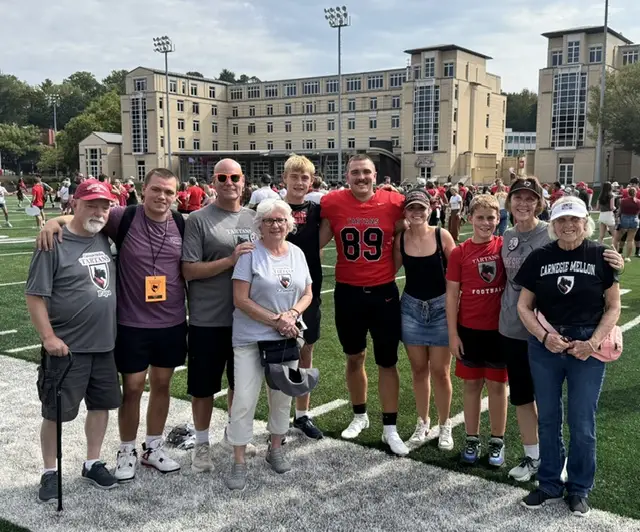
“It would be impossible to balance these three things without supportive people on all sides,” he said. “There’s a difference between ‘we’ll work something out’ and ‘how can I help you succeed?’ And it’s the latter that I have experienced here at Carnegie Mellon.”
That flexibility has allowed Provencher to grow into his responsibilities over time instead of being overwhelmed early on, fostering a steady progression that built the balance, resilience and confidence he knows will serve him well beyond CMU.
As he looks ahead to senior year and potentially larger leadership roles in both ROTC and athletics, Provencher sees his CMU experience as preparation not just for a career, but for a life that includes multiple and competing priorities.
“I didn’t know how this was all going to go when I signed up for it,” he said. “I’m incredibly grateful to have walked into a supportive community at Carnegie Mellon — one that didn’t ask me to choose just one path but encouraged me to pursue multiple interests and trusted that I could succeed.”
“Carnegie Mellon University is a private research university in Pittsburgh, Pennsylvania. The institution was originally established in 1900 by Andrew Carnegie as the Carnegie Technical School. In 1912, it became the Carnegie Institute of Technology and began granting four-year degrees.”
Please visit the firm link to site